
Student who toasts small portions of spices
You need a stable pan and controls that let you adjust the heat while briefly toasting your spices. The Netherlands Nutrition Centre explains how to toast whole seeds in a dry pan until fragrant.


Choose a portable induction hob if your pan is compatible, falls within the specified size range and you have enough clear space around the hob. A traditional electric hotplate means you don’t have to rely on induction-compatible cookware, but you’ll need to let the hot surface cool down after use. Before buying, also check the connection requirements, the manual and whether the product on offer carries the CE marking.
You need a stable pan and controls that let you adjust the heat while briefly toasting your spices. The Netherlands Nutrition Centre explains how to toast whole seeds in a dry pan until fragrant.
If you want to keep using your own pan, check that it’s suitable for induction and that its diameter falls within the hob’s size range before choosing an induction model. For example, Inventum specifies a range of 15–20 cm for the KI120T.
You want a portable cooking zone that you can put away, but while it’s in use you still need to leave the clearance specified around it. IKEA describes the TILLREDA as easy to store, while the Fire Service advises keeping flammable materials away from the hob.
A good fit if: your pan is suitable for induction, falls within the model’s size range and you have enough space to position the hob.
Bear in mind: the specified settings or power rating alone won’t tell you how evenly spices will toast in your pan. Inventum specifies at least 10 cm of clear space at the sides and back of the KI120T.
A good fit if: you want to use a stable pan that doesn’t need to be induction-compatible.
Bear in mind: don’t touch the cooking zone, and wait until everything has cooled before cleaning or putting it away. Severin specifies a cast-iron cooking zone and continuously variable control for the KP 1091.
| What to consider | What should you check? | Who should pay extra attention? |
|---|---|---|
| Adjusting the heat | Check what type of controls the model has, and stay with the pan while toasting. | If I’m briefly toasting spices in a dry pan, I want to be able to adjust the heat while keeping an eye on it. Around 33% of consumers rank heat adjustment as their top purchase priority. |
| Your existing pan | For induction, check that your pan is compatible and that its diameter falls within the model’s size range. | If I want to keep using my small pan, I’ll first check that it works with the hob. Around 27% of consumers give pan compatibility their highest priority. |
| Space and safe use | Measure the space and follow the manual’s instructions on clearance and connection requirements; keep flammable materials away. | If I have limited worktop space, the hob still needs to sit safely while in use and be easy to put away afterwards. Around 20% of consumers prioritise safe positioning and storage. |
| Total cost | Consider whether you might need different cookware for induction, and check who to contact if something goes wrong. | If I want to avoid unexpected extra costs, I’ll check whether my current pan is suitable and what else I might need. Around 20% of consumers make keeping the total cost down their top priority. |
For induction, both your pan’s compatibility and its size need to match the hob you choose. For the Inventum KI120T, the manufacturer specifies pans measuring 15–20 cm.
Check your pan and measure its diameter before choosing a model. If necessary, compare it with a traditional electric hotplate too.
A hob that can be put away after use still needs the clearance specified in the manual while you’re cooking.
Measure the space against the positioning instructions for the exact model, and leave room for ventilation.
The pan and cooking zone may still be hot after toasting. The Fire Service also advises staying with the hob and keeping flammable materials away.
Switch off the hob and wait until the pan and cooking surface have cooled before touching, cleaning or putting them away.
The KI120T is a portable, single-zone induction hob for anyone with a suitable pan and enough ventilation space.
The KP 1091 is a traditional portable hotplate; the separate KP 1071 is an induction model.
The KP-6191 is a traditional portable single-ring hotplate with a rotary control.
The single-zone TILLREDA is a portable induction hob that can be put away after use.
The DO309KP is a traditional portable hotplate with a cast-iron cooking zone.
This selection features portable induction hobs for anyone with a suitable pan who wants to adjust the heat while toasting. Before buying, check the pan size, the model’s manual and connection requirements, and whether the product on offer carries the required CE marking.
 No image available
An option if you’re looking for a portable induction hob and already have a suitable pan.
The product description lists 1000 W, five heat settings and rotary control.
 No image available
A good fit if you’re looking for a portable induction hob with adjustable power settings.
The product title lists 2000 W, ten power settings, touch controls and a safety lock. The description mentions a slim design and a glass panel.
 No image available
An option if you’re looking for a portable induction hob and your pan size falls within the specified range.
The product information lists a Ø 26 cm cooking zone, pans measuring 12–26 cm, 10 power settings and an adjustable temperature range of 60–240 °C.
 No image available
A portable induction hob to compare if you have a suitable pan and are looking for a compact model.
The product description lists 10 power settings and an adjustable temperature of 60–240 °C. It describes the design as compact and portable.
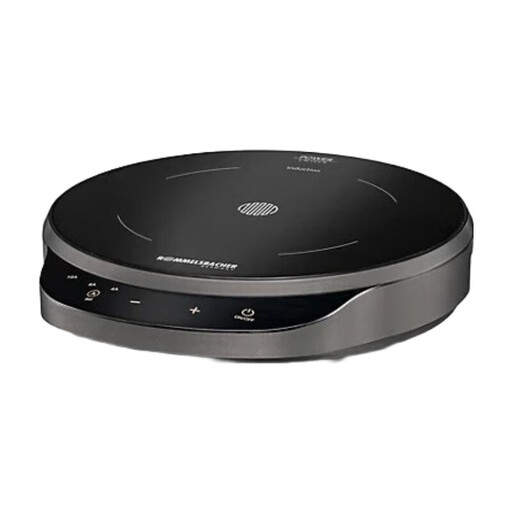 No image available
A good fit if you’re looking for a portable induction hob for flat-bottomed cookware that’s suitable for induction.
The product description lists a maximum of 1800 W, nine power settings and compatible cookware with a diameter of 12–20 cm.
Yes, as long as your pan is suitable for the hob you’ve chosen. The Netherlands Nutrition Centre describes toasting cumin and coriander seeds in a dry pan until fragrant; stay with the hob while cooking.
It depends on the hob and the pan. Inventum specifies a pan size of 15–20 cm for the KI120T; also check that your pan is suitable for induction.
A portable hob sits on the worktop and doesn’t need a cut-out. The Consumers’ Association says that most portable induction hobs can be connected to a standard earthed socket; always follow the manual for the model you choose. For example, the Inventum KI120T requires at least 10 cm of clear space at the sides and back.
Switch off the hob and let the pan and cooking surface cool before cleaning or putting them away. If a product you’ve bought is faulty, in the Netherlands the retailer is your point of contact for a solution; a manufacturer’s warranty doesn’t replace your statutory guarantee.
The Netherlands Food and Consumer Product Safety Authority (NVWA) states that CE marking is required for electrical products offered on the Dutch market. So check the product on offer; general product rules don’t confirm that an individual hob meets the requirement. Whether you’re allowed to cook in a particular student room also depends on the rules for that accommodation.