
Student with a small induction pan
Wants to toast spices briefly on a single hob and can check the pan base, diameter and required space for setting up the hob.


For the occasional batch of toasted whole spices in a small student kitchen, choose a hob to suit your pan and the safe space available. Induction only works with a suitable magnetic pan, while an electric cast-iron hotplate may be an option if you want to use a non-induction pan. Milieu Centraal recommends using a magnet to check the base of your pan. Also follow the instructions for your chosen hob and stay with the pan while toasting, as the Fire Service advises.
Wants to toast spices briefly on a single hob and can check the pan base, diameter and required space for setting up the hob.
Wants to keep using their current pan and is looking for a portable electric hotplate with room to cool down safely after use.
Needs to allow for both the hob's dimensions and the clearances specified in the instruction manual.
Choose this if: your pan base is magnetic and the pan size falls within the range for your chosen model.
Bear in mind: check the set-up and usage instructions; don't assume you can preheat the hob with an empty pan.
Choose this if: you want to keep using an existing pan that isn't suitable for induction.
Bear in mind: the hotplate and pan may remain hot after you switch it off, so allow space for them to cool down.
| What to consider | What should you check? | Who should pay particular attention? |
|---|---|---|
| Pan compatibility and size | Test the base with a magnet and compare your pan size with the range specified for the exact model. For an electric hotplate, check that the pan sits stably on the cooking zone. | If I want to keep using my small pan, I check that its base is magnetic and that it's the right size; around 25% of consumers prioritise pan compatibility. |
| Adjusting the heat | Compare the heat settings or control dial, and check the manual to see whether use with a dry pan is allowed. Don't leave the pan to preheat unattended. | For short toasting sessions, I want to be able to adjust the heat and stay with the pan; around 33% of consumers prioritise control over the heat. |
| A safe place to set it up | Measure the clearances specified in the manual, keep flammable items away and check the house rules for the cooking area. | In a shared kitchen, I want a stable spot with the specified clearances and a suitable power connection; around 25% of consumers prioritise a safe place to cook. |
| Storage and power connection | Compare the appliance dimensions and required clearances with your worktop and storage space. Also check the rated power and the available power connection. | If space is limited and I want to put the hob away, I allow for the space and power connection it needs; around 17% of consumers prioritise this. |
The instruction manual may specify extra ventilation or clearance, meaning the hob needs more space than its casing alone takes up.
Measure the set-up area, including the clearances required in the manual for the exact model.
As a result, even a compact hob may still take up a larger part of your worktop.
A glass-ceramic surface alone doesn't tell you what type of heating the appliance uses. For example, Severin describes the KP 1071 as an induction hob.
Check the stated heating type and whether your pan is suitable for it.
If your pan isn't suitable for induction, you may need a different one.
An electric hotplate may still be hot after you switch it off.
Set aside a safe place for the appliance to cool down, following the instructions for use.
The KI120T is a portable induction hob with one cooking zone. Inventum specifies 2000 W and says it's suitable for pans measuring 15–20 cm.
The KP-6185 is a compact electric cast-iron hotplate with one cooking zone, designed for a small pan.
The KP 1091 is an electric single-zone hotplate with a control dial; the KP 1071 is a separate induction model.
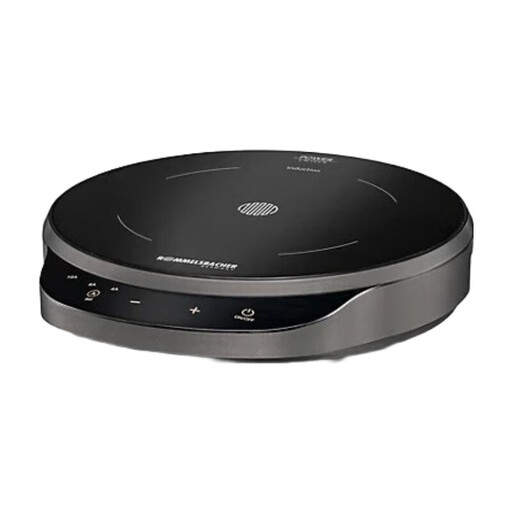
These products are portable induction hobs for a separate cooking area. Before use, check that your pan is suitable for induction and meets the conditions specified for the model.
 No image available
An option for a separate cooking area; check that the base of your pan is magnetic.
The product name lists five power settings and 1000 W.
 No image available
An induction option for a separate cooking area; check that your pan is suitable for induction.
 No image available
The listed settings may be useful if you want to adjust the heat during short toasting sessions.
The product name lists eight power settings, a temperature setting of 60–270 °C, seven cooking programmes and a 3H timer. It also mentions a child lock and cookware measuring 12–26 cm.
 No image available
A single-zone induction option; check that your pan is suitable for induction before use.
The product information warns against using the hob with an empty pan.
 No image available
A single-zone induction option for anyone who wants to adjust the heat while cooking. Check pan compatibility and the model specifications before choosing.
Only if the base is magnetic and the pan is the right size for your chosen model. Milieu Centraal suggests using a magnet as a practical check; for example, Inventum specifies a pan size range of 15–20 cm for the KI120T.
Verstegen recommends briefly toasting whole cumin seeds in a dry pan. Stay with the pan while cooking, as the Fire Service advises, and follow the instructions for your hob on use and any preheating.
Check the house rules and, if necessary, ask your landlord which cooking areas you can use. The Dutch Government notes that house rules can form part of the tenancy agreement; this doesn't automatically mean that cooking outside a designated kitchen is allowed.
In the Netherlands, the seller must offer a solution if a product doesn't meet requirements. According to the Dutch Government, there is no fixed statutory guarantee period; a manufacturer's guarantee is in addition to your statutory rights.