
Cook with an existing tagine
Wants to know whether their tagine is suitable for induction or an electric hob before choosing a hob. The Consumentenbond explains what kind of base induction requires.


Choose a portable induction hob only if your tagine’s instructions say it can be used on induction and its base fits the cooking zone. Induction requires a suitable magnetisable base, as the Consumentenbond explains. If the tagine’s manufacturer does not allow induction but does allow use on an electric hob with a heating element, that may be a better option. Check the heat settings, available power supply and cooling time before choosing a model.
Wants to know whether their tagine is suitable for induction or an electric hob before choosing a hob. The Consumentenbond explains what kind of base induction requires.
Is looking for an adjustable heat source for a slow-cooked dish and pays attention to the controls, timer and pan base. A stated setting or timer alone does not prove how evenly a tagine will simmer.
Wants to be able to put the hob away after use and takes into account the available power supply when other appliances are running at the same time.
First, check whether your tagine can be used on your chosen heat source. Then compare the control options, available space and power supply in your shared kitchen.
| What to consider | What should you check? | Who is this important for? |
|---|---|---|
| Pan compatibility | Check your tagine’s instructions and compare the base size with the cooking zone. | If I want to keep using my existing tagine, I first need to know which heat sources the manufacturer allows. Around 33% of consumers put pan compatibility first. |
| Simmer control | Check the controls and timer for the exact model; a timer or number of settings does not guarantee an even simmer. | For a slow-cooked dish, I want to be able to adjust the heat and follow the cooking instructions for the pan and appliance. Around 27% of consumers give simmer control top priority. |
| Space and power supply | Measure the available worktop space and check the power rating, socket and whether other appliances will be used at the same time. | In a shared kitchen, I want to know where the hob can go and whether the power supply can accommodate it alongside other appliances. Around 20% of consumers check this first. |
| Cleaning and storage | Check the care instructions and, for an electric hob with a heating element, the guidance on cooling down. | If I need to put the hob away after cooking, I want to know when I can clean and store it. Around 20% of consumers make care and storage their top priority. |
Induction requires a suitable base; the word ‘ceramic’ alone does not tell you whether your tagine can be used on induction.
Check the manufacturer’s instructions for your exact tagine model before choosing an induction hob.
You may need a different pan that is suitable for induction.
The Consumentenbond highlights the limitations of freestanding induction hobs with a lower power rating, particularly when several zones or other appliances are used at the same time.
Compare the number of zones you need and the power rating with the available supply. Don’t judge cooking performance by the maximum wattage alone.
Severin’s instructions say to unplug the KP 1091 and let it cool before cleaning.
In a shared kitchen, leave enough space for the hob to cool down as instructed.
The TILLREDA is available as a portable induction hob with one or two zones.
Offers both a portable induction hob and an electric hob with a heating element.
The KP 1091 is a single-zone electric hob with a heating element, not an induction hob.
The ProSlim 2000 is a portable induction hob with stated settings and a specified pan size range.
This selection includes portable induction hobs and an electric hob with a heating element, to suit different tagines and cooking habits. Before buying, check whether the manufacturer of your pan allows you to use it with your chosen heat source.
 Image unavailable
A portable single-zone option if your tagine is suitable for induction and you want to adjust the heat.
The product name lists 1000 W and five power settings. Use induction-compatible cookware.
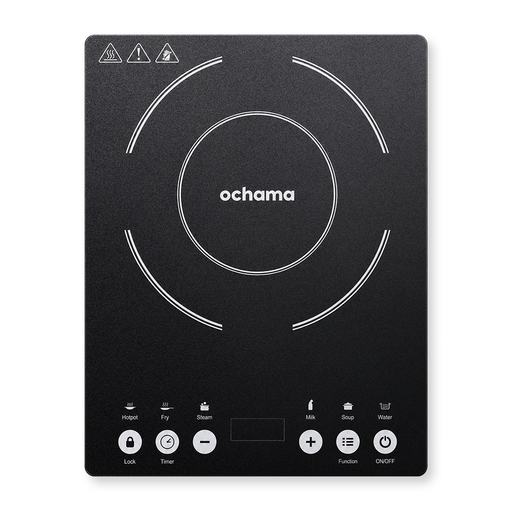 Image unavailable
A portable induction option if your tagine’s instructions allow it to be used on induction.
The product information lists 2000 W, ten heat settings and six functions. Use magnetic cookware only.
 Image unavailable
This may suit you if you’re looking for an induction hob with a stated pan size range and adjustable heat.
The product information lists ten settings, 60–240 °C and a timer of up to three hours. Use induction-compatible cookware with a diameter of 12–26 cm.
 Image unavailable
A portable induction hob for anyone looking for an extra cooking spot and using a tagine with a ferromagnetic base.
The product information lists ten power settings, ten temperature settings from 60–240 °C and a 180-minute timer with automatic switch-off.
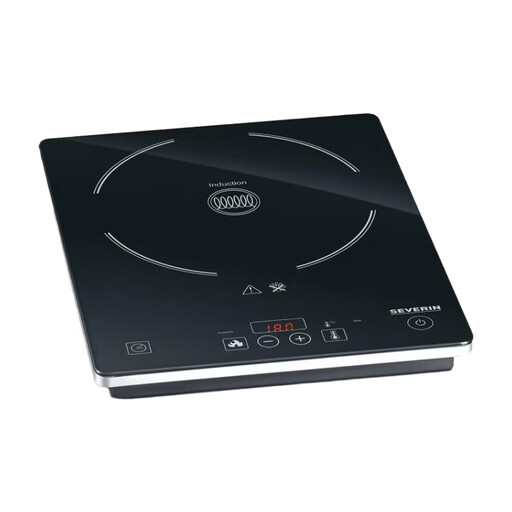 Image unavailable
An alternative to induction if your tagine’s manufacturer allows it to be used on an electric hob with a heating element.
The product information lists 2000 W and continuously adjustable heat. The hotplate gets hot and must be left to cool before cleaning.
Not based on the word ‘ceramic’ alone. Check the instructions for your exact tagine: for example, Emile Henry lists a specific Delight tagine as suitable for induction. Also compare the base size with the cooking zone.
Follow the hob’s instructions and take the load on the shared circuit into account. The Dutch Fire Service advises plugging high-power appliances directly into a socket rather than into an extension lead or cable reel; this is not a product-specific legal connection requirement.
Follow the instructions for your model. IKEA recommends cleaning the TILLREDA with a damp cloth and mild detergent, without abrasive or sharp cleaning tools. For the Severin KP 1091, the instructions say to unplug the hob and let it cool before cleaning.
No. According to the Dutch government, you are entitled to a product that works properly, and the retailer is your point of contact if something goes wrong; there is no fixed statutory guarantee period in the Netherlands. A manufacturer’s guarantee is an additional benefit.
The Netherlands Food and Consumer Product Safety Authority states that CE marking is compulsory for electrical products that fall within the relevant Dutch product category. The marking is the manufacturer’s declaration that the applicable requirements have been met; according to the NVWA, an independent product assessment is not compulsory in itself.