
Tagine cook with their own pot
You want to know whether your particular tagine can be used on an induction or traditional electric hob before choosing one.


Choose an induction hob if the manufacturer says your tagine’s base is suitable for induction. Otherwise, choose a traditional electric hob if your tagine is designed for one. Before buying, check the base of the pan and the cooking zone, the available electrical connection and the CE marking on the specific appliance. An induction hob only works with compatible cookware, and a higher total power rating means you’ll need to pay extra attention to the holiday home’s electrical supply.
You want to know whether your particular tagine can be used on an induction or traditional electric hob before choosing one.
You’re using an unfamiliar electrical connection and want to match the hob’s power rating to what the holiday home can handle, as well as the other appliances running at the same time.
You need room for a stable tagine and want to be able to put the hob away after cooking. The number of cooking zones also affects how many pans you can use at once.
First, check that your tagine is suitable for the heat source. Then check the electrical connection and the space available.
| What to consider | What should you check? | Who should consider this? |
|---|---|---|
| Compatibility with your tagine | Check the instructions for your exact tagine and compare its flat base with the diameter of the cooking zone. | I want to find out first whether I can use my own tagine on induction; around 31% of consumers prioritise pan compatibility. |
| Gentle simmering | Check the adjustable settings and any timer. A timer is no substitute for keeping an eye on the food while it cooks. | If I want to cook my tagine on a low setting for a long time, I focus on the controls; around 31% of consumers prioritise gentle simmering. |
| Electrical connection and power | Compare the stated connected load with the information from your host and the other appliances being used at the same time. | I don’t know how much power the holiday home can supply and want to check in advance; around 23% of consumers prioritise the electrical connection. |
| Worktop space and cooking zones | Measure the stable, clear surface and decide whether you really want to use a second pan alongside the tagine. | With limited worktop space, I want to know whether the hob will fit properly and can be put away; around 15% of consumers prioritise compact storage. |
Even tagines made from the same material can be designed for different heat sources. The Dutch Consumers’ Association explains that induction requires a flat, magnetisable base. Manufacturer Emile Henry also specifies different heat sources for different tagine ranges.
Look up the exact product name and instructions for your tagine before choosing an induction hob.
If your tagine isn’t suitable for the heat source you choose, you may need to use a different, compatible pan.
On a two-zone hob, the total connected load may be higher than the power rating of a single zone. IKEA lists a connected load of 3500 W and an adjustable current setting for its two-zone TILLREDA.
Ask your host about the available electrical connection and check the total connected load of the specific appliance.
Brandweer Nederland warns that a coiled cable reel can heat up and cause a fire.
Follow the instructions for connecting the appliance. Where possible, plug a high-power appliance directly into a socket.
Mestic offers freestanding, single-zone induction hobs, including the MIC-130.
The Tristar KP-6151 is a traditional electric single hob with a cast-iron cooking surface.
The Princess 303010 is a freestanding, single-zone induction hob.
The portable TILLREDA is available with one or two induction zones. The number of zones affects whether you can prepare a side dish at the same time.
The Severin DK 1031 is a portable induction hob with two zones.
These product picks are portable, single-zone induction hobs. Only use them with a compatible pan. Also check the holiday home’s electrical connection and the CE marking on the specific appliance.
 No image available
A single-zone induction hob for a tagine with a suitable, flat and magnetisable base.
Power: 2000 W. The product information lists eight power settings starting at 100 W, a timer of up to three hours and pans with a base diameter of 12–26 cm.
 No image available
A portable, single-zone induction hob for use with a compatible induction pan.
Power: 2000 W. The product name lists ten power settings and a safety lock.
 No image available
This induction hob is designed for use with an induction-compatible pan. Check the base size of your tagine.
Power: 2000 W. The product information lists ten power settings, a timer of up to three hours and pans with a base diameter of 12–26 cm.
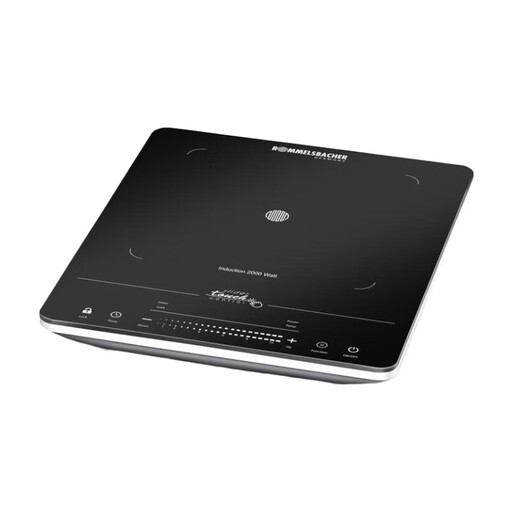 No image available
A portable, single-zone induction hob. Use it only with a compatible induction pan.
The product information lists ten power settings, a timer with automatic shut-off and pans with a base diameter of 12–23 cm.
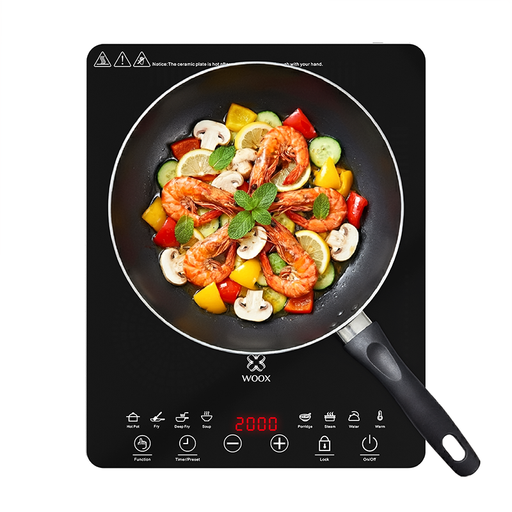 No image available
A portable, single-zone induction hob for pans with a flat, induction-compatible base.
Power: 2000 W. The product name lists eight temperature and power settings, plus a timer.
No, it depends on the specific tagine. Emile Henry describes its Delight range as suitable for induction, while the manufacturer’s Flame tagine isn’t designed for induction. Check the instructions for your exact model. An induction pan needs, among other things, a flat, magnetisable base.
Place the hob on a flat, stable surface and follow the instructions for the specific model. For the TILLREDA model it reviewed, IKEA recommends wiping away marks after use with a damp cloth and mild detergent, then carefully drying the hob. Let the appliance cool down first.
Check that the specific electrical appliance bears the applicable CE marking. The Netherlands Food and Consumer Product Safety Authority explains that, under the relevant rules, CE marking is a legal product requirement for electrical products. The marking is not, by itself, an independent safety test.
Don’t assume that you can. Brandweer Nederland warns that an appliance which burns gas can cause carbon monoxide poisoning if there isn’t enough ventilation. Check the appliance instructions and house rules before considering gas as an alternative.