
Soup makers who simmer for a long time
You want to be able to adjust a low setting and know when a timer will switch the hob off. Looking only at the maximum power won’t tell you how gently the soup will simmer.


Choose a portable hob based on the base and size of your soup pan, and on how easily you can set a low heat; a high maximum power rating doesn’t prove that soup will simmer gently. Induction requires a suitable, flat-based magnetic pan, while a traditional electric hob doesn’t, but stays hot after use. Also check the timer, connection and required safety information for the specific appliance.
You want to be able to adjust a low setting and know when a timer will switch the hob off. Looking only at the maximum power won’t tell you how gently the soup will simmer.
You want to keep using your pan after a trip to the market. So check that its base is flat and the right size, and, if you’re choosing induction, that it’s magnetic and suitable for use on an induction hob.
You’re looking for an extra portable cooking zone and need to decide whether one pan is enough or if you’d like to heat a second pan at the same time.
Choose this option: if your soup pan has a flat, magnetic base that’s compatible with the stated pan size.
Bear in mind: your pan must be suitable for induction; the settings or power rating don’t prove that it will maintain a steady simmer.
Choose this option: if you want to use your existing pan and it turns out not to be suitable for induction.
Bear in mind: the hob stays hot after use and needs to cool down before you clean or put it away.
Choose this option: if you want to use a second pan at the same time as your soup pan.
Bear in mind: a second zone takes up more worktop space; also check the zone sizes and connection.
| What to consider | What to look for | Who it matters to |
|---|---|---|
| Low heat and timer | Check the low settings and the switch-off time for the exact model; a timer doesn’t replace checking on your food as it cooks. | If you want to simmer soup for a long time, you’ll want to adjust the heat. Around 36% of consumers prioritise being able to control the heat while simmering. |
| Your own soup pan | For induction, check that the base is flat and magnetic, and compare its size with the stated pan range. | If you want to keep using the pan you know and trust, it needs to be compatible with the hob. Around 29% of consumers prioritise keeping their existing pan. |
| Space and connection | Check how much worktop space you have and follow the instructions for connecting the hob; it’s best to plug a high-power appliance directly into a socket. | If you’re short on worktop space, you’ll want to know where the hob can be placed safely and which connection you can use. Around 21% of consumers prioritise space and connection. |
| Using two pans at once | Check whether the zones can be controlled separately and whether their sizes and the total connected load are suitable for your pans and how you plan to use them. | If you want to cook something else while your soup is simmering, two zones are worth considering. Around 14% of consumers prioritise cooking with two pans at the same time. |
A power rating doesn’t tell you how low or steady the heat will be in your pan. Consumentenbond assesses simmering separately.
Compare the low heat settings and timer on the exact model. Don’t treat a manufacturer’s settings as an independent cooking test.
With induction, a flat base and a suitable size matter too. You may need a different pan if the base isn’t the right size for the cooking zone.
Measure the base of your soup pan and compare it with the stated pan range before choosing an induction hob.
If your pan isn’t compatible, you may need a different one.
A second zone is useful if you use it at the same time, but it takes up more worktop space and has specific connection requirements.
Choose two zones only if cooking at the same time is worth the larger set-up for you. Check the size of both zones and the total connected load.
In the Netherlands, the retailer is your point of contact if a product is faulty. Rijksoverheid says there’s no fixed statutory guarantee period.
Keep your proof of purchase and product information. Consider what a paid-for extended guarantee offers beyond your existing statutory rights.
The KI120T is a single-zone induction hob worth comparing for pan size, settings and timer.
The 303010 is a single-zone induction hob with adjustable temperature, power and timer.
The KP 1071 is an induction option; the KP 1091 is a non-induction single-zone hob for anyone who wants to use a pan that doesn’t work on induction.
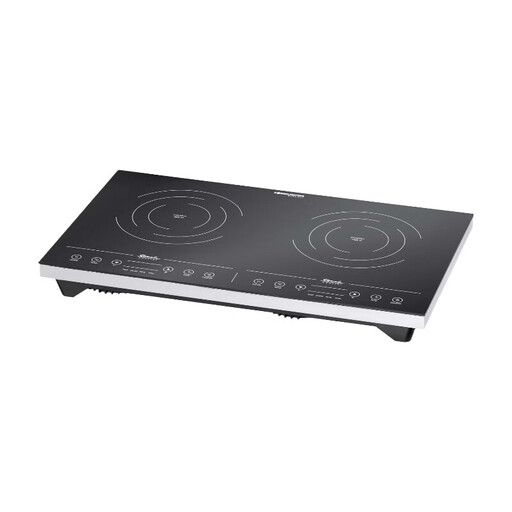
The KP-6245 is a non-induction double hob for anyone who wants to use a second pan while their soup is simmering.
These product picks are portable induction hobs for one or two pans. NVWA states that electric hobs placed on the market in the Netherlands as new consumer products must meet the applicable safety requirements and carry the required CE marking; check the marking and product information for the specific appliance.
 No image available
A portable induction hob with one cooking zone and temperature control, for anyone who wants to use one induction-compatible pan.
Stated power: 2100 W. The pan must be suitable for induction.
 No image available
The stated soup function and 10 heat settings are useful features if you want to make soup on a portable cooking zone.
Stated power: 2000 W. The pan must be suitable for induction.
 No image available
The cooking zone is stated to suit pans with a diameter of 12–26 cm; compare this range with the base of your soup pan.
Adjustable power: 200–2000 W with 10 settings. Stated temperature: 60–240 °C; timer up to 3 hours. The pan must be suitable for induction.
 No image available
A portable induction cooking zone for one pan; check that your soup pan is suitable for induction.
Stated temperature: 60–240 °C. The description lists 10 power settings and a timer of up to 99 minutes.
 No image available
With two cooking zones, you can use a second induction pan while your soup pan is on; bear in mind that a double hob takes up extra space.
Stated zone power: 1400 W and 2000 W. The description lists 10 settings, a temperature range of 60–240 °C and a 180-minute timer.
Check that the pan has a flat, magnetic base and that its size falls within the hob’s stated pan range. A suitable material alone isn’t enough if the base doesn’t sit properly over the zone.
No. A timer sets a switch-off time, but doesn’t prove that the soup will keep simmering properly in the meantime. Inventum says the KI120T also switches off after 3 hours if no timer has been set; check the pan while cooking and follow the instructions.
Follow the instructions for the exact model when connecting and setting up the hob. Brandweer advises plugging high-power appliances directly into a socket rather than using a multi-socket adaptor or cable reel. Let a heated hob cool down before cleaning or putting it away.
Yes, if it’s an electric consumer product for which the marking is required. NVWA states that electrical products must meet the applicable safety requirements and carry the required CE marking. Check the marking and product information for the specific appliance; on their own, they don’t tell you how well it simmers.
Voedingscentrum advises cooling leftover split pea soup with bacon and sausage quickly, storing it covered in the fridge and not leaving it out of the fridge for more than 2 hours. For this dish, Voedingscentrum recommends keeping it for 2 days in the fridge or 3 months in the freezer; check the relevant advice for a different recipe.