
Cooking with one small saucepan
You want to make one small portion and are mainly concerned with the size of your pan and how easily you can turn down the heat.


If you’re cooking one small portion of mushroom sauce, start with the base of your saucepan. For induction, it must be suitable and fall within the hob’s stated size range. Then compare the low heat settings, the space available on your worktop and the electrical connection. A conventional electric hob may be suitable if you want to keep using your current pan, but the cooking zone itself gets hot. The number of settings doesn’t tell you how evenly a particular sauce will simmer.
You want to make one small portion and are mainly concerned with the size of your pan and how easily you can turn down the heat.
You want to keep using your current pan. For induction, its base must be suitable and fall within the hob’s size range.
You need a temporary cooking spot and want to weigh up the dimensions, electrical connection and, possibly, whether you’ll use a second pan at the same time.
Suitable if: you use one induction-compatible saucepan that falls within the stated size range.
Consider: check the chosen model’s pan detection, low heat settings and electrical connection.
Suitable if: you want to use a pan that isn’t induction-compatible and has a base that fits the heating zone well.
Consider: the hob itself gets hot, so check the instructions for use and cooling as well.
Suitable if: you regularly use a second pan at the same time as making the sauce.
Consider: two zones take up more space. The Consumentenbond recommends considering the available power and using appliances at the same time on the same circuit when choosing a freestanding hob.
Suitable if: using a naked flame in your intended location is safe and you can follow the appliance instructions and ventilation requirements.
Consider: a naked flame and combustion gases require care; this isn’t a standard recommendation for a small indoor kitchen.
| What to consider | What to look for when buying | Who is this most important for? |
|---|---|---|
| A suitable saucepan | Measure the base of the pan and compare it with the size range of the exact hob. For model 2000 (239230), HENDI specifies a range of ø120–260 mm; also check that the hob detects the pan. | I want my small saucepan to be detected by the hob and fit within the zone. Around 36% of consumers put choosing the right pan size first. |
| A gentle simmer | Compare the controls and low heat settings. The number of power settings doesn’t measure the simmering result. | If I want to keep the sauce on a low heat after warming it, I focus on the controls. Around 29% of consumers say gentle simmering is their main buying priority. |
| Using a pan you already own | First check whether the base of the pan is suitable for induction. According to Tristar, the Tristar KP-6185 has a conventional 15 cm cooking zone. | I want to keep using my current pan, so I first look at the heating technology. Around 21% of consumers prioritise keeping a pan that isn’t induction-compatible. |
| Space and electrical connection | Check the dimensions, socket and use of other appliances on the same circuit at the same time. The Consumentenbond highlights the electrical connection as something to consider with freestanding hobs. | If I have limited worktop space or share an electrical connection, I want to know in advance whether the hob will fit in practice. Around 14% of consumers say placement and connection are decisive factors. |
With induction, the base and pan detection matter; a small pan may fall outside the hob’s size range.
Measure the base and compare it with the stated size range for the exact model. Bear in mind that you may need a different pan.
The number of settings doesn’t tell you how a small portion of sauce will cook on a low heat.
Compare the low heat settings and controls, but don’t treat the number of settings as proof of a particular cooking result.
A second zone takes up extra space. You may also need to consider the available power and using appliances at the same time on the same circuit.
Check the dimensions, power rating and instructions. Choose two zones mainly if you often use a second pan at the same time.
According to Rommelsbacher, the CT 2010/IN has a glass-ceramic surface but uses induction to heat pans.
Check the heating technology and the type of pan required, not just the surface material. With induction, you’ll need a suitable pan.
According to CASO Design, the PRO Menu 2100 is a portable, single-zone induction hob for pans measuring 12–24 cm.
According to HENDI, the Kitchen Line model 2000, code 239230, is a portable induction hob with a specified pan base size of ø120–260 mm.
Tristar offers both the conventional electric KP-6185 and the separate induction model IK-6161.
According to SEVERIN, the DK 1031 is a portable induction hob with two zones.
According to Rommelsbacher, the CT 2010/IN is a single-zone induction hob with ten power settings.
This selection includes portable single-zone hobs for a saucepan, a conventional electric model for anyone wanting to use a pan that isn’t induction-compatible, and a two-zone induction model for anyone who uses a second pan at the same time.
 No image available
An option for one saucepan if you use an induction-compatible pan.
1000 W; five power settings.
 No image available
An induction option for a small saucepan, provided its base falls within the stated range.
2000 W; pans measuring 12–26 cm; ten power settings; stated temperature range 60–240 °C; timer up to three hours.
 No image available
A single-zone induction hob for one saucepan. Use a suitable pan with a base that falls within the stated range.
Pan base size 12–23 cm; ten power settings; 180-minute timer with automatic shut-off.
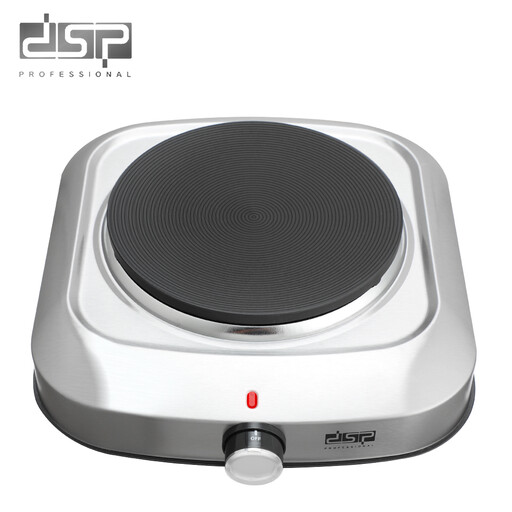 No image available
A conventional electric option if you don’t want to use an induction-compatible pan.
1500 W; 185 mm hotplate; five-setting control dial. The hob itself gets hot.
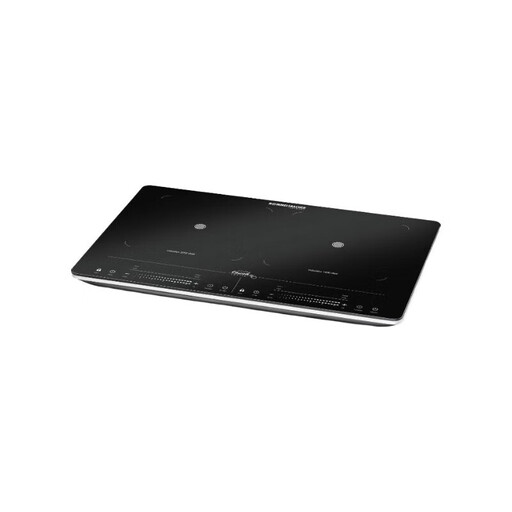 No image available
An option if you want to use a second pan at the same time as making the sauce and have enough worktop space.
Two independently controlled induction zones; pans up to 260 mm; ten power settings; dimensions 56 × 36 cm. Use induction-compatible pans.
Check that the base is suitable for induction and measure it. Compare the size with the range for the exact hob: a suitable material alone isn’t enough if the pan falls outside that range.
No, that isn’t necessarily true for every model. According to the Consumentenbond, most freestanding hobs can be used with an earthed socket, but check the power rating and instructions for your chosen hob. Also consider other high-power appliances on the same circuit.
Follow the instructions, switch the hob off after use and let hot parts cool before cleaning or putting the hob away. The Dutch fire service recommends plugging high-power appliances directly into a socket rather than using a multi-socket adaptor or cable reel.
If there’s a fault, contact the seller. According to ACM ConsuWijzer, they must resolve an issue with a product covered by the terms of the statutory guarantee at no cost to you, for example by repairing or replacing it, or giving you a refund. The exact solution depends on the circumstances.
No. The Dutch government says you can continue cooking with gas for the time being. That doesn’t mean every portable gas hob is safe to use in every location; follow the appliance instructions and bear in mind the naked flame and combustion gases.