
You roast small quantities
You use a small pan for ingredients such as cumin or coriander seeds and want to know whether the cooking zone will recognise it. The Netherlands Nutrition Centre describes roasting these spices in a dry pan.


Start by checking the diameter of your pan base and the space available around the hob, rather than focusing on the maximum power. Induction is suitable if your pan is compatible and falls within the size range for the model you choose. If you want to keep using your existing non-induction pan, compare traditional electric and ceramic hobs, and bear in mind that they retain heat after use.
You use a small pan for ingredients such as cumin or coriander seeds and want to know whether the cooking zone will recognise it. The Netherlands Nutrition Centre describes roasting these spices in a dry pan.
You’re looking for a single-ring hob that you can put away, but you also need to leave enough room for positioning and ventilation while cooking. The Inventum manual sets out specific requirements for the KI120T.
You want to check in advance whether your current pan is suitable for induction, or would rather choose an electric hob that doesn’t depend on induction compatibility. The Consumers’ Association points out that an induction hob may not recognise a pan that is too small.
When roasting small quantities of whole spices, check the base of your pan first. Then make sure you can position the hob safely on your worktop.
| What to consider | What to look for | Who is this important for? |
|---|---|---|
| Pan fits the cooking zone | Measure the flat base of your pan; check that it’s induction-compatible and falls within the size range for the exact model. | If I use a small spice-roasting pan, I want to know whether the induction zone will recognise its base. Around 33% of consumers prioritise pan compatibility. |
| Positioning and storage | Compare the external dimensions with your worktop and follow the model’s ventilation and positioning instructions. | With limited worktop space, I want to be able to put the hob away after use without losing the clearance needed while cooking. Around 27% of consumers give positioning and storage top priority. |
| Existing pans | Check the base and diameter, then compare the pan with the cooking zone of an electric or ceramic hob. | If I want to keep using my current pan, I don’t want to find out afterwards that it isn’t suitable for induction. Around 20% of consumers prioritise keeping their existing pans over other buying considerations. |
| Heat and connection | Read the instructions on cooling and check what type of connection the appliance you choose requires. | I want to let the hob cool down safely after roasting and connect it correctly. Around 20% of consumers give safe use and connection top priority. |
An induction hob may not recognise a small or incompatible pan, even if the hob has a high power rating.
Measure the base of your pan and compare it with the range specified by the manufacturer for the exact model. Also check that your pan is suitable for induction.
You may need a different pan that’s compatible with induction.
Ventilation and positioning requirements may mean you need extra space. The Inventum KI120T manual requires at least 10 cm of clearance at the sides and back, and warns against using it in small spaces.
Measure the available space, including the clearance required by the manual for the model you choose. The KI120T won’t necessarily suit every small kitchen.
Traditional electric and ceramic hobs heat the cooking zone itself. A residual-heat indicator doesn’t mean the hob is safe to touch.
Switch off the hob and let it cool according to the instructions before touching, cleaning or putting it away.
The Touch 2000 is a single-ring induction hob for comparing the size of a small spice-roasting pan with the model’s stated range.
The KP-6191 is a traditional electric single-ring hob with a rotary control, for anyone who doesn’t want induction compatibility to be a requirement.
The CT 2203/TC is a ceramic, non-induction single-ring option with a dual-ring cooking zone.
The KP 1071 is a single-ring induction hob to compare for its external dimensions, plug and controls.
The KI120T is a single-ring induction hob for pans with a stated diameter of 15–20 cm.
This selection features freestanding single-ring hobs for use on your worktop: mainly induction models and one ceramic option. For induction hobs, always check that your pan base is compatible and falls within the size range for the model you choose.
 Image unavailable
A portable induction zone for small cooking tasks. Check the manual to see whether your spice-roasting pan is compatible with this model.
Use an induction-compatible pan; the glass surface may be hot during or after use.
 Image unavailable
A portable single-ring induction hob. Its stated pan size range lets you check in advance whether it’s suitable for the base of your spice-roasting pan.
Use only induction pans with a flat base that fall within the stated range; the surface can get hot.
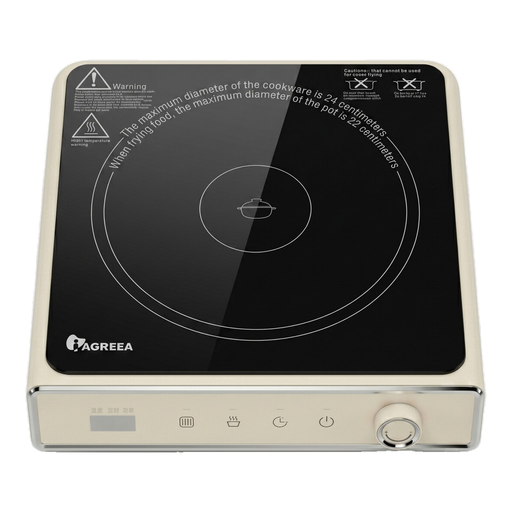 Image unavailable
A non-induction ceramic option if you want to keep using an existing pan. Check the instructions for guidance on compatibility and use.
The hob and its surface can get hot. Let the appliance cool down before cleaning it.
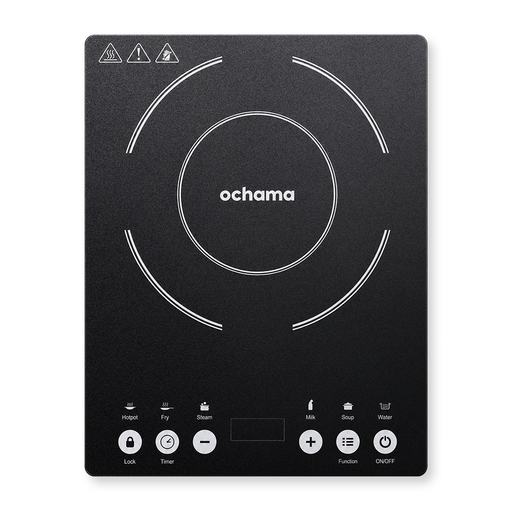 Image unavailable
A portable single-ring option for an extra cooking zone. Check whether this model will recognise your small pan.
Works only with magnetic, induction-compatible cookware.
 Image unavailable
A single-ring induction hob with a stated cooking zone of Ø 26 cm. Check whether this model will recognise your small pan.
Use induction-compatible cookware with a flat base and don’t heat an empty pan.
Yes, you can roast spices without oil in a suitable pan. The Netherlands Nutrition Centre describes roasting cumin and coriander seeds in a dry pan until fragrant. Don’t heat the hob without a pan, and follow the appliance instructions.
Check that the base of your pan is suitable for induction and compare its size with the range for the exact model. The Consumers’ Association warns that a pan that’s too small may not be recognised.
According to the Consumers’ Association, most freestanding induction hobs only need an earthed socket. Check the plug, connection and manual for the model you choose; this won’t necessarily apply to every appliance.
The Netherlands Food and Consumer Product Safety Authority states that electrical products placed on the market in the Netherlands must carry the CE marking. A CE marking is the manufacturer’s declaration of conformity and, on its own, doesn’t prove that a specific item has been independently tested.