
Making custard in a small saucepan
You’re making one portion and want to know in advance whether the hob will recognise your pan’s base.


Start by checking whether your small saucepan will work on the hob and whether you can adjust the heat as you stir. Induction responds quickly, but requires a suitable pan with the right base size. Ceramic and cast-iron hobs may suit you if you prefer a different cooking method, but bear in mind that they retain heat. Follow your recipe, too: the egg custard recipe we consulted says not to let the mixture boil, while a custard powder recipe calls for a brief, gentle boil.
You’re making one portion and want to know in advance whether the hob will recognise your pan’s base.
You want to be able to adjust the heat as you stir, especially when making egg custard that must not boil according to your chosen recipe.
You’re looking for a separate cooking zone, but you’ll also need a stable place to set the hob down safely and let it cool.
Suitable if: your saucepan is induction-compatible and its base meets the size requirements of the specific model.
Bear in mind: the hob’s set temperature is not automatically the temperature of the custard. Keep stirring and follow the recipe.
Suitable if: you want a cooking zone that doesn’t rely on induction-compatible pans and that suits the size of your pan.
Bear in mind: the Rommelsbacher model we consulted has a residual heat indicator. Check the size and features of the model you choose.
Suitable if: you want to use a compatible pan you already own and prefer simple dial controls.
Bear in mind: a conventional electric hob heats up more slowly and stays hot for longer, so adjust the heat in good time.
Whichever option you choose, check the size of your pan and the cooking zone, how the hob is controlled, and where you can leave it to cool after use.
| What to consider | What should you check? | Who is this important for? |
|---|---|---|
| Gentle heating | Compare the low settings and controls on the exact model. Follow the recipe and keep stirring. | When making egg custard, I want to be able to adjust the heat as I stir; around 36% of consumers put gentle heating first. |
| Using a small saucepan | Check your pan’s material and base diameter against the manual for the model you’re considering. | I want to use my existing small pan and know in advance whether it will be recognised; around 29% of consumers prioritise pan compatibility. |
| Positioning and safe use | Compare the hob’s external dimensions with a suitable, stable surface, and keep flammable materials away from the cooking area. | With limited worktop space, I want enough room for the hob and a hot pan; around 21% of consumers put positioning first. |
| Controls and aftercare | Check how to adjust the heat and what terms the retailer and manufacturer offer. | I want to adjust the heat easily and know who to contact if something goes wrong; around 14% of consumers prioritise easy controls and aftercare. |
Even an induction-compatible pan may be too small for a particular hob to recognise.
Check both the material and the minimum pan size in the manual for the exact model.
You may still need a pan that is compatible with the hob.
A setting on the hob doesn’t tell you what temperature a small amount of custard reaches in the pan. When making egg custard, follow your chosen recipe to prevent the mixture from boiling.
Stir and follow the recipe. Only use a suitable kitchen thermometer if the recipe calls for one.
A conventional electric hob may stay hot after it’s switched off. The ceramic model we consulted has a residual heat indicator.
Leave a suitable space for it to cool, and follow the cleaning and storage instructions for the model you choose.
For an overview of a portable induction hob, the IK-6178, and a compact cast-iron hob, the KP-6185.
For comparing the KP 1071 induction hob with the conventional single-hob KP 1091.
For an overview of the portable S-Line 2100 induction hob if you’re looking for several power settings.
For an overview of the portable ceramic CT 2200/E as an alternative if you’d rather not rely on induction-compatible pans.
These product picks focus on portable cooking zones for preparing a small portion. Check that your pan and cooking method are suitable for each model.
 No image available
May suit you if you want to adjust the heat in steps as you stir. Use induction-compatible cookware only.
The product name lists 2000 W, 10 power settings, a Ø 26 cm cooking zone and a timer.
 No image available
Consider this model if you’re looking for a portable cooking zone. Before buying, check that it suits your pan and cooking method.
 No image available
May suit you if you’re looking for a portable cooking zone. Check the cooking method and pan compatibility for this exact model.
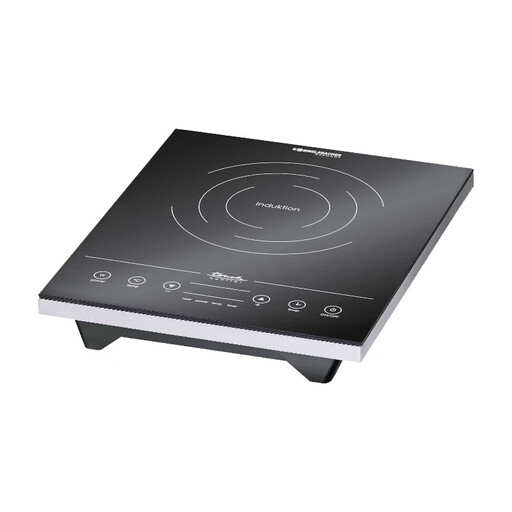 No image available
Consider this model if you need a portable cooking zone. Compare your pan size and cooking method with the specifications for the exact model.
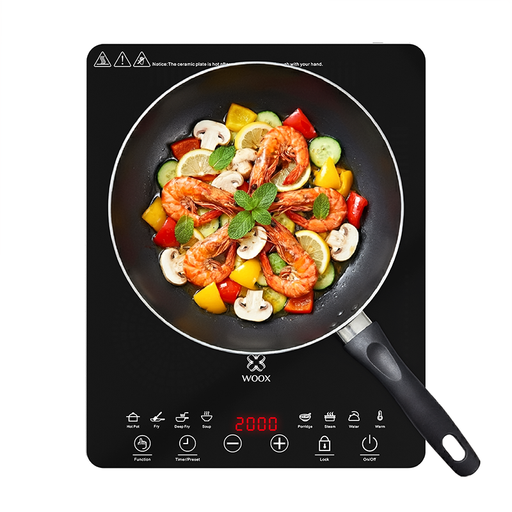 No image available
May suit you if you’re looking for a portable induction hob. Your pan must be induction-compatible.
The product name lists 2000 W and eight temperature and power settings.
Not according to the egg custard recipe we consulted from Albert Heijn Allerhande: thicken the mixture over a low heat without letting it boil, and stir occasionally. A custard powder recipe we consulted, on the other hand, says to bring the mixture to a brief, gentle boil. So follow the method in your recipe.
Check that the base is magnetic, then compare its diameter with the minimum pan size in the manual for the exact hob. Milieu Centraal explains that induction pans need a magnetic layer; the minimum size varies by model. For example, CASO lists a suitable pan diameter of 12–24 cm for the S-Line 2100.
Use a suitable, stable surface and keep flammable materials away from the cooking area. Brandweer Nederland advises staying nearby while cooking. If the hob stays hot, let it cool before cleaning or putting it away, and follow the instructions for your model.
In the Netherlands, if you use the product normally and it doesn’t meet what you could reasonably expect, you can claim your statutory guarantee from the retailer. ACM ConsuWijzer explains that if a purchase breaks sooner than you could reasonably expect, the retailer must resolve the problem free of charge. A manufacturer’s or retailer’s guarantee does not replace your statutory rights.
Applicable product safety rules apply to mains-powered electrical equipment. Business.gov.nl states that manufacturers must affix the required CE marking and draw up an EU declaration of conformity where the rules require it. According to Business.gov.nl, CE marking is not an independent quality mark.