
Looking for an extra cooking zone
You want one portable cooking zone and need to adjust the heat while stirring rice pudding. Uit Paulines Keuken recommends stirring regularly to stop the rice sticking to the bottom of the pan.


For rice pudding, a separate hob with adjustable heat is a good choice if you can keep stirring while it cooks; a timer won’t do that for you. Choose a single induction zone if your pan has a magnetic base and is within the hob’s specified size range, or consider two zones if you want to cook another dish at the same time. Also check the connection, the space available and the product marking applicable to the version you’re buying.
You want one portable cooking zone and need to adjust the heat while stirring rice pudding. Uit Paulines Keuken recommends stirring regularly to stop the rice sticking to the bottom of the pan.
You want to check whether your current pan’s base and size are suitable before choosing induction. Milieu Centraal recommends using a pan with a magnetic base on an induction hob.
You want to make rice pudding and another dish at the same time. The number of cooking zones, total connected load and available worktop space all matter.
Choose this option: if you’re only making rice pudding on the extra hob and your pan has a magnetic base.
Bear in mind: the pan size must suit your chosen model. For example, Inventum specifies 15–20 cm for the KI120T.
Choose this option: if you want to cook another dish alongside the rice pudding, using pans that are suitable for induction.
Bear in mind: the total connected load of a freestanding induction hob may limit how many zones you can use at once, as Consumentenbond points out.
Choose this option: if you want to use a pan that isn’t suitable for induction, or need two separately adjustable zones.
Bear in mind: with the Severin DK 1042, the hob itself heats up. Take care around the hot surface and check the connection requirements for this specific model.
| What to consider | What to check before buying | Who should pay particular attention? |
|---|---|---|
| Adjusting the heat and stirring | Check the heat settings and controls; a timer won’t automatically stop rice sticking to the bottom of the pan. | If I want to adjust the heat while stirring, I look at the controls and keep stirring the pudding regularly. Around 31% of consumers say gentle heating is their main reason for buying. |
| Pan suitability and size | For induction, use a magnet to check whether the base is magnetic, then compare its diameter with the size range specified for your chosen model. | I want to keep using my existing family-sized pan, so I check its base and size first. Around 25% of consumers put pan compatibility first. |
| Cooking two dishes at once | Check the number of zones, the total connected load and the space available on your worktop. | If I want to cook another dish as part of a family meal, I check that there are enough zones and sufficient connected load. Around 19% of consumers give cooking simultaneously their highest priority. |
| Connection and positioning | Follow the instructions for connection and ventilation clearance, keep flammable items away and check the product marking applicable to the exact version. | I want to be able to connect and position the hob safely, following the instructions. Around 25% of consumers put connection and positioning first. |
A timer won’t stir the pudding for you. Uit Paulines Keuken warns that rice can stick to the bottom of the pan if you don’t stir regularly.
Choose controls that let you adjust the heat, use a suitable pan and stay nearby while cooking.
With induction, the pan base must also be magnetic. What’s more, a stated diameter range applies only to the model it refers to.
Check the base with a magnet and measure the bottom of your pan before choosing a hob. Compare the measurement with the specifications for that exact model.
Consumentenbond points out that freestanding induction hobs with a low total connected load may have limitations when several zones are set to a high heat at once.
Compare the total connected load and connection requirements with what you want to cook at the same time. Assess a non-induction hob against its own specifications.
The KI120T is an example of a single-zone portable induction hob for making rice pudding in an extra pan.
The IK-6178 is a single-zone induction model with separate settings for power and temperature.
The DK 1042 is an example of a two-zone cast-iron hob without induction; the DK 1031 is a two-zone induction model.
The 303010 is a single-zone induction option if you’re looking for an extra portable cooking zone.
This selection includes portable hobs with one or two zones, both induction and non-induction, for making rice pudding and family meals.
 No image available
A single-zone option if you want to adjust the heat while stirring and your pan is suitable for induction.
The product name lists 2000 W, an XL cooking zone of Ø 26 cm and ten power settings. Check that your pan has a flat, magnetic base and falls within the stated range of 12–26 cm.
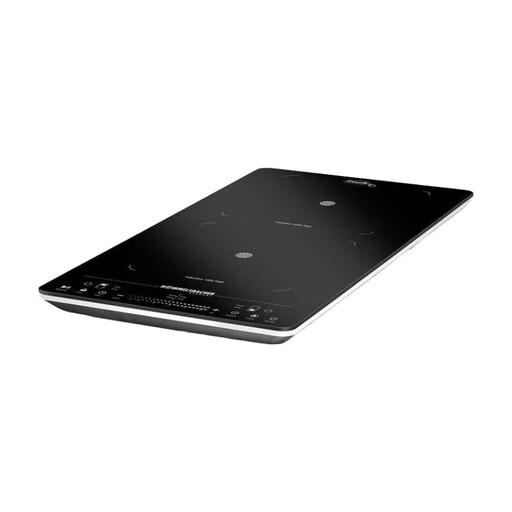 No image available
A two-zone induction option if you want to cook a second dish alongside the rice pudding and both pans are suitable for induction.
Use pans with flat, magnetic bases; the stated diameter range is 120–260 mm. Also check that the total connected load is suitable for using both zones at once.
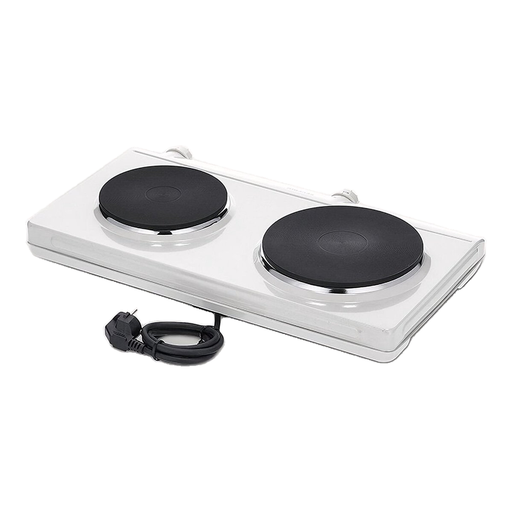 No image available
A non-induction hob if you want to use two zones or have a pan that isn’t suitable for induction.
The product name lists two cooking zones and 2500 W. Severin describes the DK 1042 as a cast-iron hob with separate temperature controls. The hob surfaces get hot; don’t leave the appliance unattended.
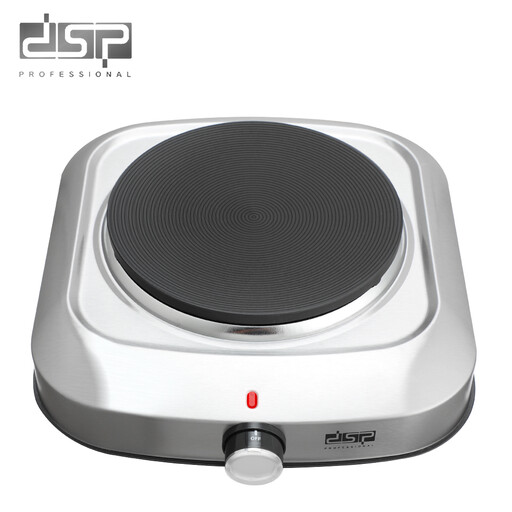 No image available
A portable single-zone option if you want to adjust the heat using a temperature control knob.
The product name lists 1500 W and an adjustable temperature. The hob gets hot during use.
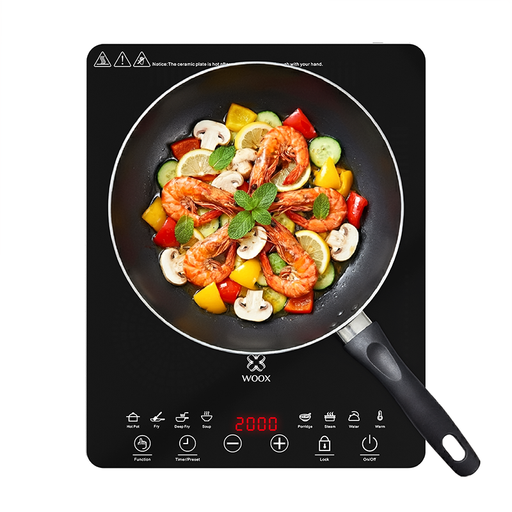 No image available
A single-zone option if you want to adjust the heat while cooking and your pan is suitable for induction.
The product name lists 2000 W, eight power settings and eight temperature settings. Use induction-compatible cookware only.
No, a temperature display isn’t essential. It’s more important that you can adjust the heat and stir the pudding regularly. A stated temperature setting doesn’t guarantee that the rice and milk won’t stick to the bottom of the pan.
Yes, if the base is magnetic and its diameter falls within the range specified for your chosen model. Milieu Centraal recommends checking that the base is suitable for induction. Inventum specifies 15–20 cm for the KI120T in particular; that range doesn’t automatically apply to other hobs.
Stay nearby while cooking, even when a timer is running. The Brandweer recommends plugging high-power appliances directly into a socket rather than using an extension lead or cable reel. Also follow the connection and ventilation instructions for your model.
According to ACM ConsuWijzer, the seller is responsible for providing an appropriate solution free of charge if a product fails to meet what you could reasonably expect during normal use. There isn’t one fixed warranty period in the Netherlands that applies to all appliances.
For electrical equipment covered by the Warenwetbesluit elektrisch materiaal (Dutch Commodities Act Decree on Electrical Equipment), the Nederlandse Voedsel- en Warenautoriteit (Netherlands Food and Consumer Product Safety Authority) sets out the applicable safety requirements and required CE marking. This applies subject to the relevant conditions; check the marking and product information for the exact version. A CE mark is not an independent test of how well the hob cooks rice pudding.