
Cooking small portions of stew
You want to gently simmer red cabbage with apple after reheating it, and be able to adjust the heat. Compare the controls and timer, but don’t treat the stated settings as proof that the food will cook evenly.


Start with your pan: induction is only suitable if the base is compatible and falls within the hob’s specified pan size range. If your pan is not induction-compatible, compare a cast-iron or ceramic electric hob instead. Then consider the low-heat controls, pan size, space required and power connection. The wattage or selected temperature alone won’t tell you how evenly red cabbage will simmer in your pan. Before buying, check the CE marking and instructions for the exact model.
You want to gently simmer red cabbage with apple after reheating it, and be able to adjust the heat. Compare the controls and timer, but don’t treat the stated settings as proof that the food will cook evenly.
You want to keep using your small pan. The base’s compatibility and diameter determine whether induction is practical; if not, you could compare a conventional electric hob. Consumentenbond explains that induction pans need a magnetisable base.
You’re looking for a portable hob that you can put away after use. Measure the full amount of space you’ll need, including the ventilation clearance specified in the instructions for your chosen model.
Suitable if: your pan has a compatible magnetisable base and falls within the model’s specified pan size range.
Bear in mind: an incompatible pan won’t work on induction. Also check the specified ventilation clearance and low-heat controls.
Suitable if: you want to keep using a pan that isn’t induction-compatible and its base fits the hotplate.
Bear in mind: Rommelsbacher says cast iron heats up more slowly than induction and retains heat for longer. Allow for this residual heat if you want to slow down the simmering.
Suitable if: you don’t want to use an induction pan and are looking for a smooth cooking surface.
Bear in mind: the cooking surface heats up itself and may stay hot after you switch it off. Rommelsbacher lists a 180 mm cooking zone and variable control for the CT 1800/E.
| What to consider | What should you check? | Who is this important for? |
|---|---|---|
| Controllable simmering | Compare low power settings, controls and the timer; keep an eye on your first few cooking attempts with your own pan. | If I want to simmer a small portion gently, I need to be able to adjust the heat and keep an eye on the cooking. Around 36% of consumers prioritise controllable heat for simmering. |
| Pan compatibility | Check whether the base is magnetisable and compare its diameter with the range specified for the exact model. | Anyone wanting to keep using their current pan should check that it’s suitable for the cooking technology and cooking zone. Around 29% of consumers give pan compatibility top priority. |
| Space for use and storage | Measure the space as directed in the instructions, including the ventilation clearance required for the model. | If I have limited worktop space, I want to know in advance how much room the hob will take up when in use. Around 21% of consumers focus mainly on the space needed while the hob is set up. |
| Power connection and safe use | Check the power connection, instructions and CE marking for the exact model, and keep flammable materials away. | If you’re mainly concerned with the connection and safe positioning, compare the product information with the space and power supply available. Around 14% of consumers say this is their main buying concern. |
The Netherlands Food and Consumer Product Safety Authority states that CE marking is compulsory for electrical products covered by the relevant rules. The manufacturer declares that the product meets these requirements; CE marking is not the same as an independent inspection of every individual item.
A smooth surface can also be found on a ceramic radiant hob. Only an induction hob requires a compatible pan base.
First check the heating technology, then compare your pan’s base and diameter with the model’s instructions.
If your pan isn’t suitable for induction, you may need a different pan.
Product specifications describe the hob, not the measured temperature distribution in your pan of red cabbage.
Compare the control options and keep an eye on your first few cooking attempts. Use your own pan to find the setting that gives a gentle simmer.
The instructions for a model may specify extra clearance for ventilation.
Measure the entire space where you’ll set it up and follow the clearances in the instructions for the exact model.
Models with similar names can differ in their cooking technology or controls.
Before ordering, compare the full model number, technology and controls on the product page with the manufacturer’s information.
The KI120T is a single induction hob worth comparing if you’re looking for a small-pan option with a timer.
The 303010 is a single induction hob to compare with other models that offer adjustable controls.
The KP-6185 is a compact conventional electric hob with a cast-iron hotplate.
The CT 1800/E is an example of a ceramic radiant hob; the CTA 1800/IN is a separate induction model.
The KP 1091 is a conventional electric hob; the KP 1071 is a separate induction model.
These product selections are portable single induction hobs. For the exact model, check the mandatory CE marking, compatible pan base, pan size and specified clearance around the hob.
 No image available
The five power settings suit anyone who wants to adjust the heat while cooking; your pan must have a magnetisable base.
The product name lists 1000 W.
 No image available
The adjustable power settings and timer may be useful if you want to control the heat and cooking time while simmering.
The product description lists 8 power levels, temperature control from 60–270 °C and a timer of up to 3 hours with automatic shut-off. According to the description, suitable cookware has a flat, induction-compatible base measuring 12–26 cm.
 No image available
The adjustable settings and timer are worth comparing if you want to control the heat and cooking time for a small dish.
The product name lists 2000 W and 10 power settings. The product description mentions a timer of up to 3 hours and cookware with a magnetic base.
 No image available
This model may suit anyone looking to compare several heat settings and a timer; use a pan with a compatible ferromagnetic base.
The product name lists 2000 W and 10 power settings. The product description mentions a pan size range of 12–26 cm and a timer of up to 3 hours with automatic shut-off.
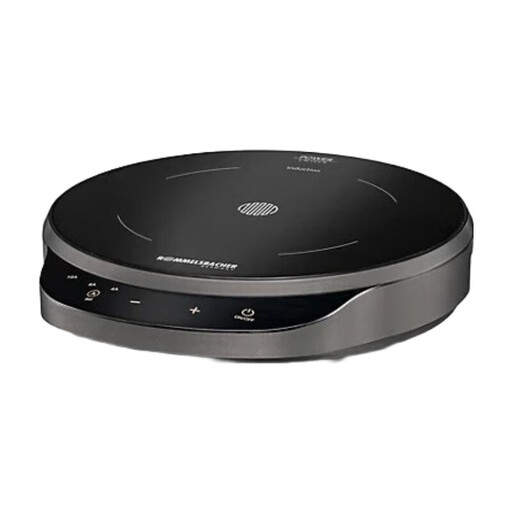 No image available
This induction model is worth comparing if you have a small induction pan and want to be able to adjust the power.
The product description lists 9 power levels, pan detection and a residual heat indicator. The specified pan size is 12–20 cm; the pan base must be flat and induction-compatible.
Yes, if the pan base is magnetisable and its diameter falls within the range specified for the exact model. Inventum lists a pan size of 15–20 cm for the KI120T. If your pan isn’t suitable for induction, compare a conventional electric hob.
No. Follow the instructions for a stable, heat-resistant surface and the specified clearance around the hob. For the KI120T, Inventum requires at least 10 cm of space at the sides and back; this clearance doesn’t automatically apply to other models.
No. A timer or automatic shut-off doesn’t replace the Fire Service’s advice to stay nearby while cooking and keep flammable materials away.
The Netherlands Food and Consumer Product Safety Authority states that CE marking is compulsory for electrical products covered by the relevant rules. The marking is the manufacturer’s declaration that the product meets the applicable requirements; it doesn’t mean that every individual item has been independently inspected. Check the marking and product information for the exact model.
Cool leftovers quickly, store them in a sealed container and don’t leave them out of the fridge for more than two hours. Voedingscentrum recommends keeping opened, cooked red cabbage for two days in the fridge or three months in the freezer. If it’s in an unopened pack, follow the storage instructions on the packaging.