
Quick one-pan cook
You want to bring a single pan of soup to the boil after class, then leave it to simmer gently. Focus on the pan size, heat settings and controls.


For one pan of potato soup after an evening class, a single-zone induction hob is the obvious choice if your pan has a magnetisable base and falls within the stated pan size. If your pan is not induction-compatible, compare it with a conventional electric hob. Choose two zones only if you really do cook a second dish at the same time, and check that you have enough space and a suitable electrical connection.
You want to bring a single pan of soup to the boil after class, then leave it to simmer gently. Focus on the pan size, heat settings and controls.
You want to keep using your current soup pan. Check whether its base is induction-compatible, or compare it with a conventional hob.
You often make a side dish as well as soup. In that case, two cooking zones, available space and the electrical connection are important considerations.
Choose this if: your soup pan has a magnetisable base and is within the stated pan size.
Bear in mind: the pan requirement and the load on your electrical circuit if other appliances are running too.
Choose this if: you want to use your existing pan and it sits steadily on the cooking zone.
Bear in mind: the cooking surface itself gets hot and needs space to cool down.
Choose this if: you regularly use a second pan at the same time as making soup.
Bear in mind: the extra worktop space required, and the individual and combined power of the zones.
| Consideration | What to check before buying | Who this matters to |
|---|---|---|
| Bringing soup to the boil and simmering it | Compare the stated power, heat settings and controls of the exact model. The wattage alone does not tell you how long your quantity of soup will take. | After class, I want to bring one pan to the boil quickly and then let it simmer gently; around 33% of consumers prioritise this adjustable cooking process. |
| Using your existing pan | Test the base with a magnet, as advised by Milieu Centraal, and compare its diameter with the size stated for your chosen model. | If I want to keep my current soup pan, I first want to know whether its base is suitable for the hob; around 25% of consumers prioritise keeping their existing pan. |
| Using two pans at once | Check the dimensions, the power of each zone and the combined power. For the Princess 303021, Princess lists zones of 800 W and 1200 W, giving a combined total of 2000 W. | When I really do use a second pan as well as making soup, I want to cook both dishes at once; around 17% of consumers prioritise this option. |
| Space and electrical connection | Measure the space available, follow the model's ventilation instructions and check whether other appliances can run on the same circuit at the same time. Consumentenbond highlights the load when appliances are used simultaneously. | If my worktop space or electrical connection is limited, I want to know in advance whether the hob will fit and work there; around 25% of consumers are guided mainly by this consideration. |
The stated power alone does not tell you how quickly your quantity of soup will be ready. Your pan and the controls also play a part.
Compare the power with the heat settings and pan size for the exact model. Unless it is based on a comparable test, don't treat a stated cooking time as a guaranteed result.
Induction requires a pan with a magnetisable base, and the model you choose may specify a limited pan size.
Test the base with a magnet and measure its diameter before choosing a model. Milieu Centraal describes the magnet test as a way to check for the steel layer in the pan base.
With a conventional hob, the cooking surface itself gets hot. An induction zone can also retain heat from the pan after cooking.
Let the hob cool down in a clear, stable place and follow the manufacturer's instructions. The Fire Service advises staying near the hob while cooking.
The Inventum KI120T is a single-zone induction hob for anyone who wants to check the stated pan size against their soup pan before buying.
The models reviewed include a single-zone induction option and a conventional cast-iron hob for those whose pans are not induction-compatible.
The Princess 303021 reviewed is a double ceramic hob for anyone who really does use a second pan alongside their soup.
The CT 2002/IN is a single-zone induction hob with a manufacturer-stated pan size that you can check against your soup pan before buying.
The portable hobs shown are designed for cooking with one pan or using multiple zones. With induction, the pan base must be magnetisable and fall within the stated pan size.
 No image available
The two zones can be controlled independently, making this a good option if you use another pan alongside your soup.
Five temperature settings.
 No image available
This single-zone induction hob is an option for cooking with one pan; the base must be induction-compatible.
Power: 1000 W. Five heat settings.
 No image available
An infrared hob to consider if you want to use an existing pan; the cooking surface gets hot during use.
Power: 3500 W. With timer, touch controls and dial.
 No image available
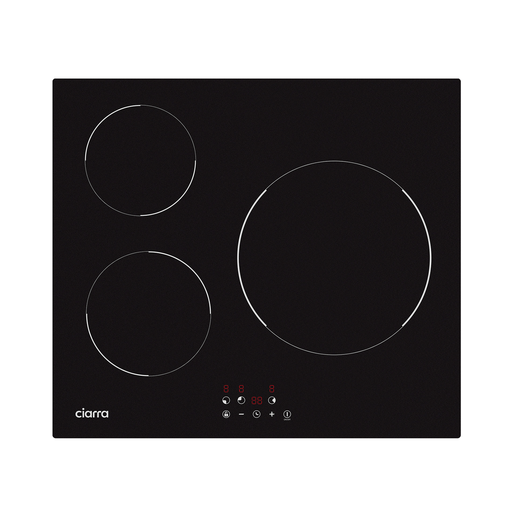
Three zones are designed for cooking with several pans at once; check the available space and electrical connection first.
Stated total power: 5600 W. Nine power settings and a timer of up to 99 minutes.
 No image available
The listed soup function makes this model worth comparing if you're cooking one pan of soup; the pan base must be induction-compatible.
Power: 2000 W. Ten power settings and six functions.
It depends on the base and the pan size. Check whether the base is magnetisable with a magnet, as advised by Milieu Centraal, and compare its diameter with the specifications of your chosen model. For example, the manufacturer gives a pan size of 15–20 cm for the Inventum KI120T.
No, a timer is no substitute for supervision. Follow the manufacturer's instructions for connecting and positioning the hob; the Fire Service advises staying near it while cooking.
Not necessarily. According to the Dutch government, there is no fixed statutory warranty period in the Netherlands, and the seller must provide a solution if a product is faulty. Compare the terms of any paid-for extended warranty with the rights you already have.
CE marking is compulsory for electrical products covered by the applicable regulations. The mark is the manufacturer's declaration of conformity; according to the Netherlands Food and Consumer Product Safety Authority, independent testing is not normally compulsory for electrical products.
Ask your pacemaker technician or cardiologist whether induction cooking is suitable for you. Milieu Centraal advises discussing this on an individual basis; a ceramic electric hob could also be part of that conversation.