
Workshop leader with one polenta pan
Wants to demonstrate cooking and stirring at a worktable, with heat that’s easy to adjust. Allerhande describes polenta being gently simmered while stirring.


Start with the pan: for induction, its base must be compatible, while an electric hob with a cast-iron hotplate can also be used with pans you already own. If you need one pan per workstation, a single-zone induction hob could be a good fit, provided the power supply is suitable and you can turn the heat down while stirring. If you need several pans, consider the number of cooking zones and the total connected load too. Only use gas if both the appliance and the venue allow it.
Wants to demonstrate cooking and stirring at a worktable, with heat that’s easy to adjust. Allerhande describes polenta being gently simmered while stirring.
Wants to know whether the pan bases are compatible with the chosen hob. Milieu Centraal recommends checking induction compatibility with a magnet.
Needs to match the number of pans to the cooking zones and the power supply. The Fire Service recommends plugging high-powered appliances directly into a socket; the Consumers’ Association highlights the need to consider appliances being used at the same time on the same circuit.
First, check that your pans are compatible and decide how many need to cook at once. Then make sure the heat settings and power supply suit your workstation.
A good fit if: you use one pan per workstation, its base is induction-compatible and you want to adjust the heat while stirring.
Bear in mind: a pan without a magnetisable base won’t work on induction; the pan and cooking zone may still be hot after use.
A good fit if: you want to keep using your existing pans without needing them to be induction-compatible, or you need to cook with two pans at once.
Bear in mind: check the size of the cooking zones and take care around the hotplate; if there are two zones, the total connected load matters too.
Only suitable if: the venue allows gas and the appliance is approved for use in that setting.
Bear in mind: a naked flame and combustion gases require different precautions from electric cooking; portability doesn’t automatically mean it’s suitable for indoor use.
| What to consider | What to check before buying | Who is this important for? |
|---|---|---|
| Gentle cooking and heat adjustment | Check the power settings and controls; a high maximum power rating doesn’t tell you how the low setting will work with your pan. | If I’m stirring throughout, I want to be able to turn the heat down easily. Around 31% of consumers prioritise adjustability. |
| Using a pan you already own | For induction, check that the base is magnetisable and compare its size with the stated dimensions of the cooking zone. | If I want to keep using my workshop pans, I first check that they’ll work on the hob I’ve chosen. Around 25% of consumers prioritise pan compatibility. |
| Using several pans at once | Compare the number of cooking zones and their suitable pan-base diameters with the pans you’ll be using at the same time. | If participants are cooking at the same time, the number of suitable cooking zones is the deciding factor for me. Around 19% of consumers prioritise cooking several portions at once. |
| Power supply at the venue | Compare the stated power rating and available sockets with other appliances being used at the same time on the same circuit. | At a workshop venue that changes from one event to the next, I want to know whether the hob can be plugged in directly and safely. Around 25% of consumers prioritise the power supply at the venue. |
Milieu Centraal recommends induction pans with a magnetisable layer in the base; the Fire Service advises plugging high-powered appliances directly into a socket. Never leave a hob unattended while it’s in use.
Once it has come to the boil, polenta needs to simmer gently while you stir. The maximum power rating doesn’t tell you how the hob will perform on a low setting with your pan.
Compare the available settings and controls, and try them with the pan you’ll use during the workshop.
A pan without a suitable magnetisable base won’t work on an induction hob. If your pan isn’t compatible, you may need a different one for the workshop.
Check the base with a magnet and compare its size with the stated cooking-zone dimensions. If you want to keep using your existing pans, consider a different type of hob.
With a double hob, the total connected load may matter, particularly if other appliances are drawing power at the same time.
Compare the appliance’s power rating with the facilities at the venue before setting up the workstations.
A flame and combustion gases bring different risks; whether the appliance is suitable depends on both the appliance and the venue.
Check the appliance instructions and the venue’s rules before using it.
Princess describes the Princess 303012 as a freestanding induction hob for one pan.
Tristar describes the Tristar IK-6178 as a single-zone induction hob with adjustable power and a timer.
Severin describes the KP 1071 as a portable induction hob.
DOMO describes the DOMO DO310KP as an electric hob with two cast-iron hotplates.
These portable induction hobs are selected for workshop use with induction-compatible pans, from models for one pan per workstation to one with two cooking zones.
 No image available
For one pan at a workstation, provided the pan is induction-compatible.
The product information lists 10 heat settings and a power rating of 2000 W.
Use only with induction-compatible cookware.
 No image available
A single-zone option for a one-pan demonstration, with a stated cooking-zone diameter range.
The product information lists 10 power levels, adjustable power from 200 W to 2000 W, and touchscreen and rotary controls.
The pan must be induction-compatible and have a base diameter of 12–26 cm.
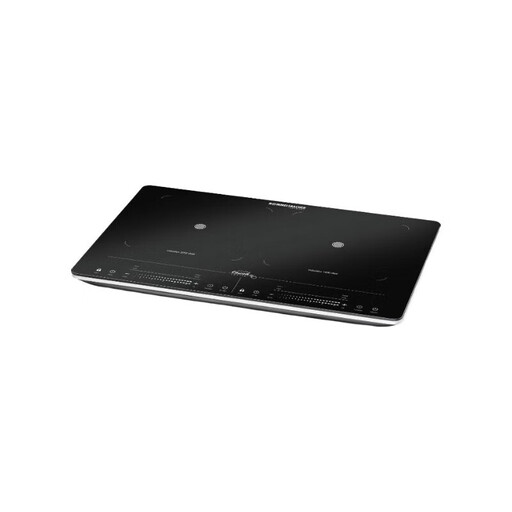 No image available
For a workshop where you need to use two induction-compatible pans at the same time.
The product information lists two cooking zones for pan bases of 120–260 mm and a maximum power rating of 3400 W.
When using the hob, take the power supply at the venue into account.
 No image available
A single-zone hob for a polenta pan with a suitable induction base.
The product information lists 10 power levels, 10 temperature settings and a timer of up to 180 minutes.
The pan must have a ferromagnetic base and a diameter of 12–23 cm.
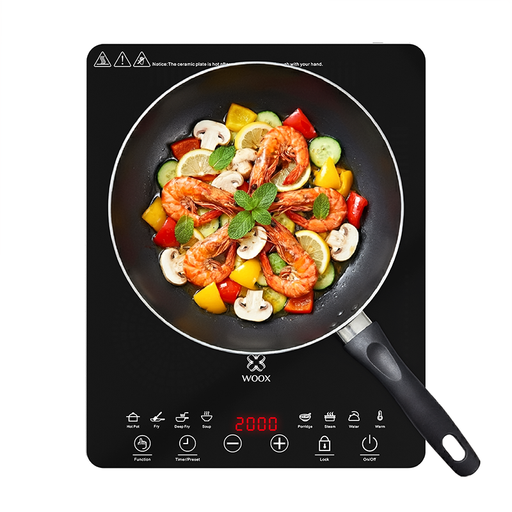 No image available
For one pan at a demonstration workstation, provided the pan is induction-compatible.
The product information lists 8 adjustable power and temperature settings and an LED display.
Only if the pan base is suitable for induction. Milieu Centraal recommends checking this with a magnet; also compare the base diameter with the cooking-zone specifications.
Add the polenta to boiling liquid while stirring, then simmer gently while continuing to stir. Allerhande gives a cooking time of three minutes in the recipe used; stay with the pan and follow the recipe or packet instructions you’re using.
Don’t assume you can without checking the power supply. The Fire Service recommends plugging high-powered appliances directly into a socket where possible; also check which other appliances are being used at the same time on the same circuit.
For businesses selling food or drink to customers, the NVWA lists requirements including safe food handling and a food safety plan or hygiene code. Whether these requirements apply to a particular workshop depends on how it’s organised.
Yes. The NVWA states that CE marking is compulsory for electrical products covered by the relevant regulations. This requirement isn’t an independent test result showing how well a particular model cooks polenta.