
For cooks with a large pancake pan
You’ll want to know whether the base of your pan suits the cooking zone. Measure the base, not just the diameter of the rim; the Consumers’ Association recommends matching the pan size to the cooking zone.


Choose a single-zone induction hob if you use one pan at a time and its base is suitable for the specified zone. If you want to use a second pan at the same time, look for a two-zone model and check the combined power rating and electrical circuit. If your current pan does not work on induction, compare ceramic or cast-iron hobs, and check the size of the pan base against the cooking zone for those too.
You’ll want to know whether the base of your pan suits the cooking zone. Measure the base, not just the diameter of the rim; the Consumers’ Association recommends matching the pan size to the cooking zone.
You want to fry and use a second pan at the same time. As well as the number of zones, check the combined power rating and which other appliances are connected to the same electrical circuit.
First, you’ll want to check whether your pan works on induction. If it doesn’t, you can compare ceramic or cast-iron electric hobs and check the base size against the cooking zone.
Suitable for: cooking with one pan at a time, provided its base is induction-compatible and within the size specified by the manufacturer for that model.
Keep in mind: you can’t use a second pan on this hob at the same time.
Suitable for: frying while using a second pan; Tristar lists 19 and 16 cm zones for the IK-6162.
Keep in mind: two zones don’t necessarily mean you can use both at the highest setting at once. The electrical connection and other appliances on the circuit also matter.
Suitable for: anyone wanting to use a pan that isn’t suitable for induction; according to DOMO, the DO339KP has two independently controlled 18 cm zones.
Keep in mind: the hob itself heats up and needs to cool down before you move or clean it.
Suitable for: anyone wanting to use a smaller existing pan; Tristar lists a 15 cm zone and five settings for the KP-6185.
Keep in mind: the small zone is less suitable for a large pancake pan and stays hot after use.
| What to consider | What should you check? | Who is this important for? |
|---|---|---|
| Pan base and cooking zone | Measure the pan base and compare it with the permitted pan diameter or cooking zone for the exact model. For induction, also check that the base is compatible. | I want the base of my pancake pan to be within the suitable size range. Around 33% of consumers prioritise pan size and heat distribution. |
| One or two pans | Compare the zone sizes and combined power rating; also check which other appliances use the same electrical circuit. | If I want to use a second pan while frying, I’ll look for a model that supports simultaneous use. Around 27% of consumers give this their top priority. |
| Keeping your existing pan | Check whether the pan is suitable for induction; whatever the technology, compare the pan base with the zone. | I want to keep using my current pan, so I’ll choose a cooking technology that suits it. Around 20% of consumers prioritise keeping their existing pan. |
| Electrical connection and worktop space | Check the dimensions, plug, cable and instructions for the exact model. It’s best to plug a high-power appliance directly into a socket, not into a multi-socket adaptor or cable reel. | With limited worktop space, I want to know where the hob will sit securely and how it connects to the available power supply. For around 20% of consumers, space and connection are their main concerns. |
The base may be smaller than the rim. The Consumers’ Association recommends matching the pan size to the cooking zone; a mismatch can affect how the zone works.
Measure the base and compare it with the pan diameters specified for the exact hob model.
With a freestanding induction hob, you can’t assume that several zones will all work at a high setting at once. Other appliances on the same electrical circuit can also limit use, as the Consumers’ Association explains.
Check the total power rating, the instructions and the appliances on the same circuit. The Fire Service advises plugging high-power appliances directly into a socket rather than into a multi-socket adaptor or cable reel.
A pan that isn’t suitable for induction may need an alternative, but ceramic and cast-iron hobs differ in zone size and how they heat. With these types, the cooking surface itself gets hot.
Compare the pan base with the zone, and allow the hob to cool before moving or cleaning it. Don’t choose based on the word ‘electric’ alone.
The features listed apply to the specific models below and are not a recommendation for every product from the same brand.
The IP 1266 is a single-zone portable induction hob for anyone wanting to use one induction-compatible pan.
Tristar offers models including the double induction hob IK-6162 and the cast-iron KP-6185.
The DO339KP is a portable ceramic hob with two zones, for anyone looking for an alternative to induction.
The 303010 is a single-zone portable induction hob that gives you an extra cooking space.
Severin offers models including the induction hob KP 1032 and the conventional electric hob KP 1092.
This selection features portable induction hobs with one or two zones. Use only pans with a suitable, flat base, and compare the base size with the information for the exact model.
 Image unavailable
For anyone who uses one pan at a time and wants adjustable heat.
The product name lists 8 power settings, a temperature range of 60–270 °C, a 3-hour timer and suitability for cookware measuring 12–26 cm. Use only flat, induction-compatible pans.
 Image unavailable
For anyone who uses one induction-compatible pan at a time; Fritel lists pans measuring 12–26 cm for this model.
The product name lists a 26 cm cooking zone and 10 power levels. Measure the pan base and use only flat, induction-compatible pans.
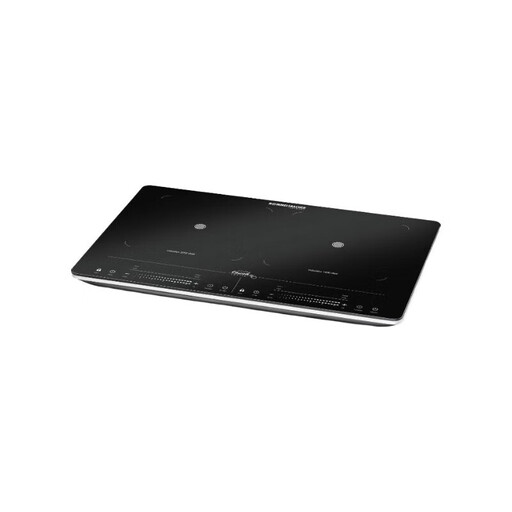 Image unavailable
An option for using two pans at once on a portable induction hob.
Before using your pancake pan, check the base size and electrical specifications for this exact model; use only induction-compatible pans.
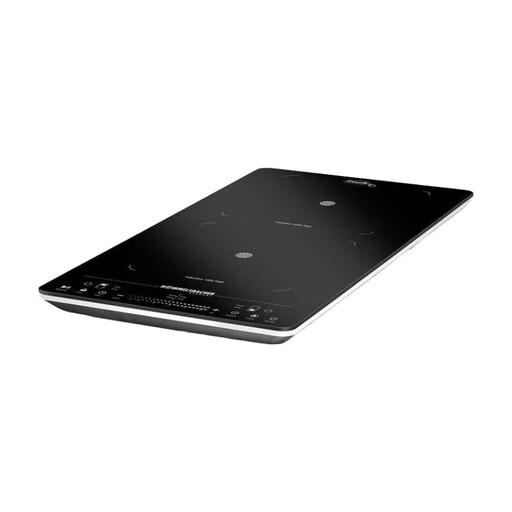 Image unavailable
For anyone who wants to use two pans at once and has induction-compatible cookware.
Check whether the pan base falls within the stated range of 120–260 mm. The hob may become hot during and after use.
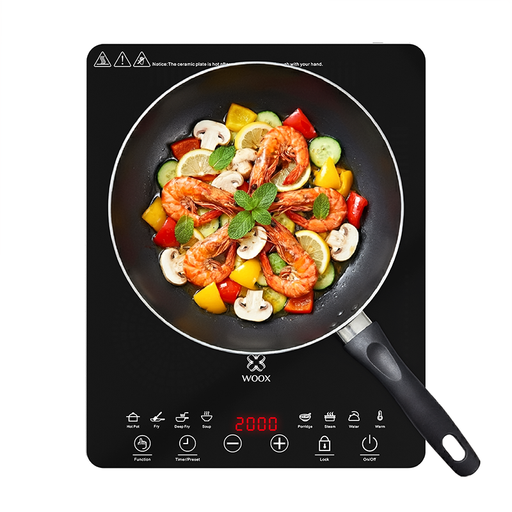 Image unavailable
For anyone who wants to use one pan at a time on the worktop and adjust the settings.
The product name lists 8 temperature and power settings. Use only induction-compatible cookware.
Only if its base is induction-compatible and suits the cooking zone. Check for the induction symbol or hold a magnet against the base. Compare the base diameter with the sizes specified for your chosen model, not the diameter at the top of the pan.
The Fire Service advises plugging high-power appliances directly into a socket rather than into a multi-socket adaptor or cable reel. If you have a two-zone hob, also check which other appliances are connected to the same electrical circuit.
Milieu Centraal recommends first asking your pacemaker technician or cardiologist whether induction cooking is suitable for you. Milieu Centraal lists ceramic cooking as an alternative with a much weaker electromagnetic field; be sure to follow advice tailored to your situation.
Switch off the hob and follow the instructions for the exact model before cleaning or moving it. Even with induction, the zone may have become warm from the pan; with ceramic and cast-iron hobs, the hob itself heats up.
Check the marking and documentation for the exact model. The European Commission sets out the applicable requirements of the Low Voltage Directive; Business.gov.nl explains that the manufacturer must establish the required conformity before affixing the CE marking. CE is not an independent quality mark for cooking performance.