
Cooking for one and taking your time to simmer
You’re making a small amount of onion gravy in one pan and want to adjust the heat as you fry and reduce it.


Start by checking the base of the pan you want to use. For induction, it must be magnetic and within the size range specified for your chosen model, as the Consumers’ Association explains. If you want to keep your pan but it isn’t suitable for induction, a cast-iron or glass-ceramic hob could be an alternative. For onion gravy, pay particular attention to the heat settings, the space available and the connection instructions.
You’re making a small amount of onion gravy in one pan and want to adjust the heat as you fry and reduce it.
You want to know in advance whether the base will work on an induction hob, or would rather use a hob that doesn’t require an induction-compatible pan.
You’re looking for a single portable cooking zone and also want to allow for a stable, safe set-up with adequate heat ventilation.
Choose this if: your pan has a magnetic base that falls within the size range specified for the model.
Bear in mind: a pan that’s too small or unsuitable may not be detected; manufacturer settings aren’t an independent test of simmering performance.
Choose this if: you want to keep using your existing pan and it isn’t suitable for induction.
Bear in mind: the hob may stay hot after you turn down the setting or switch it off.
Choose this if: you want a flat hob that doesn’t require an induction pan and value a residual-heat indicator.
Bear in mind: the cooking zone heats up and may stay hot after use.
| What to consider | What to look for when buying | Who is this important for? |
|---|---|---|
| Turning down the heat | Check the settings or dial on the exact model. Keep an eye on the gravy as it reduces and stir if needed. | When I fry onions and then reduce the gravy, I want to be able to adjust the heat myself. Around 36% of consumers prioritise adjustable heat for this kind of cooking. |
| Using your own pan | For induction, check both the base material and the pan size specified for the model. | If you cook with a small pan you already own, you’ll want to know whether it will work on your chosen hob before buying one. Around 29% of consumers say pan compatibility is their main concern. |
| Space and connection | Measure the hob and leave the space required by the manual for positioning and heat ventilation; follow the connection instructions. | On a small worktop, I want to position the hob and pan securely and connect them safely. Safe positioning is a top priority for around 21% of consumers. |
| Cleaning and extra purchases | Check the cleaning instructions and allow for buying another pan if your current one won’t work on your chosen induction hob. | If I want to keep my pan and easily clean up any spilt gravy, extra purchases and maintenance are important considerations. Around 14% of consumers say this is their main buying concern. |
An induction hob needs a suitable pan with a magnetic base, and the hob must be able to detect the pan size.
Measure the base of the pan you want to use for the gravy and compare it with the details for the exact model.
If your pan isn’t suitable for induction, you may need another one.
The stated power rating alone doesn’t tell you how a small amount of gravy will heat on a low setting.
Compare the settings available on the model, but don’t treat manufacturer settings as an independent cooking test.
A cast-iron or glass-ceramic hob may stay hot after it’s switched off.
Allow the cooking zone to cool safely and follow the manual when moving or cleaning the hob.
The KI120T is an induction model for pans within the 15–20 cm range specified by Inventum.
The KP 1091 is a conventional single-ring cast-iron hob for anyone who doesn’t want to use an induction pan.
The KP-6185 is a single-ring cast-iron hob with a 15 cm cooking zone.
The Touch 2000 is an induction option for a suitable pan with a diameter of 12–24 cm, as specified by CASO.
The CT 1800/E is a standalone glass-ceramic radiant hob, not an induction model.
These product picks are portable induction hobs for one pan. Before buying, check that your pan is suitable and that its size is right for the model.
 No image available
The product name describes a portable induction hob with one cooking zone and five power settings.
The product name lists a power rating of 1,000 W. You’ll need a pan with a suitable magnetic base.
 No image available
The touch controls and ten power settings listed in the product name give you options to adjust as you cook.
The product name lists 2,000 W and a safety lock. Your pan must be suitable for induction.
 No image available
This model is a portable induction hob for one pan; the product name lists ten power settings and a timer.
The product information gives a suitable pan size range of 12–26 cm. Check that your pan base falls within this range.
 No image available
The product name identifies this as a single-zone induction hob for a pan suitable for induction.
If you’re using a small pan, check that the exact model will detect its base.
 No image available
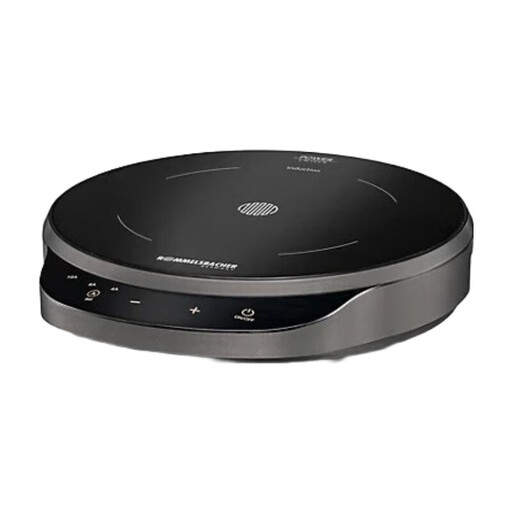
This standalone induction hob is designed for one pan that’s suitable for induction.
The product information lists a pan size of 12–20 cm; check that your pan base falls within this range.
Check that the base is suitable for induction and compare its size with the hob’s specified range. The Consumers’ Association explains that an induction pan needs a magnetic, conductive base; Inventum specifies a pan size of 15–20 cm for the KI120T.
It depends on the appliance’s dimensions and the space required for set-up in the manual. Measure the space first and allow for the pan, heat ventilation and connection. The Fire Service recommends connecting high-power appliances directly to a suitable socket wherever possible.
Switch the hob off and follow the cleaning instructions for the exact model. Only clean the surface when it’s safe to do so; a glass-ceramic hob with a residual-heat indicator may still be hot.
A freestanding hob doesn’t need to be fitted into a worktop cut-out. However, follow the manual to position it securely and connect the model correctly.
According to the Netherlands Food and Consumer Product Safety Authority, CE marking is required for electrical products placed on the market in the Netherlands. Check the marking on the specific product: information about a different model doesn’t prove that the item you’re buying has the marking.