
The cautious holiday baker
Wants to melt small amounts of chocolate gradually and is looking for a simple bain-marie set-up that keeps water out of the chocolate. Rutger Bakt advises that the water should not touch the bowl.


Choose a hob that suits the available electrical connection, worktop space and pan. For chocolate, a bain-marie over gently heated water is more suitable than direct heat. Induction requires a compatible pan, whereas a conventional electric hob does not. A power setting or selected temperature does not, on its own, tell you the temperature of the chocolate.
Wants to melt small amounts of chocolate gradually and is looking for a simple bain-marie set-up that keeps water out of the chocolate. Rutger Bakt advises that the water should not touch the bowl.
You may not know in advance which pans, sockets or worktop space will be available. Check what the kitchen has before choosing a hob; Inventum and Consumentenbond highlight things to consider regarding pans and electrical connections.
Looking for a single-burner hob that suits the space and electrical connection available. Tristar’s model information and the Fire Service’s safety advice can help you assess dimensions, positioning and power use.
First, choose between induction and a conventional hob based on the pan you can use. Then check the electrical connection and where the hob can be positioned safely.
Suitable if: you have a compatible induction pan and the electrical connection and available space are suitable.
Bear in mind: check the suitable pan diameter and positioning instructions for the exact model. The hob’s selected temperature is not automatically the temperature of the chocolate.
Suitable if: you want to use the pan you have without needing the specific pan base required by induction.
Bear in mind: the hob may remain hot after it has been switched off. Let it cool before putting it away.
For a bain-marie, Rutger Bakt recommends placing a dry, heatproof bowl over gently heated water without letting it touch the water. Keep the chocolate dry and stir it regularly. The Dutch government states that electrical appliances covered by the relevant rules must carry a CE mark; check the specific appliance for this marking.
| What matters | What to look for | Who should pay particular attention? |
|---|---|---|
| Heating chocolate gradually | Check that the pan and dry, heatproof bowl fit together securely. Heat the water gently and stir the chocolate; the hob setting does not measure the chocolate’s temperature. | I want to melt small amounts gently without getting water in the chocolate; around 36% of consumers prioritise gentle heating. |
| Available power supply | Ask which socket and power capacity are available, and which other appliances will be used on the same circuit. Compare this with the power rating and instructions for the model you choose. | If I don’t know what electrical connection the holiday cottage has, I want to check in advance whether I can use the hob there alongside other appliances; around 29% of consumers say the electrical connection is their main buying concern. |
| Pan compatibility | Check that the pan has a magnetic base and falls within the induction hob’s stated diameter range. If you’re unsure, compare it with a conventional hob and check that your pan is suitable for that, too. | I’d prefer to use a pan I’m already taking with me; around 21% of consumers prioritise pan compatibility. |
| Safe space for the hob | Measure the available worktop space and follow the positioning instructions for the exact model. Keep flammable items away and stay near the hob while it’s in use. | With limited worktop space, I want to know whether the hob, pan and bowl can be positioned safely; around 14% of consumers give safe positioning and portability top priority. |
The setting selected on the hob doesn’t tell you how hot the chocolate in the bowl is. For gradual heating, Rutger Bakt describes using a water bath in which the bowl doesn’t touch the water.
Use a suitable water bath, stir the chocolate and keep an eye on it as it melts.
Induction requires compatible cookware, and some models also specify a suitable pan size. A pan that doesn’t meet these requirements won’t work with the hob you’ve chosen.
Check the pan’s base and diameter against the instructions, or compare it with a conventional electric hob.
For the Rommelsbacher CT 2020/IN, the manufacturer lists temperature settings of 60–220 °C, while a Joybuy listing gives a different upper limit.
Compare the full model code and check the specifications of the item being sold before you decide.
Offers conventional single electric hobs, including the KP-6185 and KP-6191.
The KI120T is a freestanding induction hob for anyone with a compatible pan.
Offers both the conventional KP 1091 and the KP 1071 induction hob; check the full model code.
The CT 2020/IN is a portable induction hob with slider controls.
The 303010 is a freestanding single-burner induction hob with settings and a timer.
This product selection includes portable induction hobs for bain-marie use and one conventional single electric hob. Before buying, check that the specific appliance carries the required CE mark and is suitable for your electrical connection, pan and available space.
 No image available
An option to consider if you’re looking for an induction hob with adjustable power settings for a bain-marie set-up.
The product name lists five power settings and 1000 W. Check that your pan is induction-compatible.
 No image available
Worth considering if you want several settings for a water bath and have a compatible pan.
The product name lists 2000 W, eight power settings, a temperature setting of 60–270 °C and suitable cookware measuring 12–26 cm. The description requires a pan with a magnetic base; the selected temperature is not a measurement of the chocolate’s temperature.
 No image available
An option to look at if you want a portable induction hob with adjustable heat settings for a water bath.
The product name lists 2000 W, ten power settings, six functions and touch controls. The description says magnetic cookware is required.
 No image available
Worth considering for a bain-marie set-up if your pan is induction-compatible and fits the cooking zone.
The product name lists 2000 W, a Ø 26 cm cooking zone, ten power settings and a timer. The description requires induction-compatible cookware with a flat base.
 No image available
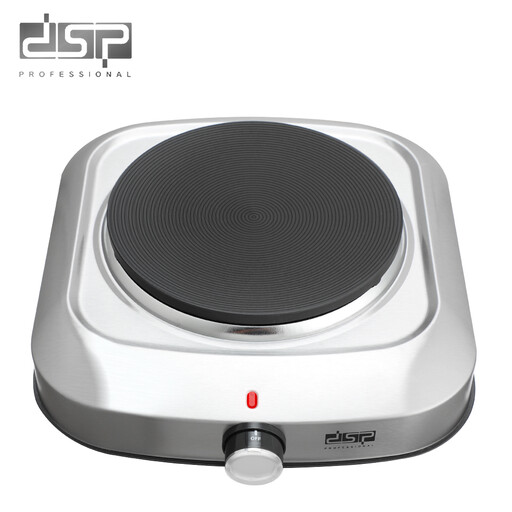
A conventional electric option to consider if you don’t want to use an induction pan.
The product name lists 1500 W and an adjustable temperature control. The product description specifies a 185 mm hotplate.
For gradual heating, a bain-marie is a suitable method: place a dry, heatproof bowl over gently heated water and make sure it doesn’t touch the water. Stir the chocolate and keep water out; this advice is in line with Rutger Bakt’s guidance.
Don’t assume so without checking. Look at the electrical connection and the instructions for your chosen model, and ask which other appliances will be used on the same circuit. Inventum specifies an earthed Dutch socket for the KI120T. The Fire Service advises fully unwinding any cable reel you use.
Follow the instructions for the exact model and let the hob cool down before putting it away. Stay nearby while it’s heating and keep flammable materials away from the hob, as advised by the Fire Service.
A hob covered by the applicable rules for electrical equipment must carry a CE mark. The Dutch government lists electrical appliances among the products that must carry a CE mark in the EU; check the specific appliance for this marking.
No. According to ACM ConsuWijzer, your statutory guarantee is separate from any manufacturer’s or retailer’s guarantee and depends on what you could reasonably expect from the product under normal use. If a product is faulty, the retailer is responsible for providing an appropriate solution.