
Careful chocolate melter
If you’re melting chocolate for a group, a bain-marie helps apply heat indirectly. Rutger bakt and Heel Holland Bakt recommend making sure the bowl doesn’t touch the water.


For gently melting chocolate, a stable bain-marie set-up matters more than choosing a particular hob setting: no setting can guarantee the temperature of the chocolate. Then choose a single-zone induction hob if your pan is compatible, a conventional electric hotplate if you want to use your existing pan without needing it to be induction-compatible, or a two-zone hob if you really need to use two pans at once.
If you’re melting chocolate for a group, a bain-marie helps apply heat indirectly. Rutger bakt and Heel Holland Bakt recommend making sure the bowl doesn’t touch the water.
If you want to keep using your own pan, first check that its base is suitable for induction and falls within the hob’s size range. Otherwise, a conventional electric hotplate could be an alternative.
If you want to use a second pan while melting the chocolate, consider not only the number of cooking zones, but also the available worktop space and the total electrical load.
Choose this option: if you’re using one pan of water and have an induction-compatible pan with a suitable base size.
Bear in mind: you can only use one pan at a time, and the setting doesn’t measure the temperature of the chocolate.
Choose this option: if you genuinely need to use a second pan at the same time as melting the chocolate.
Bear in mind: you’ll need more worktop space and should check the total electrical load. The Consumentenbond points out that freestanding hobs with limited connection capacity may restrict cooking on high settings at the same time.
Choose this option: if you want to use an existing pan without needing it to be induction-compatible.
Bear in mind: a dial or setting won’t tell you what temperature the chocolate reaches. Stay nearby and heat it indirectly.
With a bain-marie, the bowl doesn’t touch the water. Rutger bakt and Heel Holland Bakt describe this as a way to heat chocolate indirectly.
| What to consider | What should you look for? | Who should prioritise this? |
|---|---|---|
| Gentle melting | Place the bowl securely on the pan of water without letting it touch the water; compare the low-setting controls and stir the chocolate. | If I want to heat chocolate gradually, I prioritise indirect heat and checking it as I stir. Around 36% of consumers put gentle melting first. |
| Pan compatibility | Check that the pan is induction-compatible and that its base falls within the range for the exact model. | If I want to keep using my existing pan, I first check that it’s compatible with the hob I choose. Around 29% of consumers prioritise keeping their own pan above all else. |
| Space and a second pan | Measure the worktop space, including room for the pan, bowl and handles; consider whether you need to use a second pan at the same time. | If I want to heat something else at the same time as the pan of water, I’ll need enough space and a suitable electrical connection. Around 21% of consumers value being able to use two pans at once most. |
| Electrical connection and set-up | Follow the connection instructions for the exact model and keep the hob away from flammable items. | If I want to set up and connect the hob safely during a get-together, I check these requirements in advance. Around 14% of consumers prioritise the connection and set-up above all else. |
A setting describes how the hob is controlled, not a measured temperature in the bowl. So the selected value alone doesn’t tell you how hot the chocolate will get.
Use a stable bain-marie set-up, keep the chocolate dry and stir it regularly.
Induction requires cookware with a suitable base, and the stated size range varies by model.
Check that your pan of water is induction-compatible and that its base is the right size before choosing a hob. If your pan isn’t suitable, compare conventional electric hotplates.
A second zone is only useful if you’ll use it at the same time and both pans fit in the space available. The Consumentenbond says that freestanding hobs with limited connection capacity may restrict cooking on high settings at the same time.
Measure the space and check the connection and load of the circuit you’ll use before choosing a two-zone hob.
The KI120T is a single-zone induction hob, while the VKI3010ZWA has two zones. The right option depends on your pan, the space available and whether you need to use two pans at once.
The IK-6178 is a single-zone induction hob worth comparing if you want adjustable temperature and power controls.
The KP 1092 is a conventional electric hotplate worth comparing if you don’t want to use an induction-compatible pan.
The S-Line 2100 is a single-zone induction hob worth comparing if you’re looking for a hob that suits pans with a base diameter of 12–24 cm and offers several power settings.
This selection includes single-zone induction hobs for one bain-marie pan, plus a conventional electric hotplate for anyone who wants to avoid needing an induction-compatible pan.
 No image available
A single-zone hob worth comparing if you use one pan of water for a bain-marie.
10 power and temperature settings, adjustable range of 60–240 °C, 8 presets, timer and child lock. The selected temperature doesn’t measure the temperature of the chocolate.
Induction-compatible cookware is required.
 No image available
A single-zone induction hob worth comparing if you use one pan and its base size falls within the stated range.
8 power and temperature settings, adjustable range of 60–270 °C, 7 preset functions and a timer of up to 3 hours.
Requires induction-compatible cookware with a flat base measuring 12–26 cm. The selected value doesn’t measure the temperature of the chocolate.
 No image available
A single-zone induction hob worth comparing if you use one pan of water with a suitable pan base.
10 power settings, adjustable range of 60–240 °C and a timer of up to 3 hours.
Requires induction-compatible cookware with a base diameter of 12–26 cm. A selected setting doesn’t guarantee the temperature of the chocolate.
 No image available
A portable single-zone induction hob worth comparing if you use one pan and its base fits the cooking zone.
10 temperature settings from 60–240 °C, a 180-minute timer with automatic shut-off and a residual heat indicator.
Requires a pan with a ferromagnetic base and a diameter of 12–23 cm. The selected temperature isn’t a measurement of the chocolate.
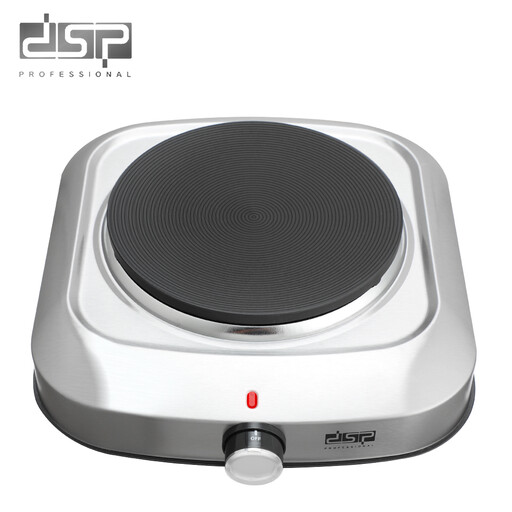 No image available
A conventional electric hotplate worth comparing if you want to use an existing pan without needing it to be induction-compatible.
Adjustable temperature dial and a 185 mm hotplate. The setting doesn’t show the temperature of the chocolate.
The pan of water must be induction-compatible and fall within the size range of the hob you choose. Place the dry, heat-resistant bowl on the pan without letting it touch the water. The manufacturer states that the Inventum KI120T is suitable for pans with a diameter of 15–20 cm.
No, stay near the hob. The Brandweer describes a kitchen timer as a reminder and advises keeping flammable materials away; also follow the appliance’s set-up instructions.
No, it depends on the model. According to the Consumentenbond, most of the low-power freestanding models it tested could be plugged into a standard earthed socket. The models it tested above 7000 W required a Perilex socket and a two-phase connection. Check the instructions for the hob you choose.
Contact the retailer. According to ACM ConsuWijzer, your statutory guarantee may apply if the product breaks down sooner than you could reasonably expect; repair, replacement or a refund may then be a solution. The length of a manufacturer’s guarantee doesn’t automatically limit your statutory rights.