
Careful home baker
Wants to melt small amounts of chocolate using a bain-marie, and looks for a stable pan-and-bowl combination and a controllable heat source. Lindt describes using a bowl over a pan of water.


Choose a portable hob that suits your pan and the available connection. Ideally, melt chocolate using a bain-marie: the hob’s setting does not automatically reflect the temperature of the chocolate. Induction works only with compatible pans; a conventional electric hotplate can work with a wider range of pans, but its cooking zone gets hot and needs to be handled with care.
Wants to melt small amounts of chocolate using a bain-marie, and looks for a stable pan-and-bowl combination and a controllable heat source. Lindt describes using a bowl over a pan of water.
Wants to use a portable hob in a shared kitchen without automatically having to buy an induction pan. Models from Inventum and Tristar show why it’s worth comparing the pan requirements for each type of hob.
Wants to work with temperature more often and distinguish between melting and tempering chocolate. CASO describes a hob with a temperature probe, while Callebaut covers chocolate tempering separately.
A good fit if: your pan is induction-compatible, its base is the right size and one cooking zone is enough.
Keep in mind: your existing pan may not be suitable; also check the model’s ventilation clearance and connection requirements.
A good fit if: you want to use your existing pan without the specific induction requirement.
Keep in mind: the cooking zone gets hot, so consider the risk of contact, cleaning and the space available on your worktop.
A good fit if: you work with temperature more often and want to check your measuring set-up carefully.
Keep in mind: a stated temperature range with a probe does not prove what temperature the chocolate reaches in a separate bowl.
| What to consider | What should you check? | Who is this important for? |
|---|---|---|
| Gentle melting | Check that the pan and heatproof bowl fit securely, and use a water bath. The hob setting does not automatically tell you the temperature in the bowl. | If I want to melt small amounts of chocolate gently, I mainly look for controllable heat. Around 40% of consumers put control over melting first. |
| Existing pan | Check the pan material and base size in the manual for the exact model. | I want to keep using my existing water-bath pan and first check whether it will fit on the hob. Around 23% of consumers put pan compatibility first. |
| Space and connection | Measure the available worktop space and check the connection, ventilation clearances and appliances being used at the same time. | In a shared kitchen, I want to know whether there’s enough space and whether the hob can be used alongside other appliances. Around 23% of consumers put shared workspace and connection requirements first. |
| Working with temperature | Decide whether you only want to melt chocolate or also temper it; check where any probe takes its reading. | If I want to temper chocolate more often, I want to know exactly what the probe measures and what extra steps are involved. Around 14% of consumers value being able to reuse the hob for temperature-controlled cooking. |
Heat reaches the chocolate via the pan and the water bath. So a setting on the hob does not automatically tell you how hot the chocolate is in the bowl.
Use a suitable bowl over a water bath, and measure the chocolate separately if its temperature is important for your recipe.
Induction requires compatible pans, and the base size may vary by model. For the Inventum KI120T, Inventum specifies pans with a diameter of 15–20 cm.
Check the material and base diameter of your pan against the manual for the exact model.
Two zones take up more worktop space. In a shared kitchen, it’s also important to consider which other appliances are being used on the same electrical circuit.
Choose two zones only if you need them, and check the manufacturer’s placement and ventilation instructions. Keep flammable items away from the hob.
The KI120T is a compact single-zone induction hob worth comparing if one cooking zone is enough.
The conventional electric KP-6191 is an option to compare if you don’t want to use an induction pan.
The DK 1042 is a conventional double hotplate; the DK 1031 is a different model and is, in fact, a double induction hob.
The TC 2400 Thermo Control is an induction hob supplied with a temperature probe, designed for those who want to work with temperature more precisely.
This selection of Joybuy products includes both conventional hobs for a water bath and portable induction hobs. Before buying, check that your pan and connection are suitable for the model you choose.
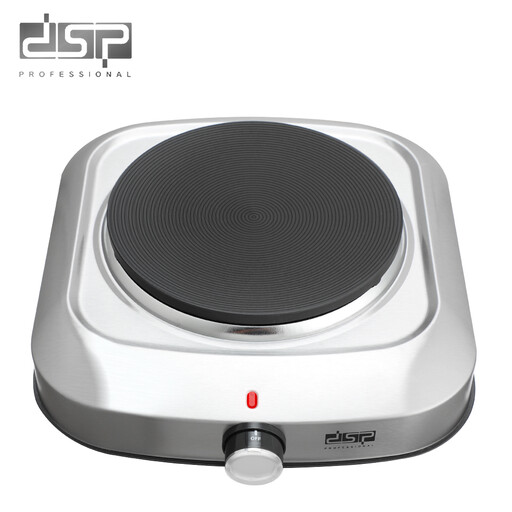 No image available
A conventional hotplate for heating a water bath if you don’t want to use an induction pan.
1500 W; 185 mm hotplate; adjustable temperature control. The hotplate gets hot. According to the product description, it may produce a little smoke and an odour the first time you use it; if so, run it for 3–5 minutes in a well-ventilated area.
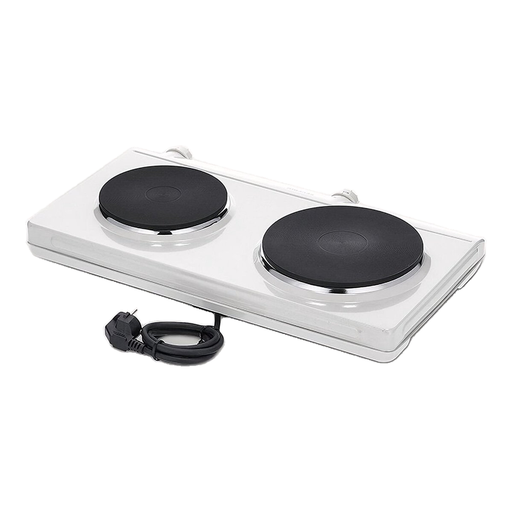 No image available
A conventional double hotplate to consider if you’ll actually use both zones in your shared kitchen.
Two cooking zones; 2500 W; infinitely adjustable temperature. The zones need extra worktop space, and the surfaces get hot.
 No image available
A portable single-zone induction hob to consider if your pan is magnetic and its base size falls within the specified range.
2000 W; 8 power settings; stated temperature range of 60–270 °C; 3-hour timer. Suitable only for magnetic induction cookware with a flat base measuring 12–26 cm. The set temperature is not automatically the temperature of the chocolate.
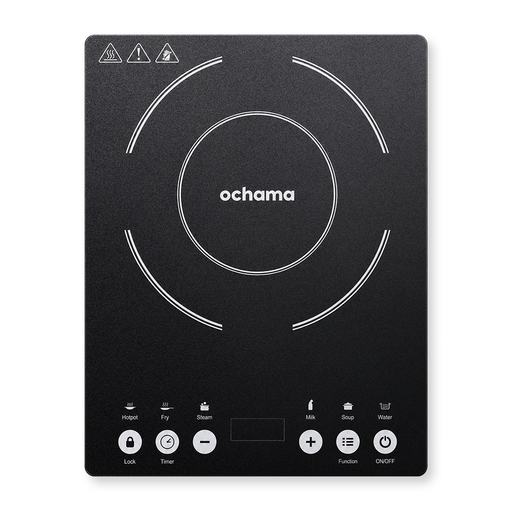 No image available
A portable induction hob for a water bath if your existing pan meets the induction requirements.
2000 W; 10 power settings; 6 functions; safety lock. Suitable only for magnetic induction cookware.
 No image available
A freestanding induction hob to consider if your pan’s base size suits the cooking zone and meets the model’s requirements.
2000 W; Ø 26 cm cooking zone; 10 power settings; timer. Requires induction-compatible pans measuring 12–26 cm in diameter.
No. Lindt describes using a bain-marie, with a heatproof bowl over a pan of water and not touching the water. Stir gradually and check that the pan and bowl sit securely on the cooking zone.
No. Callebaut distinguishes melting from the further tempering steps needed to achieve a glossy finish and a firm snap. The 40–45 °C temperature given by Callebaut is for melting chocolate; it is not a universal setting for a hob or water bath.
No, an induction hob requires compatible cookware. Check your pan’s material and base diameter against the manual for the exact model; for example, Inventum specifies a pan diameter of 15–20 cm for the KI120T.
No, the hob’s set temperature is not automatically the temperature in the bowl. Heat reaches the chocolate via the pan and water bath; measure the chocolate separately if its temperature is important for your recipe.
It depends on the exact model. The Consumers’ Association says most freestanding hobs can be connected to an earthed socket, but powerful models may require a Perilex socket and a two-phase connection. So check the model specifications and which other appliances are being used on the same circuit at the same time.