What should you look for when choosing?
First decide how you want to heat the curd, then choose a type of hob that suits your pan. Next, measure the entire space you’ll need: the appliance alone isn’t enough if you also need room for ventilation, the pan and stirring.
| What to consider |
What to look for |
Who it matters most to |
| Gentle heat |
Check how you can adjust the heat and whether the pan or bowl will sit securely. A hob setting doesn’t measure the temperature of the curd; Albert Heijn Allerhande and Rutger bakt both describe stirring while heating. |
If I want to keep stirring and let the curd thicken gently, I focus on heat control; around 36% of consumers say this is their priority. |
| Space required |
Measure the space needed for the appliance, pan and stirring, and follow the manual for the exact model. For the Inventum KI120T, the manufacturer specifies at least 10 cm of clearance at the sides and back. |
On a small worktop, I want to know whether the hob will fit with the pan and room to stir; around 29% of consumers prioritise available space. |
| Existing pan |
For induction, check both that the base is magnetic and that the pan diameter is within the manufacturer’s specified range. The Inventum KI120T is designed for pans measuring 15–20 cm; this size range does not automatically apply to other models. |
If I want to keep using my current pan, I choose a hob to suit it; around 21% of consumers prioritise pan compatibility. |
| Safe positioning and connection |
Check the manual, make sure the surface is flat and heat-resistant, and check the available power connection. Keep flammable items away and stay nearby while cooking. According to EUR-Lex, the relevant EU safety regulations, including CE marking, apply to electrical equipment within the applicable limits of 50–1.000 V AC. |
If space is limited, I want to know in advance whether the hob can be positioned safely and suits my power connection; around 14% of consumers prioritise positioning and connection. |
Joybuy product picks
These product picks are portable induction hobs for direct heating or use in a bain-marie setup; you’ll need a suitable pan. Before use, check the markings and information for the exact appliance: EUR-Lex describes the CE requirement for electrical equipment within the applicable limits of 50–1.000 V AC that is placed on the EU market.
 No image available
Joyami JCL02M circular induction hob
The product name describes an induction hob with one cooking zone, for use with a suitable pan.
The product name specifies 220V/240V and 2100.
View at Joybuy
 No image available
IAGREEA DF200-14V10 induction hob, 2000W
The power levels and temperature setting offer adjustment options, but they don’t measure the temperature of the curd.
The description lists 8 power levels, a range of 60–270 °C, a timer of up to 3 hours and compatibility with pans measuring 12–26 cm with a flat magnetic base.
View at Joybuy
 No image available
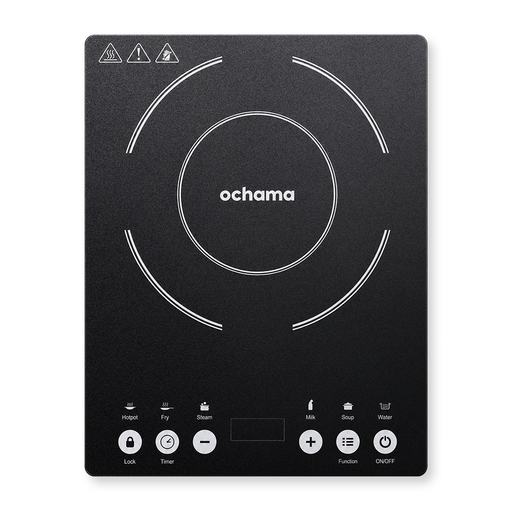
ochama induction hob, 2000W
The ten heat settings offer adjustment options when using a suitable induction pan; keep checking the curd as you stir.
The title specifies 2000 W and 10 power settings. According to the description, aluminium and ceramic pans without a magnetic base do not work well on this hob.
View at Joybuy
 No image available
Fritel IP 1266 induction hob, 2000W
The adjustment options may be useful for gentle heating, but the selected temperature is not a measurement of the curd’s temperature.
The product information specifies 10 power levels, 60–240 °C, a timer of up to 3 hours and compatibility with induction pans measuring 12–26 cm.
View at Joybuy
 No image available
Rommelsbacher CT 2020/IN induction hob
The adjustable levels give you an option for gentle heating; keep stirring and check the curd’s consistency yourself.
The description lists 10 power levels, a temperature range of 60–240 °C, automatic pan detection and a timer of up to 99 minutes. According to the description, the hob only heats with suitable induction pans.
View at Joybuy
Frequently asked questions
Does lemon curd have to be heated directly in a pan?
No, both methods are used. Albert Heijn Allerhande describes heating the mixture in a bowl over a pan of water, without the bowl touching the water; a recipe from Rutger bakt also describes heating it directly over a low heat. A bain-marie can reduce the risk of overheating, but takes longer.
Can I use my current pan on a portable induction hob?
Only if the base is suitable for induction and the pan meets the requirements of your chosen model. Inventum specifies a diameter of 15–20 cm for the KI120T; check the product specifications for other models separately. According to the manufacturer, the Severin KP 1091 is not an induction hob.
How should I position a hob on a small worktop?
Follow the manual’s instructions for ventilation clearance, and leave room for the pan and stirring too. The manual for the Inventum KI120T specifies at least 10 cm of clearance at the sides and back; this distance does not automatically apply to other models. Keep flammable items away, stay nearby while cooking, and let a hot hob cool before cleaning or storing it.
How can I handle the eggs safely when making lemon curd at home?
Voedingscentrum advises heating dishes containing raw egg thoroughly and recommends that vulnerable groups avoid dishes in which the egg remains raw. An Albert Heijn Allerhande recipe gives approximately 80 °C as the point at which the mixture thickens; this recipe temperature is not a food safety guarantee for every preparation.
When is CE marking relevant for an electric hob?
The relevant EU regulations and CE marking apply to electrical equipment placed on the EU market that falls within the applicable limits of 50–1.000 V AC. EUR-Lex describes this requirement; the marking is a declaration by the manufacturer, not an independent product test.


