
One-pan cook
You usually make soup in one small pan and want a portable hob that suits your pan, plug socket and available worktop space.


For a single pan of red lentil soup, a compact induction hob is a sensible choice if your pan is induction-compatible and you’ve checked the pan size, positioning and connection. If you’d like to keep using your current pan and it doesn’t have an induction-compatible base, a traditional electric hob may be a better fit. Two zones are most useful if you’re cooking a second dish at the same time, but they need more space and require you to consider the total power supply. This comparison is based on the stated features, not an independent cooking test.
You usually make soup in one small pan and want a portable hob that suits your pan, plug socket and available worktop space.
You’d like to check whether your current soup pan is suitable for induction, or you’d prefer an electric hob that doesn’t have this requirement.
You want to prepare soup and a side dish at the same time, and are weighing up a second cooking zone against the extra space and power supply needed.
A good fit if: you usually use one soup pan and it’s suitable for induction.
Keep in mind: the pan size, clear space for ventilation and the electrical connection; you can’t fit a second pan on a single zone at the same time.
A good fit if: you want to use your existing pan and it doesn’t have a magnetisable base.
Keep in mind: the hob itself gets hot. Check that your pan fits the cooking zone and turn the heat down in good time.
A good fit if: you regularly use a second pan alongside your soup pan and have room for it.
Keep in mind: the dimensions and total power supply; check the load on your electrical circuit.
| What matters when buying | What should you check? | Who is this important for? |
|---|---|---|
| Gentle simmering | Check the controls, adjustable settings and timer on the exact model. The number of settings doesn’t prove how evenly it simmers soup. | If you want to turn the heat down gently after bringing the soup to the boil and keep an eye on the pan while it cooks, simmer control is a priority. Around 36% of consumers put this at the top of their list. |
| Positioning and connection | Check the dimensions, the clearance specified in the manual, the plug type and the power supply available on the circuit. | If you have a small worktop, you’ll want to check in advance that the hob, pan and required ventilation space will fit, and that the connection is suitable. For around 29% of consumers, positioning and connection are their main considerations. |
| Using an existing pan | For induction, use a magnet to check whether the pan base is magnetisable, and compare the pan diameter with the model’s stated range. Milieu Centraal describes the magnet test as a way to check. | If you’d prefer to keep your current soup pan, check the base first. A traditional electric hob avoids the induction requirement, but the pan still needs to fit the cooking zone. Around 21% of consumers prioritise pan compatibility. |
| Using two pans at once | Check the number of zones, the overall dimensions and the power supply; also consider other appliances on the same circuit. | If you want to cook a side dish alongside your soup, you’ll need space for two pans and should check that the connection can handle this. Around 14% of consumers prioritise cooking two dishes at once. |
Your pan and the specified ventilation space also take up room. The Inventum KI120T manual requires at least 10 cm of clearance at the sides and back.
Measure the whole setup and follow the manual for the model you choose.
An induction pan needs a magnetisable layer in its base. Also check that its diameter falls within the hob’s stated range.
Test the pan base with a magnet and check the stated pan size before you choose.
According to Princess, the 303013 has a total power rating of 3,500 W. The Consumers’ Association notes that other appliances on the same electrical circuit can also matter when using portable induction hobs.
Check the total power supply, the circuit and the guidance on using both zones at once.
Whether a gas stove can be used indoors depends on the instructions for that specific model. According to the GGD, cooking with gas releases nitrogen dioxide.
Check that the appliance is explicitly suitable for the indoor space where you plan to use it. If indoor use is permitted, follow the GGD’s ventilation advice.
The KI120T is an example of a compact, single-zone induction hob for a soup pan that’s suitable for induction.
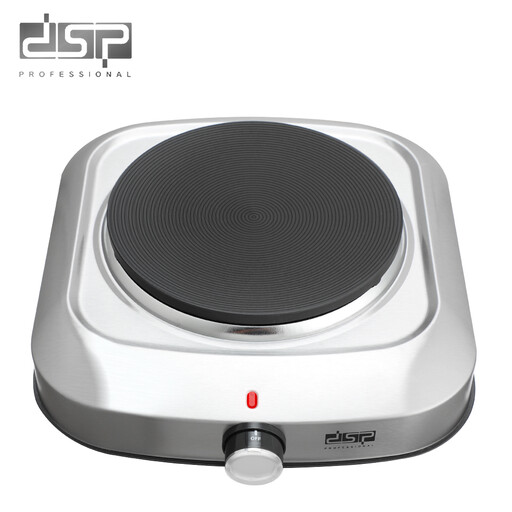
The KP 1091 is a traditional single-zone electric hob for anyone who wants to use a pan without an induction-compatible base.
The 303013 is a double induction hob for anyone who wants to prepare a second dish alongside their soup.
The IK-6178 is a single-zone induction hob with digital controls for temperature, power and the timer.
These product picks are portable single-zone hobs for cooking one pan of soup: induction models and a traditional electric hob.
 No image available
A portable single-zone induction hob for anyone who cooks soup on one zone and wants to adjust the heat.
Power: 2,100 W. The product description lists 220/240 V, touch controls, temperature control, multiple power settings and automatic pan detection. The pan base must be suitable for induction.
 No image available
A portable single-zone hob for soup, with settings that let you adjust the heat as you cook.
The product description lists 2,000 W, 10 heat settings and a soup function. Suitable for pans with a magnetic base; check that your soup pan meets this requirement.
 No image available
A freestanding single-zone induction hob for anyone who uses one pan and wants to adjust the settings while cooking.
Adjustable power: 200–2,000 W. The product description lists 10 power settings, an adjustable temperature of 60–240 °C, a timer of up to 3 hours and pans measuring 12–26 cm. The pan must be suitable for induction.
 No image available
A portable single-zone induction hob for anyone looking for a separate cooking spot for a pan of soup.
The product description lists 2,000 W, 10 power levels, 10 temperature settings from 60–240 °C and a timer of up to 180 minutes. The pan must have a ferromagnetic base. According to the product description, the hob should not be left unattended while in use.
 No image available
A traditional single-zone electric hob for anyone who wants to use a pan without the induction requirement for its base.
Power: 1,500 W. The product information lists a 185 mm cooking plate and adjustable heat control, including a simmer setting. The description says a little smoke and a slight smell may occur briefly the first time you use it; run the hob for 3–5 minutes in a well-ventilated room.
Only if the pan base has a magnetisable steel layer. Milieu Centraal recommends checking this with a magnet; also check the pan size range for your chosen model. For the Inventum KI120T, Inventum lists a diameter of 15–20 cm.
Check the connection required by the exact model and the electrical circuit available. Inventum describes the KI120T as suitable for an earthed Dutch socket; the Consumers’ Association notes that more powerful freestanding induction hobs may need a Perilex socket and a two-phase connection. Also consider other appliances on the same circuit.
Follow the manual for your chosen model. For the Inventum KI120T, the manual specifies a flat, heat-resistant surface and at least 10 cm of ventilation clearance at the sides and back. Don’t automatically apply these distances to another model.
No. A timer can switch the hob off after the set time, but it won’t stop the soup boiling over or catching on the bottom of the pan. Keep an eye on the pan and the cooking process.
Your statutory guarantee rights apply alongside any manufacturer’s or seller’s warranty. According to ACM ConsuWijzer, the seller is responsible for providing an appropriate remedy free of charge if the product doesn’t perform as you could reasonably expect during normal use.