
Making warm coulis
You’re making syrup or warm fruit sauce for the family and want to be able to turn down the heat as it cooks to stop the sugar from caramelising.


You only need a hob for fruit coulis if your recipe includes a step that requires heating. In Albert Heijn Allerhande’s raspberry coulis recipe, you simmer the syrup over a low heat for five minutes, then mix it with the fruit. Choose induction if your pan has a magnetic base; a conventional electric hob may be suitable if your pan isn’t induction-compatible. Only consider gas if the appliance is approved for the location according to its instructions. Brandweer Nederland highlights ventilation, carbon monoxide and keeping gas appliances away from combustible materials.
You’re making syrup or warm fruit sauce for the family and want to be able to turn down the heat as it cooks to stop the sugar from caramelising.
You want an extra hob without necessarily having to buy a new pan. With induction, it depends on the base of your current pan.
You’re looking for an extra cooking spot for a family meal and need to decide whether one zone is enough for the coulis, or whether you want to use two pans at once.
A good fit if: your pan is induction-compatible and you want to adjust the heat while making syrup.
Bear in mind: check both the pan base and the size range supported by the specific hob. The selected setting won’t tell you the exact temperature the sauce reaches.
A good fit if: your pan isn’t induction-compatible and you have a suitable electrical connection where you plan to cook.
Bear in mind: an electric cooking zone can remain hot after it’s switched off. Let it cool before cleaning or putting it away.
Only consider this if: there’s no suitable electrical connection and the appliance’s instructions confirm it’s intended for that location.
Bear in mind: fuel, ventilation and keeping the appliance away from combustible materials all matter. Don’t assume it’s suitable for general indoor use.
| What to consider | What to look for when buying | Who should pay particular attention? |
|---|---|---|
| Being able to adjust the heat | Check how to adjust the power or temperature. A timer helps you keep track of cooking time, but won’t stop syrup from caramelising. | If I want to simmer syrup gently, I need to be able to turn down the heat as I cook. Around 36% of consumers say adjustable heat is their main consideration when choosing. |
| Using an existing pan | For induction, check whether the pan base is magnetic and whether the pan’s diameter falls within the model’s supported range. Milieu Centraal describes the magnet test as a way to check whether a base is magnetic. | If I want to keep using my current saucepan, it needs to be compatible with the hob. Around 29% of consumers prioritise pan compatibility. |
| Worktop space and number of zones | Choose one zone if the hob is only for the coulis; consider two zones if you want to use a second pan at the same time. Check how much space you have available, too. | If I want to put another pan on an extra cooking spot while preparing a family meal, worktop space matters. Around 21% of consumers prioritise having extra cooking space. |
| Set-up and energy source | Check that the connection is suitable for your cooking area and follow the instructions. Allow a hot surface to cool down, and only use a gas appliance in a location it’s approved for. | If the available connection or a suitable place to set up the appliance affects my choice, I want to check those requirements beforehand. Around 14% of consumers prioritise set-up and safety. |
In Albert Heijn Allerhande’s raspberry coulis recipe, water and sugar are gently simmered first; the fruit is then mixed with the syrup.
Read through your recipe and work out which steps actually need heat before choosing an extra hob.
Induction requires a magnetic pan base. A model may also specify its own supported range of pan diameters.
Check the base with a magnet and compare your pan size with the specifications for the exact model.
The setting on the hob doesn’t tell you the temperature reached by the contents of your pan. Albert Heijn Allerhande’s recipe warns against letting the sugar caramelise.
Use the controls to adjust the heat and keep an eye on the syrup as it cooks.
The Joybuy listing we consulted for a product labelled KP 1071 describes a stepless temperature control; Severin describes the KP 1071 as an induction hob with touch controls.
Before buying, compare the full model code and cooking technology with the manufacturer’s information.
Severin describes both the KP 1071 induction hob and the non-induction cast-iron KP 1091. This makes the differences in pan requirements across the range clear.
Princess describes the 303010 as a single portable induction hob and the 303011 as a model with two cooking zones.
According to Tristar, the IK-6178 is a single freestanding induction hob that can be used as an extra cooking zone.
CASO Design describes the Touch 2000 as a portable single-zone induction hob.
Rommelsbacher describes the CTS 2000/IN as a single-zone induction hob with temperature control and cooking programmes.
These product picks are for anyone looking for a single portable cooking zone for making sauce or syrup. Check that your pan is compatible with each model and see which settings it offers.
 No image available
A single portable induction hob with adjustable power, for anyone who wants to adjust the heat while cooking.
Power: 100–2000 W with 8 levels; temperature setting: 60–270 °C; timer: 3 hours.
According to the product description, suitable cookware has a magnetic base and a diameter of 12–26 cm. The selected temperature isn’t the same as the measured temperature of the sauce.
 No image available
A single induction hob with adjustable power, for anyone who wants to turn down the heat while cooking.
Power: 2000 W; 10 power levels; temperature setting: 60–240 °C; pan diameter: 12–26 cm.
According to the product description, use only induction-compatible cookware with a flat base. Check that your pan falls within the specified size range.
 No image available
A single portable induction hob for anyone who wants to choose the heat setting and cooking time.
The product description lists 10 power levels, 10 temperature settings from 60–240 °C and a timer of up to 180 minutes with automatic shut-off.
Suitable for pans with a ferromagnetic base. The settings don’t tell you what temperature the contents of the pan will reach.
 No image available
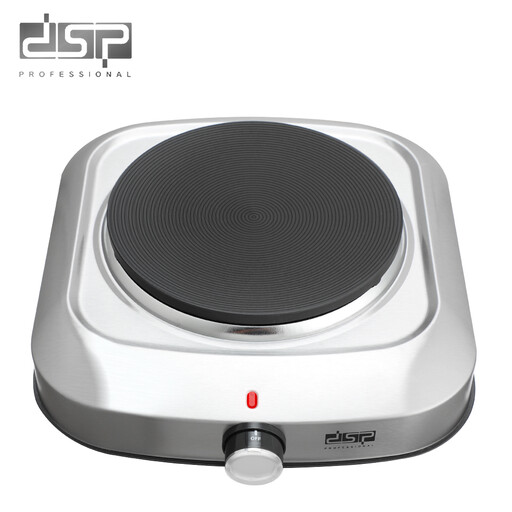
A portable electric hob with a temperature control dial, for anyone looking for an extra cooking zone.
Power: 1500 W; hotplate diameter: 185 mm.
According to the product description, a slight smell and light smoke may occur temporarily the first time it’s used. The recommended initial heating should take place in a well-ventilated area.
 No image available
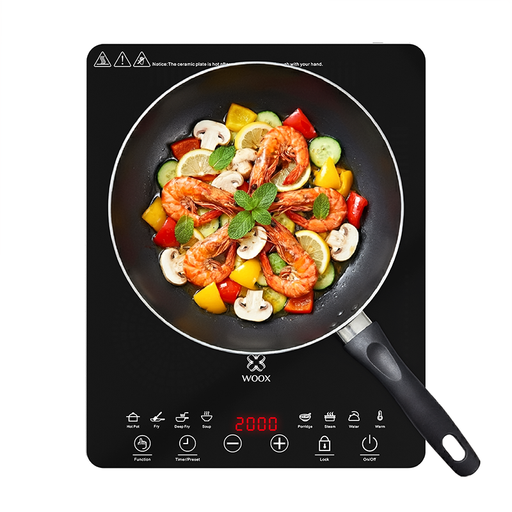
A portable single-zone induction hob with adjustable power levels, for anyone looking for an extra cooking zone.
Power: 2000 W; 8 power levels; temperature setting: 80–240 °C. The product name also mentions a timer and automatic shut-off.
According to the product description, use only induction-compatible cookware. A setting doesn’t prove what temperature the coulis will reach.
No. In Albert Heijn Allerhande’s raspberry coulis recipe, you simmer water and sugar over a low heat for five minutes, then mix the raspberries with the warm syrup. Check your recipe to see which steps need a hob.
According to Milieu Centraal, the pan base needs a magnetic steel layer, which you can check with a magnet. Also compare your pan’s diameter with the range specified by the manufacturer for your chosen model.
No. The selected setting doesn’t tell you what temperature the contents of your pan will reach. Use the controls to adjust the heat and keep an eye on the syrup, as Albert Heijn Allerhande’s recipe recommends to prevent it from caramelising.
Don’t assume it’s suitable for general indoor use. Follow the instructions for the specific appliance and check the location. Brandweer Nederland recommends ventilation when using gas appliances and highlights the risks of carbon monoxide and combustible materials.
According to the Netherlands Food and Consumer Product Safety Authority, CE marking is compulsory for electrical products and gas appliances. Ondernemersplein explains that the manufacturer of a relevant electrical appliance must apply the marking and draw up an EU declaration of conformity. Check the marking on the specific appliance; it doesn’t prove that the product has undergone independent performance testing.