
For cooks with a small kitchen
You want to use one pan for gravy and put the hob away after use. Allow for the full size of the hob and the clearance required by the specific model.


Start with your gravy pan and the space available: a portable induction hob is suitable if your pan is compatible and you can leave the required clearance; a standard electric hotplate is an alternative if you want to keep using your existing pan. Then compare the controls, connection and where the hob can cool down after use. The wattage or timer won’t tell you how evenly your gravy will heat on a low setting.
You want to use one pan for gravy and put the hob away after use. Allow for the full size of the hob and the clearance required by the specific model.
You want to adjust the heat and keep an eye on the pan as the gravy reduces. Compare the controls on each model, but don’t assume a particular cooking result based on the wattage or timer.
You first want to find out whether your gravy pan is suitable for induction. If it isn’t, you could also compare standard electric hobs.
Choose this if: your pan has a compatible magnetic base and the right diameter, and you have enough clearance.
Bear in mind: both the pan and the space around the hob must meet the requirements for the exact model.
Choose this if: you want to use your existing pan without relying on it being induction-compatible.
Bear in mind: the hotplate gets hot, so make sure you have a safe place to leave it to cool after use.
| Buying concern | What should you look for? | Who is this important for? |
|---|---|---|
| Space and storage | Measure the hob, pan and handles, and check the clearance required around the exact model. Inventum requires at least 10 cm of clearance at the sides and back of the KI120T. | If my kitchen has limited worktop space, the hob must fit with the pan on it and be easy to put away once cool; around 36% of consumers put space first. |
| Adjusting the heat | Compare the settings or control dial on the model, and stay by the hob to check the heat and gravy. | When I’m reducing gravy, I want to be able to adjust the heat while keeping an eye on the pan; around 29% of consumers prioritise that level of control. |
| Pan compatibility | Check that the base is magnetic and compare the diameter with the model specifications. For the Inventum KI120T, Inventum recommends pans measuring 15–20 cm. | If I want to keep using my current gravy pan, I need to know whether it works on induction; around 21% of consumers prioritise keeping their own pan. |
| Connection and use | Follow the model’s connection and placement instructions, and consider other appliances on the same circuit. The Fire Service recommends plugging high-power appliances directly into a socket wherever possible. | If my connection is limited or shared, I want to know in advance where I can safely place the hob and how to connect it; around 14% of consumers start with these practical considerations. |
The hob casing, pan handles and required ventilation clearance all take up more space than the cooking zone alone.
Measure the full setup and follow the instructions for the exact model. The requirement for at least 10 cm of clearance at the sides and back applies to the Inventum KI120T.
Induction only works with a suitable pan base. If your pan isn’t compatible, you won’t be able to use it on that induction hob.
Check the base and size of your pan, and compare standard electric hobs too if necessary. You may need a different, induction-compatible pan.
A stated feature or power rating alone doesn’t tell you how evenly your pan will heat on a low setting.
Compare the controls and stay nearby to check and adjust the gravy and heat.
The KI120T is a single-zone induction hob for anyone using a pan with a compatible base and diameter.
Severin offers a standard electric hotplate, the KP 1091, as well as an induction model, the KP 1071; their specifications aren’t interchangeable.
The IK-6178 is a single-zone induction hob worth comparing if you have a suitable pan and adjustable controls.
The Princess 303012 is a single-zone induction hob with dial controls to include in your comparison.
The products below are single-zone portable induction hobs for anyone who wants to reduce gravy and needs to make the most of limited kitchen space. Check your pan, the controls and the space available before choosing a model.
 No image available
A compact option to compare if you’re looking for a portable induction zone with adjustable settings.
The product name lists five power settings and 1000 W. The dimensions are 21.5 × 21.5 × 4.7 cm.
 No image available
An option to compare if you’re looking for a single portable induction hob with several adjustable settings.
The product information lists several power settings and cooking functions. Check that the connection details are suitable for your setup.
 No image available
Compare this model if you’re looking for a portable induction hob with several settings for a small kitchen.
The product information lists touch controls, ten heat settings and six cooking functions.
 No image available
A single induction zone to compare if pan diameter and adjustable heat are important factors in your choice.
The product name lists an Ø 26 cm XL cooking zone, ten power settings and a timer. The product information gives a compatible pan size of 12–26 cm and external dimensions of 392 × 368 × 100 mm.
 No image available
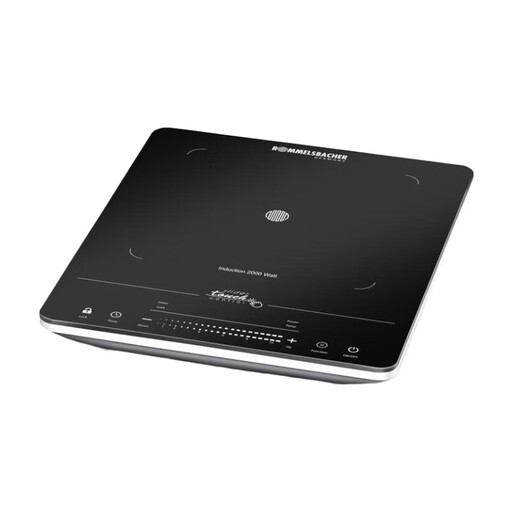
A single induction hob to compare if you’re looking for adjustable heat for use in a small kitchen.
The product information lists ten power settings, an adjustable temperature range of 60–240 °C, touch controls, pan detection and a timer with automatic shut-off.
Check that the base is magnetic and compare the pan’s diameter with the instructions for the specific model. A magnet can help with an initial check; Inventum recommends a compatible diameter of 15–20 cm for the KI120T.
Follow the placement instructions for the exact model. The Inventum KI120T manual requires at least 10 cm of ventilation clearance at the sides and back; let a standard electric hotplate cool down before putting it away.
No, an extension lead isn’t required. The Fire Service recommends plugging high-power appliances directly into a socket wherever possible, rather than using an extension lead or cable reel. Follow the model-specific connection instructions too, and consider other appliances on the same circuit.
Yes. The NVWA says CE marking is required for electrical products placed on the Dutch market. This doesn’t confirm that a particular item or model meets that requirement, so check separately.