
Cook with limited worktop space
You want to reduce gravy in a single pan. So measure not only the hob, but also allow for the saucepan and clearance around the appliance.


Choose a single-zone hob and first check that your saucepan and the entire space you plan to use it in will fit. Induction works with a flat, magnetic pan base; if your existing pan isn’t suitable, an electric hob could be an alternative. For either type, pay particular attention to the lowest setting: a high maximum power rating doesn’t prove that a small amount of gravy will simmer gently.
You want to reduce gravy in a single pan. So measure not only the hob, but also allow for the saucepan and clearance around the appliance.
You want to be able to turn the heat down after cooking. So check the lowest setting and the pan size, not just the maximum power.
The base of your saucepan is one factor in determining whether induction is suitable. Induction requires a flat, magnetic base.
First check that your pan and the hob will fit in the available space. Then check whether you can turn the heat down low enough to reduce the gravy gently.
Suitable if: your saucepan has a flat, magnetic base and is within the hob’s specified size range.
Bear in mind: check the minimum pan size and the lowest usable setting. A temperature setting or high power rating doesn’t prove that the hob can maintain a steady simmer.
Suitable if: you want to use your current pan and its base isn’t suitable for induction.
Bear in mind: the hotplate itself gets hot. Check that the thermostat setting suits your pan and the amount of gravy you’re making.
| What to consider | What should you check? | Who is this important for? |
|---|---|---|
| Reducing gravy gently | Compare the lowest setting and the controls, and see whether a simmering test is available for the exact model. Consumentenbond tests how well an induction hob maintains its temperature on a low setting. | If you want your gravy to thicken gently after cooking without continuing to boil vigorously, low-heat control should be your first consideration. Around 36% of consumers prioritise this. |
| Making sure the hob and pan fit | Measure the appliance and leave space for the pan handle and ventilation, as instructed in the manual. Choose one zone for one pan; opt for two zones only if you need to use them at the same time. | On a small worktop, you’ll want to set up the hob without the saucepan or the required clearance getting in the way. Around 29% of consumers prioritise keeping worktop space to a minimum. |
| Pan compatibility | For induction, check that the base is flat and magnetic, and that the pan size is within the model’s specified range. Consumentenbond lists both as requirements for induction pans. | If you want to keep using your current saucepan, first check that it’s compatible with your chosen heating method. Around 21% of consumers prioritise keeping their existing pans. |
| Connection and positioning | Check the plug, connection details, manual and clearance. The Fire Service advises plugging high-power appliances directly into a suitable socket; the NVWA says CE marking is mandatory for electrical products covered by the applicable regulations. | If you have limited suitable socket or setup space, you’ll want to know in advance whether the hob can be used there safely according to the manual. Around 14% of consumers prioritise connection and positioning. |
A high maximum rating doesn’t tell you whether the lowest setting is suitable for gently simmering a small amount of gravy. Consumentenbond explains that induction hobs don’t all maintain the same low temperature on their lowest setting.
Compare the lowest setting and the controls, and look for a simmering test of the exact model where possible.
Induction requires a flat, magnetic base. What’s more, a small saucepan won’t necessarily work with every hob.
Check the pan base and the permitted pan diameter before choosing an induction hob.
The body of the appliance and the pan handle also take up space. You’ll also need to leave enough room for heat to disperse, as instructed in the manual.
Measure the whole area you plan to use and check the clearance requirements for your chosen model.
Tristar offers both the IK-6178 single-zone induction hob and compact electric hotplates, including the KP-6185CH.
The CT 2010/IN is a portable single-zone induction hob with a cooking zone measuring 120–230 mm, according to Rommelsbacher.
The KP 1071 is a single-zone induction hob. Severin lists details including the appliance dimensions and plug specifications.
Princess offers the freestanding 303010 single-zone induction hob and the double-zone 303011, among other models.
This selection features portable single-zone induction hobs. Before choosing, check that your saucepan has a flat, magnetic base and is within the hob’s specified size range.
 No image available
For anyone looking for a single portable induction zone; check that your saucepan has a flat, magnetic base.
 No image available
For anyone looking for a portable induction hob with several power settings; induction requires a flat, magnetic pan base.
The product name lists 2000 W and ten power settings. That number alone doesn’t tell you how steadily a small pan of gravy will simmer.
 No image available
For anyone looking for a single induction cooking zone; check that your saucepan has a flat, magnetic base.
The product name lists 2000 W and a cooking zone of Ø 26 cm. Check the pan size and lowest setting to make sure they suit the way you cook.
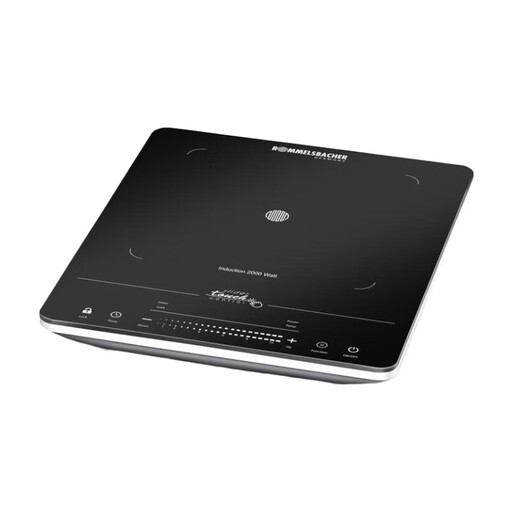 No image available
For anyone looking for a single portable induction zone; use a flat, magnetic pan that’s compatible with the hob.
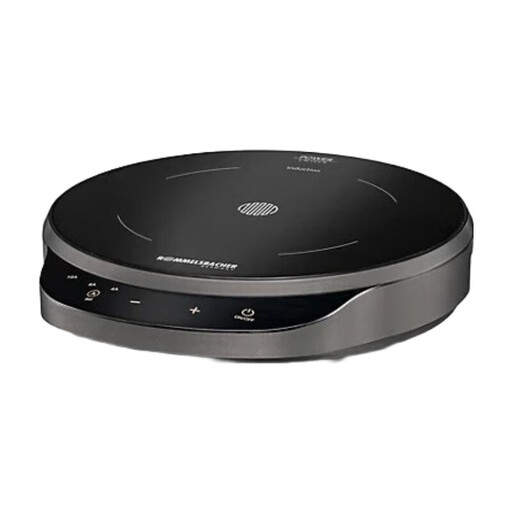 No image available
Check that your saucepan base is within the specified 12–20 cm range and suitable for induction.
Induction requires a flat, magnetic pan base.
Check that the base is flat and magnetic, and that it’s within the size range of your chosen hob. Not every induction zone will automatically recognise a small pan.
Check the manual and the connection details. The Fire Service advises plugging high-power appliances directly into a suitable socket rather than using a cable reel or extension lead. If you do use a cable reel, unwind it fully.
In the Netherlands, the retailer must resolve a product issue if the product doesn’t meet the required standards, according to the Dutch government. A manufacturer’s warranty or paid-for extended warranty doesn’t replace this statutory right.
The NVWA says CE marking is mandatory for electrical consumer products covered by the applicable regulations. Check the marking on the specific appliance; the requirement applies within the scope of those regulations.
No. A timer can switch off the hob according to the model’s specifications, but it can’t tell you how quickly the gravy is thickening. Keep an eye on the cooking process and the pan.