First, check whether your saucepan is suitable for induction and falls within the pan-size range for the model you’re considering. If it does, a portable induction hob could be a good option. If you want to keep using a pan that isn’t induction-compatible, compare it with a traditional electric hotplate. The stated power rating doesn’t prove how evenly a small amount of gravy will simmer, so check the controls too and follow the instructions for the space around the hob.
Who is this choice relevant to?
A gravy maker who wants to adjust the heat
You’re reducing a small amount of gravy and want to adjust the heat as it goes from warming up to a gentle simmer. Compare the controls and pan size; the power rating alone doesn’t tell you how steadily the heat is maintained.
A cook with an existing saucepan
You want to keep using your current small pan. First, check whether its base is suitable for induction and whether the pan falls within the stated range for the exact model. If not, a traditional electric hotplate could be an alternative.
A cook with limited worktop space
You’re looking for a cooking zone you can put away after use, but you’ll also need room for the pan and cable while cooking, as well as the clearance specified in the instructions.
What should you look for when buying?
Portable single-zone induction hob
A good fit if: your saucepan has a magnetic base and falls within the range for the model you’ve chosen.
Bear in mind: a pan that’s too small or unsuitable may rule out this option; follow the instructions on where to place it.
Traditional electric hotplate
A good fit if: you want to keep using a pan that isn’t suitable for induction.
Bear in mind: the cooking zone may stay hot after you switch it off; let the hotplate cool before putting it away.
Good Food describes simmering gravy uncovered to reduce it. Choose controls that let you adjust the heat, but don’t treat the number of settings or the maximum power as proof of precise simmering.
| What to consider |
What to look for |
Who should pay particular attention? |
| Turning down the heat |
Compare the controls and available settings on the exact model. Stay by the hob and stir as needed while the gravy reduces. |
If you want to adjust the heat as the gravy thickens, temperature control should be a priority; around 42% of consumers in this scenario share that priority. |
| Using your existing pan |
Check whether the base is magnetic and compare its diameter with the range in the instructions for the hob you’ve chosen. |
If you want to keep your current small saucepan, the fit will determine your choice; around 33% of consumers prioritise using their existing pan. |
| Space and positioning |
Measure the space with the pan in place and check the model’s ventilation clearance and connection instructions. |
If you have limited worktop space and want to put the hob away after use, the space available matters; around 25% of consumers prioritise space and positioning. |
Pitfalls to avoid when buying
-
Assuming a high maximum power means gentle simmering
Product specifications sometimes list settings or peak power, but these figures don’t show how steadily a hob heats a small amount of gravy.
Choose a hob based on the pan size and controls that suit the way you cook. Don’t treat the number of settings as a test result for making sauces.
-
Overlooking whether a small pan is induction-compatible
Induction requires a suitable magnetic pan base, and the stated pan-size range varies by model. A pan outside that range may not work with the hob you’ve chosen.
Check the base and measure the pan before comparing it with the range in the instructions. Otherwise, you may need a suitable saucepan.
-
Measuring only the hob
The pan and the required clearance also take up space while you’re cooking. For example, the Inventum KI120T manual calls for a flat, heat-resistant surface and at least 10 cm of ventilation space at the sides and back; this guidance applies to that model.
Measure the cooking area with the pan in place and follow the instructions for the model you’re considering. Keep flammable materials away from the hob.
Brands to consider
Inventum
The KI120T is a freestanding induction hob with one cooking zone.
- Inventum says the KI120T has 10 temperature settings, a timer of up to 180 minutes and a stated pan-size range of 15–20 cm.
- The manual for this model calls for at least 10 cm of ventilation space at the sides and back. Smaller pans fall outside the stated range.
Severin
The KP 1091 is a traditional single-zone electric hotplate to consider if your pan isn’t suitable for induction.
- Severin lists a 18.5 cm cast-iron cooking zone, approximately 1,500 W of power and stepless control for this model.
- This isn’t an induction hob. The cooking zone may stay hot after use; let it cool before putting the hotplate away.
Princess
The 303030 is a freestanding single-zone induction hob with digital controls.
- Princess says this model has 10 power levels up to 2,000 W and a timer of up to 180 minutes.
- A 19 cm cooking surface diameter doesn’t, on its own, confirm the minimum suitable pan size. Check the manual for this information.
Rommelsbacher
The CT 2010/IN is a single-zone induction option to consider if using a relatively small induction pan is a priority.
- The manufacturer lists a 120–230 mm cooking zone, 10 power settings and a 180-minute timer.
- Check the pan-size range against the manufacturer’s information for the exact model before choosing a pan.
Hobs at Joybuy
This selection includes portable single-zone induction hobs and a traditional electric hotplate for anyone looking to reduce gravy for one.
 No image available
Portable induction hob, 1,000 W
An option if you’re looking for a portable induction hob; use a pan that’s suitable for induction.
The product name lists 5 power settings and 1,000 W.
View at Joybuy
 No image available
ochama induction hob, 2,000 W
A portable induction option if you want to compare heat settings; use magnetic cookware.
The product name lists 10 heat settings, touch controls and 2,000 W.
View at Joybuy
 No image available
Fritel IP 1266, induction hob
A single-zone induction option for a small saucepan, provided the pan falls within the stated range.
The product name lists 10 power settings and 2,000 W. Check that your pan is induction-compatible and falls within the 12–26 cm range.
View at Joybuy
 No image available
Rommelsbacher CT 2002/IN
A portable single-zone induction hob to consider for a small saucepan.
Check that the pan has a ferromagnetic base and falls within the stated 12–23 cm range.
View at Joybuy
 No image available
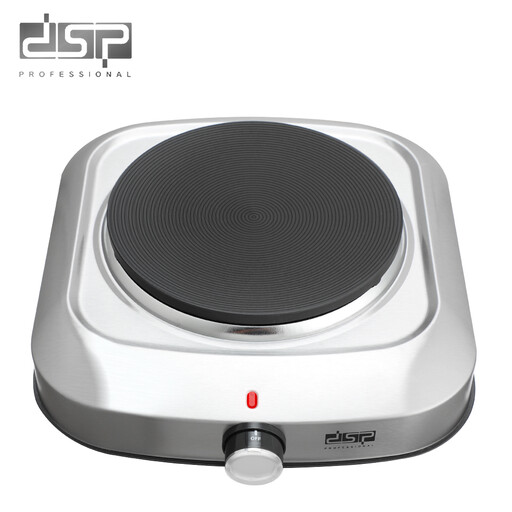
DSP Professional KD4056, electric hotplate
A traditional electric option if you don’t want to use an induction-compatible pan.
The product name lists 1,500 W and adjustable temperature control.
View at Joybuy
Frequently asked questions
Can I use my current saucepan on an induction hob?
Only if the pan is suitable for induction and falls within the hob’s pan-size range. Milieu Centraal recommends checking whether the base is magnetic, for example with a small magnet; then compare the diameter with the manual for the exact model.
How do I reduce a small amount of gravy?
Simmer the gravy uncovered and adjust the heat as needed. Good Food describes simmering uncovered as a cooking step; this isn’t a test of a portable hob’s performance. Stay by the hob and stir as needed.
Can I put the hob away straight after use?
Wait until the hob and pan have cooled. A traditional electric cooking zone in particular may stay hot after being switched off; also follow the cleaning and storage instructions for the model you’ve chosen.
Do I need a special electrical connection for a portable single-zone hob?
That depends on the model and the connection available. The Consumentenbond states that most, but not all, freestanding induction hobs can be plugged into an earthed socket. Check the manual and avoid overloading the circuit.


