
Batch cook using a wide pan
If you’re making a larger quantity in one pan, compare the flat base of the pan with the size of the cooking zone. The Consumentenbond explains that if an induction pan is too large, it may heat mainly in the centre.


Start by measuring the flat base of your largest pan, then decide whether you’ll use one pan at a time or need two pans side by side. A single-zone induction hob is suitable if the pan base is magnetic and fits the cooking zone; a conventional electric or ceramic hob may be an option for pans that are not suitable for induction, but the zone itself gets hot. If you want to use two pans, also check the available space and total connected load. Milieu Centraal says that induction uses less electricity than other electric hobs.
If you’re making a larger quantity in one pan, compare the flat base of the pan with the size of the cooking zone. The Consumentenbond explains that if an induction pan is too large, it may heat mainly in the centre.
If you want to turn down the heat after warming the mixture, compare the controls and any timer on the specific model. A timer is no substitute for Brandweer Nederland’s advice to stay nearby while cooking.
If you’re splitting portions between two pans, check that there are two cooking zones, enough workspace and a suitable electrical connection. The Consumentenbond warns that freestanding hobs with a limited total power output may not always be able to run both zones on a high setting at the same time.
First, measure the flat base of your pan and compare it with the model’s cooking zone. The Consumentenbond points out that an induction hob may heat mainly the centre of a pan with an oversized base. If you’re using two pans, you’ll also need to consider the available space and total connected load.
| What to consider | What to look for when buying | Who is this important for? |
|---|---|---|
| A cooking zone that suits your batch pan | Measure the flat base of the pan and compare it with the stated pan size range or the diameter of the cooking zone. | If I’m making a large quantity in one pan, I want to know whether its base will fit the zone. Around 33% of consumers say that finding a suitable pan size is their main purchase priority. |
| Turning down the heat while simmering | Check the controls and the maximum timer duration for the specific model; stay nearby while cooking. | If I want to continue simmering gently after warming the mixture, I look for controls that let me turn down the heat. Around 27% of consumers prioritise being able to control the simmering process. |
| Continuing to use your existing pan | Use a magnet to check whether the base is suitable for induction, then compare its size with the cooking zone. | If my current pan isn’t magnetic, I want to know whether I can still use it or need a different type of hob. Around 20% of consumers prioritise keeping their existing pan. |
| Using two pans at once | Measure the available space and check the total connected load, the electrical connection and the circuit load. | If I want to prepare two portions at once, I need room for both pans and want to know what the electrical connection can handle. Around 20% of consumers say that cooking with two pans at once is their main priority. |
The rim doesn’t tell you how large the flat base is. According to the Consumentenbond, if a pan is too large for an induction zone, it may heat mainly in the centre.
Measure the base and compare it with the pan size range or cooking zone diameter for the specific model.
On a freestanding hob with a limited total power output, using two high settings at once may be restricted.
Check the total connected load, the power output of each zone and the load on the electrical circuit.
With conventional electric and ceramic hobs, the zone itself gets hot and may retain heat after cooking.
Let the hob cool according to the instructions before touching, cleaning or putting it away.
The Voedingscentrum’s guidance on jam is partly based on its high sugar content; it doesn’t tell you how long a different coulis recipe will keep.
Chill leftovers promptly, store them covered and choose a storage method that suits the recipe you’ve actually made.
The KI120T is a single-zone induction hob for a pan with a suitably sized base.
The KP 1091 is a conventional single-zone hob; the DK 1014 has two individually controlled zones.
The 303011 is a two-zone induction hob, while the 303021 is a two-zone ceramic hob.
The TILLREDA 805.901.55 is a storable single-zone induction hob that gives you an extra cooking space.
This selection includes portable single-zone induction hobs and a two-zone model. For a single-zone hob, check that the magnetic pan base fits the cooking zone. Choose two zones only if you have enough space and the right electrical connection.
 No image available
A single-zone option for anyone who uses one pan at a time and has a suitably sized magnetic pan base.
Power output: 1000 W. Five heat settings and a dial control.
 No image available
A single-zone model for cooking with one pan and adjusting the heat using a range of settings.
2000 W and ten power settings. Touch controls and a safety lock. Suitable only for magnetic cookware; according to the product description, aluminium and ceramic pans without a magnetic base won’t work properly.
 No image available
The Ø 26 cm cooking zone may be worth considering if your pan base is a suitable size.
2000 W, ten power settings and a timer of up to 3 hours. Requires induction-compatible cookware with a flat, magnetic base.
 No image available
A single-zone model for anyone who uses one pan and wants to adjust the heat while simmering.
Ten power settings, ten temperature settings and a 99-minute timer. Suitable for induction-compatible pans.
 No image available
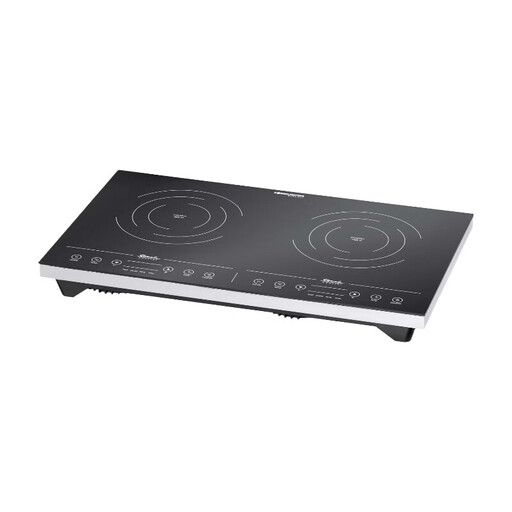
A two-zone option if you want to use two pans at once and have room for the hob and both pans.
Zones of 1400 W and 2000 W, ten settings and a 180-minute timer. The product description lists temperatures of 60–240 °C and pans up to 230 mm. Requires induction-compatible cookware; check the electrical connection and the size of both pan bases.
Check whether a magnet sticks to the pan base, then compare its diameter with the pan size range or cooking zone for the specific model. Measuring only the diameter of the rim isn’t enough.
First, check the connected load, the socket and which other appliances are on the same circuit. The Consumentenbond explains that freestanding induction hobs with a limited connected load may not be able to run several zones on a high setting at once. Brandweer Nederland advises plugging high-power appliances directly into a socket where possible. Always follow the instructions for the specific model too.
No. Some models may switch off when the timer ends, but that doesn’t replace supervision: Brandweer Nederland advises staying near the hob while cooking.
Don’t automatically treat freshly made coulis like jam with a long shelf life: jam’s preserving qualities are partly due to its high sugar content. The Voedingscentrum advises putting leftovers in a fridge at 4 °C, well covered, within two hours of preparation. The right storage method and shelf life depend on the recipe.
For electrical equipment placed on the Dutch market under the applicable European requirements, the Dutch government’s Ondernemersplein explains that CE marking and an EU declaration of conformity are manufacturer obligations. Check the information for the specific model; a CE marking on its own isn’t a performance test.