
Cook with limited worktop space
You want to use one stew pot and still have enough room for the controls and safe placement. As well as measuring the hob, check the clearance specified in the manual.


Start by checking how much safe worktop space you have and measuring the base of your stew pot; then choose the type of heating. Induction is an option if your pan is compatible, while a ceramic or cast-iron hob may work with other pans. For every model, check the connection, pan size and placement instructions: wattage alone won’t tell you how gently a dish simmers on the lowest setting.
You want to use one stew pot and still have enough room for the controls and safe placement. As well as measuring the hob, check the clearance specified in the manual.
You want to be able to adjust the heat while cooking. Check the controls and use a suitable pan; wattage alone won’t tell you how gently a hob simmers on a low setting.
You want to check whether your current pan is suitable and whether its base matches the heating zone before considering another pan.
First compare the space available and pan size, then the controls and heating technology, and finally check the connection and placement instructions.
| What to consider | What to look for | Who is this important for? |
|---|---|---|
| Space and placement | Measure the available width and depth, and follow the clearance requirements in the manual for your chosen model. | If I have limited worktop space, I want to know whether the hob and the clearance it needs will fit. Around 33% of consumers say safe placement is their main buying concern. |
| Adjusting the heat | Check the controls and settings on the exact model. A timer is a useful feature, but it’s no reason to leave the pan unattended. | If I want to adjust the heat while stewing, I look for settings that are easy to use. Around 27% of consumers prioritise adjustable heat. |
| Pan and cooking zone | For induction, check that your pan is compatible; for all types, compare the base diameter with the stated pan size or cooking zone. | If I want to keep using my existing stew pot, its base needs to suit the hob. Around 20% of consumers name pan compatibility as their main buying concern. |
| Connection and use | Check the plug type, manual and socket. Keep flammable materials away and stay nearby while cooking. | If I want to use a portable hob in my kitchen, I want to know whether the connection and placement will work in that setup. Around 20% of consumers prioritise the connection and safe use. |
Dimensions and connection requirements vary by model. For example, Inventum specifies pans measuring 15 to 20 cm for the KI120T, and its manual requires at least 10 cm of clearance at the sides and rear. Don’t assume the same clearance applies to other models.
A model’s manual may specify clearance around the hob in addition to its external dimensions. So a hob that appears to fit on paper might not be suitable for the space you have in mind.
Measure the depth too, and follow the placement instructions for the exact model.
Induction hobs and ceramic radiant hobs can both have a smooth surface, but they heat differently and have different requirements for pans.
Check the heating technology and pan requirements in the product information, not just the finish.
A 15 cm cooking zone won’t necessarily suit every stew pot. The external dimensions won’t tell you whether the pan base matches the heating zone.
Measure the base of your pan and compare it with the stated range or zone for the specific model.
Stated power and features don’t independently measure how a hob performs on a low setting. A timer is no substitute for keeping an eye on it either.
Check the controls the model offers and stay near the hob while cooking.
The KI120T is a single-zone induction hob for anyone with a compatible pan and an earthed socket.
The KP 1071 is a portable single-zone induction hob. Its stated external dimensions and plug type are worth checking if space is limited.
The CT 2200/E is a ceramic radiant hob for anyone who doesn’t want to use an induction pan.
The DO309KP is a single-zone cast-iron hob with a larger zone than the Tristar KP-6185 mentioned here.
The KP-6185 is a compact single-zone cast-iron hob for a smaller pan.
These product picks are portable single-zone induction hobs. Ceramic and cast-iron alternatives are covered above, so you can also consider them if your pan isn’t suitable for induction.
 No image available
An option if you have a flat-based, induction-compatible pan that falls within the stated range.
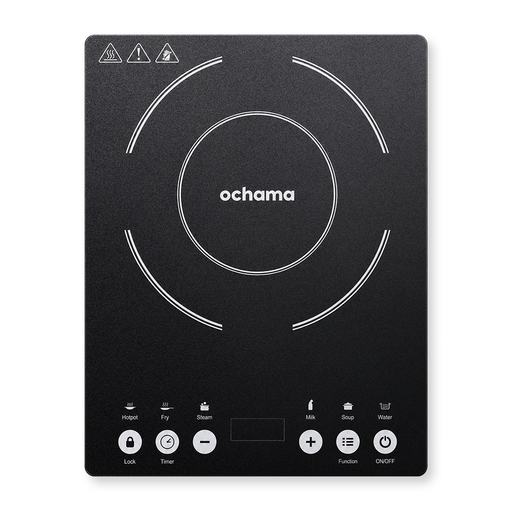
2000 W; 8 power settings; suitable for pans measuring 12–26 cm; timer up to 3 hours.
 No image available
An option if you want to adjust the heat while cooking and use induction-compatible pans.
2000 W; 10 power settings; 6 functions; safety lock. Suitable for magnetic cookware.
 No image available
An option if you want to use induction-compatible cookware with a suitable flat base.
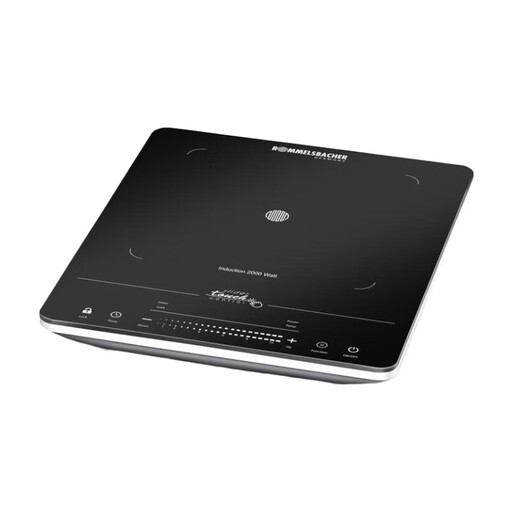
2000 W; 10 power settings; stated pan range 12–26 cm; dimensions 392 × 368 × 100 mm.
 No image available
An option if you use a suitable induction pan and want to compare the heat settings.
10 power levels; temperature setting from 60–240 °C; 99-minute timer. The product information doesn’t specify a pan size.
 No image available
An option if your pan has a ferromagnetic base and falls within the stated zone range.
10 power levels; 10 temperature settings; cooking zone of 12–23 cm; timer up to 180 minutes.
It depends on the model. Inventum specifies that the KI120T should be connected to an earthed Dutch socket; according to the Consumers’ Association, this applies to many, but not all, freestanding induction hobs. Check the connection requirements for the exact appliance and what your electrical circuit can handle.
Follow the model’s manual for the surface it should stand on and the ventilation clearance required. For example, the Inventum KI120T manual specifies a flat, heat-resistant surface and at least 10 cm of clearance at the sides and rear; that distance doesn’t automatically apply to other hobs. The Fire Service advises staying nearby and keeping flammable materials away from the hob.
It depends on the recipe and ingredients. In the Netherlands Nutrition Centre’s recipe, the vegetables and baby potatoes go into the stew first, and the fish is added for the final five minutes. This timing isn’t a universal cooking time for every type of fish or shellfish.
No, a manufacturer’s warranty doesn’t replace your statutory rights in the Netherlands. If a product is faulty despite being used normally, the seller is responsible for providing an appropriate solution under the applicable terms. There isn’t one fixed statutory warranty period for every product.
Where CE marking is required for the product in question, it means the manufacturer declares that the product meets the relevant EU requirements. According to the Netherlands Enterprise Agency, CE marking isn’t an independent safety assessment. Check the product information for the specific appliance; a brand name alone doesn’t establish compliance.