
Custard maker with limited worktop space
You mainly cook with one pan at a time and want to adjust the heat as you stir, without giving up too much worktop space. Albert Heijn Allerhande describes making custard while stirring constantly.


Choose a hob that lets you adjust the heat as you stir; a high maximum power rating alone doesn’t tell you how well it will cook custard over a low heat. A single induction hob takes up little space, but you’ll need a suitable pan. A traditional electric hotplate avoids this requirement. A double hotplate is mainly worthwhile if you regularly use two pans at once, and it needs more space and careful consideration of the electrical connection.
You mainly cook with one pan at a time and want to adjust the heat as you stir, without giving up too much worktop space. Albert Heijn Allerhande describes making custard while stirring constantly.
You want to find out whether your current pan is suitable for induction before choosing a hob or buying another pan. The Consumentenbond explains that an induction pan needs a flat, magnetic base.
As well as making custard, you regularly want to use two pans at once and need to work out whether a double hotplate will fit in your kitchen and suit your electrical connection. Tristar lists two independently adjustable zones for the KP-6245.
A good fit if: you need one cooking zone and already have a suitable induction pan.
The trade-off: the pan base must be flat and magnetic; the settings don’t represent measured custard temperatures.
A good fit if: you use one pan and want to avoid the induction requirement for your existing pan.
The trade-off: check that your pan fits the cooking zone, and bear in mind that the hotplate itself gets warm.
A good fit if: you regularly use two pans at once and have the space for them.
The trade-off: a second zone adds little when you’re making custard in just one pan; also check the electrical connection and available worktop space.
When making custard, being able to adjust the heat as you stir constantly is an important consideration. Albert Heijn Allerhande describes cooking it while stirring constantly.
| What to consider | What should you check? | Who should pay particular attention? |
|---|---|---|
| Adjusting the heat | Check whether you can easily adjust the low settings as you stir. Try the controls with the pan and quantity you plan to use. | When I make custard, I want to be able to adjust the heat as I stir, rather than relying on the maximum power rating alone. Around 36% of consumers put adjustability first. |
| Using your existing pan | Check that the base is flat and magnetic, and compare the size of the pan with the cooking zone. | I want to keep using my current pan and find out first whether it’s suitable for induction. Around 29% of consumers prioritise keeping their existing pan. |
| Space and storage | Measure the space for the hob and pan; also check when the hob can be stored safely. | In a small kitchen, I want a hob that can be put away after use and doesn’t take up more space than necessary. Around 21% of consumers prioritise limited worktop space and storage. |
| Using two pans at once | Consider how often you cook with two pans at once, and compare the stated total power with the electrical connection you plan to use. | I regularly cook meals with two pans at once and want to know whether a double hotplate will fit in my kitchen and suit the electrical connection. Around 14% of consumers say cooking with two pans at once is their top priority. |
The stated wattage doesn’t show how the hob performs on a low setting. Albert Heijn Allerhande describes making custard while stirring constantly; a high maximum power rating alone doesn’t indicate that the heat will be consistent.
Look at the controls and assess the hob and pan combination you actually plan to use. Don’t treat the settings as measured custard temperatures.
An induction hob needs a suitable pan base. If your pan isn’t flat and magnetic, you may need to change your choice of hob or buy another pan.
Check the base and compare the pan size with the cooking zone and the instructions for your chosen model.
A double hotplate needs more space, and its total power matters when choosing an electrical connection. Brandweer Nederland advises plugging high-power appliances directly into a socket rather than using an extension lead.
Measure the space available, check the stated power and follow the connection instructions. Stay with the hob while cooking, as Brandweer Nederland advises.
For the Rommelsbacher CT 2010/IN, the manufacturer gives a cooking zone of 120–230 mm, while the Joybuy product listing gives 100–200 mm. These different measurements could affect which pan you can use.
If in doubt, check the full specifications and product documentation for the exact version before deciding on a pan size or making a purchase.
The CT 2010/IN is a single induction hob for anyone with a suitable pan who wants to choose from several power settings.
The KP 1091 has one traditional electric cooking zone for anyone who wants to avoid the induction requirement for their pan.
The single-zone TILLREDA is a storable induction option for a small kitchen.
The KP-6245 is a traditional double electric hotplate for anyone who regularly uses two pans at once.
These Joybuy products are portable hobs for one pan: both traditional electric hotplates and induction hobs for use with a suitable pan.
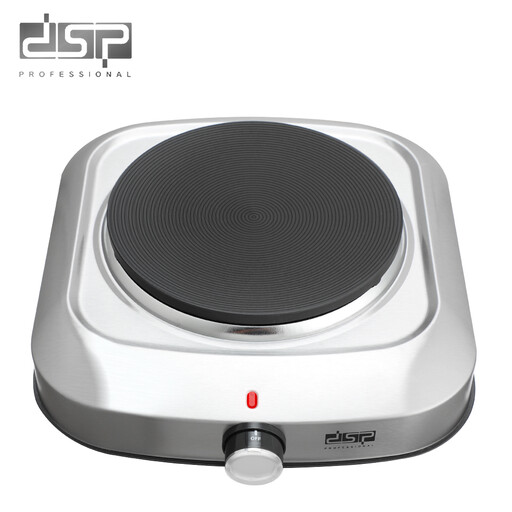 No image available
A traditional electric hotplate with one burner and an adjustable temperature dial, for anyone who uses one pan.
1500 W; adjustable temperature; model KD4056.
 No image available
A portable induction hob for one pan; check that your pan is suitable for induction before buying.
Five power settings; 1000 W.
 No image available
A portable induction hob for one pan; your pan needs a flat, magnetic base.
220V/240V/2100.
 No image available
A portable induction hob for one pan; check that the pan base is flat and magnetic.
2000 W; ten power settings.
 No image available
An induction hob for one pan; the pan must be suitable for induction.
2000 W; cooking zone Ø 26 cm; ten power settings.
Follow your recipe and keep stirring as you adjust the heat. Albert Heijn Allerhande describes heating custard over a medium heat while stirring constantly; another Allerhande recipe says to thicken it over a low heat. So these recipes don’t provide one universal hob setting for every hob or recipe.
Only if the pan base is suitable: check that it’s flat and magnetic, and that its size is right for the cooking zone. Also compare the pan size with the manual for the exact model. The Consumentenbond explains the requirements for an induction pan.
Brandweer Nederland advises plugging high-power appliances directly into a socket, not an extension lead, and staying nearby while cooking. Also check the stated power and the hob’s instructions, and make sure the electrical connection in your home is suitable.
In the Netherlands, if a product doesn’t meet reasonable expectations, you can contact the retailer to find a solution. The Rijksoverheid explains that the retailer is responsible; any extra guarantee offered doesn’t replace your statutory rights.
Electrical equipment within the voltage range covered by the EU Low Voltage Directive must meet safety and conformity requirements. According to the European Union, a CE marking is the manufacturer’s declaration that the product meets the applicable requirements; on its own, the marking isn’t an independent performance test of the hob.