
Custard maker with an induction pan
Wants to turn down the heat while stirring and is looking for an extra cooking zone to do so.


Choose a portable induction hob if your saucepan has a suitable magnetic base and you want to adjust the heat as you stir. If your pan isn’t suitable for induction, compare conventional electric hobs; bear in mind that the cooking zone may stay hot after you switch it off. For every model, check the pan size and electrical connection: the settings or stated temperatures won’t tell you how evenly your custard will thicken.
Wants to turn down the heat while stirring and is looking for an extra cooking zone to do so.
Wants to keep using their own saucepan, so is also comparing conventional electric hobs.
Needs a portable hob that fits the available space and can be used with a suitable electrical connection.
| What to consider | What should you check? | Who is this important for? |
|---|---|---|
| Adjusting the heat | Check the controls at low settings and whether you can easily move the pan off the zone. | If I want to turn the heat down quickly while stirring and stop cooking at the right time, I’ll look at the controls and any residual heat. Around 36% of consumers prioritise heat control. |
| Using your saucepan | For induction, use a magnet to check that the base is magnetic, and compare the pan size with the model’s stated range. | If I want to keep using my current pan, it needs to be suitable for the heating method and cooking zone. Around 29% of consumers give pan compatibility top priority. |
| Electrical connection and space | Compare the power rating, plug, cable length and dimensions with the available space and electrical connection. | If I want to use a portable hob on a small worktop, both the space and the connection need to be suitable. Around 21% of consumers check this first. |
| Controls and aftercare | Check the controls and the repair information for the specific model. | If I plan to use the hob regularly, I’ll also consider how easy it is to use and what aftercare is available. Around 14% of consumers prioritise ease of use and aftercare. |
An induction hob can also have a ceramic glass surface. However, induction requires a suitable pan with a magnetic base.
Check the hob’s heating method and test your own pan before buying. Milieu Centraal explains how to use the magnet test on a pan base.
If your pan isn’t suitable for induction, you may need another saucepan to use with that hob.
A conventional ceramic or cast-iron cooking zone can retain heat after you turn it down. This may cause the custard to thicken further.
Keep stirring and, if necessary, move the pan off the zone as soon as the custard is thick enough. The Voedingscentrum advises continuing to stir the custard in its recipe and turning off the heat once it has thickened.
A retailer’s description of the Severin KP 1071 mentions a heating element and stepless control, while Severin describes the model as an induction hob with pan detection.
Before choosing, compare the full model number and heating method with the manufacturer’s information.
Rommelsbacher makes both induction models and conventional electric hobs. Compare the models’ pan requirements and how much heat they retain after you turn them down.
The KP 1071 and KP 1091 are different Severin models with different heating methods.
The IK-6178 is a portable induction hob with separately adjustable power, temperature and timer settings.
The S-Line 2100 portable induction hob is worth comparing if you want a choice of power settings.
Below are portable hobs to compare if you’re looking for an extra cooking zone. Check the heating method, pan requirements, number of zones and controls for each model.
 No image available
Worth comparing if you’re looking for a portable induction zone with adjustable power.
The product title lists 1,000 W and five power settings. Induction requires a suitable pan with a magnetic base.
 No image available
Worth comparing if you want to adjust both the power and temperature while stirring.
The description lists 2,000 W, eight power settings, a temperature range of 60–270 °C and a timer of up to 3 hours. Suitable for flat-bottomed induction pans measuring 12–26 cm; check the base size of your saucepan.
 No image available
Worth comparing if you’re looking for a portable induction hob with several adjustable heat settings.
The description lists 2,000 W, ten heat settings and touch controls. Use magnetic induction cookware with this hob.
 No image available
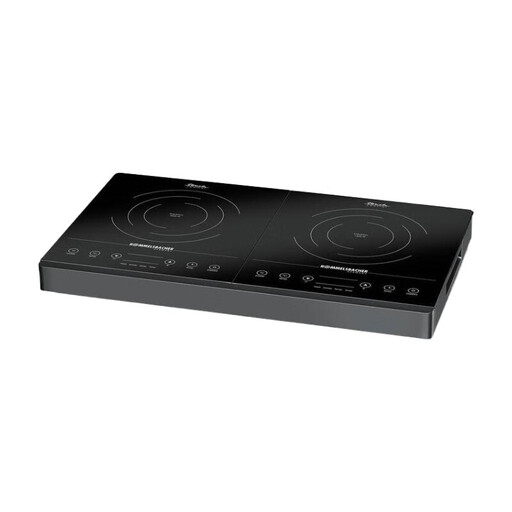
Worth comparing if you want a second cooking zone alongside the one for your custard pan.
The product name identifies this model as a double hob. Check the exact version and heating method before choosing a pan.
 No image available
Worth comparing if you’re looking for a portable extra induction zone with separate settings.
The description lists ten power settings and ten temperature settings. Induction requires a ferromagnetic pan base.
Keep stirring and turn off the heat as soon as the custard has thickened. The Voedingscentrum recommends this for the cornflour custard recipe described; a hob timer is no substitute for watching and stirring the custard.
Use a magnet to check that the base is magnetic, and compare the pan size with the range specified for your chosen hob. Milieu Centraal explains the magnet test. If your pan isn’t suitable, you could compare conventional electric hobs.
The Netherlands Fire Service advises plugging high-power appliances directly into a socket rather than using an extension lead or cable reel. Also check the manual and see which other appliances are connected to the same circuit.
According to the Dutch Food and Consumer Product Safety Authority, CE marking is compulsory for electrical products covered by the relevant regulations; the marking is not proof of an independent safety test. ACM ConsuWijzer explains that you’re entitled to a product that lasts as long as you could reasonably expect with normal use; there is no standard two-year period.