
Cook with one pan and limited space
If you cook the vegetables together or one after the other, you can put away a single-zone hob after use and free up worktop space. IKEA highlights this benefit for the TILLREDA.


If you cook your carrots and onions together in one pan or one after the other, a portable single-zone hob is a sensible choice. If you want to use two pans at once, you’ll need two zones and enough worktop space. Induction requires pans with a magnetic base, while a conventional electric hob doesn’t have this requirement but does heat up itself. Before buying, check the dimensions and the connection requirements for the specific model, and use the hob on a stable, clear surface.
If you cook the vegetables together or one after the other, you can put away a single-zone hob after use and free up worktop space. IKEA highlights this benefit for the TILLREDA.
If you want to cook carrots while frying the onions separately, two zones are useful, provided there’s enough room for the hob and your pans. IKEA and Tristar describe portable models with two zones.
Before choosing induction, check whether a magnet sticks to the base of your pan. Milieu Centraal explains that a magnetic layer is needed; otherwise, you could consider a conventional electric hob.
Choose this if: you use one pan or cook the vegetables one after the other, and your pan has a magnetic base.
Bear in mind: you can only use one pan at a time, and you’ll need to check that your pan is suitable for induction.
Choose this if: cooking and frying at the same time matters more to you than having the smallest possible footprint.
Bear in mind: external dimensions, available connection capacity and power settings vary by model.
Choose this if: you use one pan that isn’t suitable for induction, provided its base fits the cooking zone.
Bear in mind: the cooking zone itself gets hot and must cool down before you clean or put the hob away.
Choose this if: you want to use two pans at once without needing them to have magnetic bases.
Bear in mind: a two-zone hob takes up more space. Check the connection requirements too, and remember that the cooking zones get hot.
| Consideration | What should you check? | Who is this important for? |
|---|---|---|
| Worktop space and storage | Measure the stable surface and storage space, and compare the full external dimensions. | If I need space again after cooking to chop vegetables or put pans down, a compact hob is a priority for me. Around 36% of consumers prioritise worktop space and storage. |
| Using two pans at once | Check that two zones, your pan sizes and the specified connection capacity suit the way you’ll use it. | If I want to cook carrots while frying onions separately, having two usable zones matters more than the smallest possible footprint. Around 29% of consumers prioritise cooking with two pans at once. |
| Existing pans | Test the pan base with a magnet and compare its size with the cooking zone. | If I want to keep using my current pans, I’ll first check that they’re suitable for induction. Around 21% of consumers prioritise whether their existing pans are suitable. |
| Connection and safe use | Read the instructions for the exact model, check the available connection and place the hob on a stable surface with no flammable items nearby. | If I want to know in advance whether the hob is compatible with the connection I have and where I can place it safely, I’ll check the model specifications and cooking area. Around 14% of consumers prioritise connection requirements and safe use. |
The space available needs to accommodate not just the hob, but also room for chopping and putting pans down.
Measure the space and compare it with the model’s full external dimensions before deciding how many zones you need.
A larger hob could take up space you need for food preparation and pans while cooking.
An induction hob needs a magnetic layer in the pan base, and the base must also be the right size for the cooking zone.
Test the pan base with a magnet and check its size before choosing an induction hob.
If your pans aren’t suitable, you may need to use a compatible pan or consider a conventional electric hob.
Connection ratings and requirements vary by model; the number of cooking zones alone doesn’t tell you what connection you’ll need.
Check the instructions, connection requirements and available electrical circuit for the specific model. The fire service recommends plugging high-power appliances directly into a socket wherever possible.
The TILLREDA models reviewed are portable induction hobs with one or two zones.
The KP-6185 and KP-6152 models reviewed are conventional electric alternatives with one and two cooking zones respectively.
The models reviewed, 303010 and 303011, are induction hobs with one and two zones respectively.
The KP 1032 and DK 1031 models reviewed are portable induction hobs with one and two zones respectively.
This selection focuses on portable single-zone hobs for cooking with one pan: mainly induction models, with one conventional electric alternative if you want to use a pan that isn’t suitable for induction.
 No image available
Suitable if you use one pan and want a portable induction hob for a smaller space.
The product description lists one cooking zone, 2100 W, automatic pan detection and a child lock. Induction requires a pan with a magnetic base.
 No image available
A portable single-zone induction hob for anyone who wants to use a range of cooking settings in a limited space.
The product name lists 8 power levels, temperature control from 60–270 °C, 7 cooking programmes, a 3-hour timer and a child lock. According to the product information, suitable cookware has a base diameter of 12–26 cm.
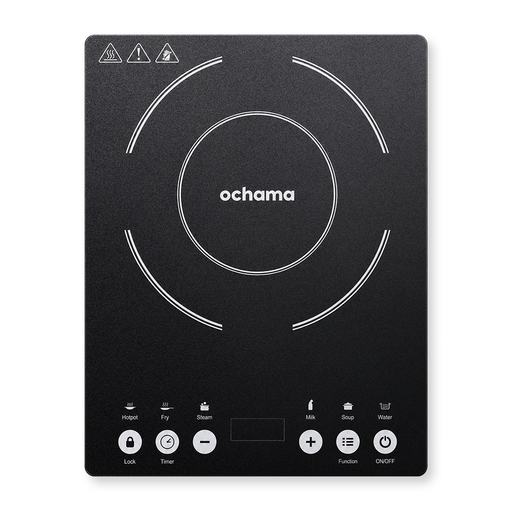 No image available
A portable induction option for anyone who uses one pan and wants to put the hob away after cooking.
The product information lists 10 power settings and 6 functions. Use a magnetic pan; the cooking surface gets hot during use.
 No image available
Suitable for cooking with one pan, provided it has a magnetic base and is within the specified size range.
The product name lists 2000 W, a Ø 26 cm cooking zone, 10 power levels, touchscreen controls and a timer. The product information specifies pans with a base measuring 12–26 cm.
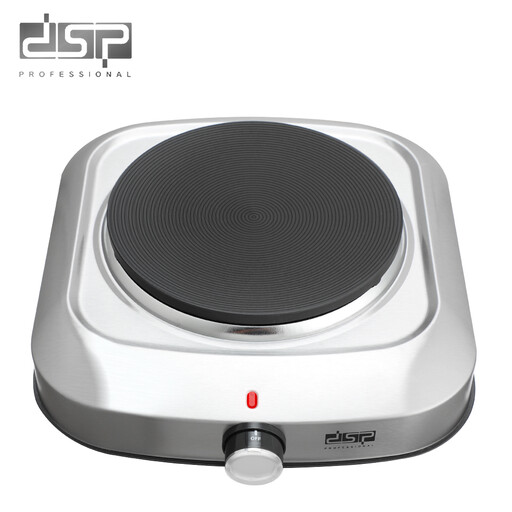 No image available
A conventional electric option for cooking with one pan if you don’t want to rely on having a magnetic pan base.
The product name lists 1500 W; the product description specifies a 185 mm hotplate and an adjustable temperature. It also notes that a slight smell and some smoke may occur the first time you use it.
Yes, if you cook them together in one suitable pan or cook and fry them one after the other. If you want to use two pans at once, choose two suitable zones and check that the hob will fit on your worktop.
Check whether a magnet sticks to the pan base; induction requires a magnetic layer. Also compare the base size with the model’s cooking zone.
Don’t assume that every model has the same connection requirements. Check the model specifications and the available electrical circuit; the Consumentenbond notes that high-power models may require a different connection. The fire service recommends plugging high-power appliances directly into a socket, rather than using an extension lead or cable reel.
Place the hob on a flat, stable surface, keep flammable items away and stay nearby while cooking. For the TILLREDA models reviewed, IKEA recommends removing food residue after use with a damp cloth and mild detergent. For other models, follow the instructions supplied with the product.
Ask your pacemaker technician or cardiologist first. Milieu Centraal advises people with a pacemaker to get individual advice before using induction. Don’t draw conclusions about your personal situation without that advice.