
One-pot cook with limited space
If you want to leave your tagine to simmer in one place and put the hob away afterwards, a portable single-zone hob could be suitable. The Consumentenbond says that induction requires a flat, magnetic base.


Start with the pan: choose a portable hob that you’re allowed to use with your particular tagine or casserole dish, following the pan’s instructions. If you’re only using the casserole dish, one zone may be enough; if you want to prepare a side dish at the same time, you’ll need a second zone. Induction requires a suitable magnetic base, while ceramic zones heat up and respond more slowly, according to Milieu Centraal. Also check that the connected load is suitable for your set-up.
If you want to leave your tagine to simmer in one place and put the hob away afterwards, a portable single-zone hob could be suitable. The Consumentenbond says that induction requires a flat, magnetic base.
Start by checking the material and base of your own pan: the shape of a tagine alone doesn’t tell you whether it will work on induction. The Voedingscentrum also recommends a casserole dish or roasting tin with a thick base and lid for slow cooking.
If you want to use a second pan while the tagine simmers, compare the number of cooking zones, available worktop space and the hob’s connected load with your set-up.
| What to consider | What to check before buying | Who is this most relevant to? |
|---|---|---|
| Gentle slow cooking | Compare the heat settings and any timer with the cooking time in your recipe. | I want to let my stew cook gently for longer, so I’m looking for adjustable heat and a timer that suits the recipe. Around 40% of consumers prioritise gentle slow cooking. |
| Using your own pan | Check the pan’s instructions, the material of its base and its size in relation to the cooking zone. | I want to check first whether my tagine or casserole dish can be used with the heat source I’ve chosen. Around 30% of consumers prioritise being able to use their own pan. |
| Using a second pan | Check the number of zones, the dimensions and the total connected load. | I want to prepare a side dish while the tagine simmers, so I need room for a second pan. Around 20% of consumers prioritise being able to cook two things at once. |
| Worktop and connection | Compare the dimensions, plug and connected load with the available space and electrical set-up. | I need to be able to position the hob on my worktop and connect it to my power supply. This is a priority for around 10% of consumers; Brandweer Nederland advises plugging high-power appliances directly into a suitable socket. |
A glass or glass-ceramic surface alone doesn’t tell you how the hob heats your pan. According to Severin, the Severin KP 1071 has a glass-ceramic cooking zone with induction and pan detection.
Check the heating technology and pan requirements for the exact model, not just the material of the surface.
Induction requires a suitable magnetic base. The fact that a tagine with a cast-iron base is suitable tells you nothing about a different model.
Check your pan’s instructions and base before choosing an induction hob.
The stated connected loads of double hobs can vary: Princess lists a total of 2.000 W for the 303021, while Tristar lists 3.400 W for the IK-6179. These are connected-load figures, not measurements of simmering performance.
Compare the power rating with the model’s manual, your electrical connection and any other appliances drawing power at the same time. Stay near the hob while cooking, as advised by Brandweer Twente.
The TILLREDA is a portable, single-zone induction hob, designed as an extra cooking space or for a small kitchen.
The IK-6178 has one induction zone; the IK-6179 has two zones for anyone who wants to cook with a second pan at the same time.
The 303021 is a freestanding ceramic hob with two independently adjustable zones.
The KP 1071 is a single-zone induction hob; the KP 1091 has a traditional electric cast-iron cooking zone.
These Joybuy products are portable induction hobs with one or more zones. Before buying, check that your particular pan is suitable for induction and that the connected load is right for your set-up.
 No image available
Two zones are useful if you want to prepare a second dish at the same time as your stew.
The product name lists two cooking zones and five temperature settings.
 No image available
A single cooking zone may be suitable if you only want to cook your tagine or casserole dish on this portable hob.
The product name lists one zone, 1.000 W and five power settings.
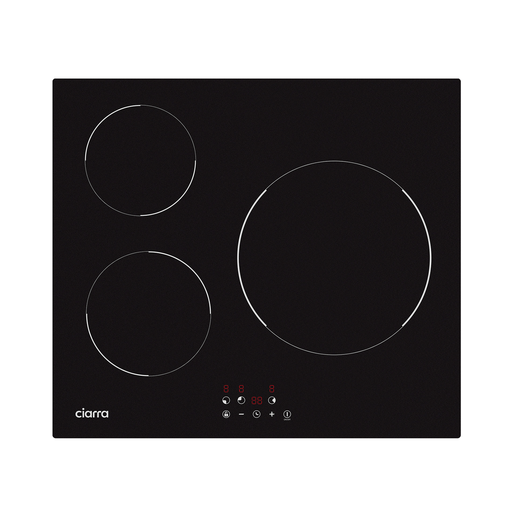 No image available
Three zones can be useful if you want to use several pans at the same time while your tagine simmers; just check the available space and electrical connection.
The product name lists 5.600 W and nine power settings.
 No image available
This single-zone hob may be suitable if you’re looking for a separate cooking spot for one casserole dish.
The product name lists 2.000 W, ten power settings and six functions. The product information specifies that magnetic cookware is required.
 No image available
A single zone may be suitable if you want to use one tagine or casserole dish on the hob.
The product name lists 2.000 W, an XL zone of Ø 26 cm, ten power settings, touchscreen controls and a timer. The product information specifies a flat, induction-compatible pan base and a pan size of 12–26 cm.
No. According to the Voedingscentrum, you can slow-cook in a casserole dish or roasting tin with a thick base and lid, or in a tagine. Then choose a hob that’s suitable for your particular pan.
Don’t assume it can: induction requires a suitable magnetic base. Le Creuset says its own tagine with a cast-iron base is suitable for induction, but that doesn’t tell you whether other tagines are. Check your pan’s instructions.
Stay nearby while cooking and follow your model’s manual for use and cleaning. For the TILLREDA, IKEA recommends wiping it with a damp cloth and mild detergent after use, then drying it with a soft cloth.
No. Your statutory rights aren’t dependent on buying an additional warranty. ACM ConsuWijzer says that, with normal use, a product must meet what you can reasonably expect of it; if it breaks down too soon, the seller is responsible for providing an appropriate solution. The manufacturer’s warranty period doesn’t automatically limit your statutory rights.
For electrical equipment within the applicable 50–1.000 V AC range, the EU directive sets out safety and CE requirements for placing products on the market. This doesn’t prove that an individual product complies; check the marking and accompanying product information.