
Making cheese sauce with adjustable heat
If you’re making sauce in one pan, you’ll want to be able to adjust the heat as you stir. Albert Heijn Allerhande’s recipe for Dutch cheese sauce recommends cooking over a low heat and stirring regularly.


For cheese sauce, first choose a hob that lets you adjust the heat while you stir. Then decide whether you need one or two cooking zones. Induction only works with a suitable flat-based magnetic pan, whereas ceramic and conventional electric hobs don’t have this specific requirement. Whichever type you choose, check the connection requirements and instructions for the exact model: an adjustable setting doesn’t guarantee that the sauce will stay at a constant low temperature.
If you’re making sauce in one pan, you’ll want to be able to adjust the heat as you stir. Albert Heijn Allerhande’s recipe for Dutch cheese sauce recommends cooking over a low heat and stirring regularly.
If you want to use the pan provided in your holiday cottage, first check whether its base is suitable for induction. The Consumentenbond says that induction cooking requires a flat, magnetic base.
If you want to use two pans at once, compare a hob with independently adjustable zones against the available worktop space and electrical connection. Two-zone models may have different space and power requirements from single-burner models.
| Buying consideration | What to check | Who it matters to |
|---|---|---|
| Adjusting the heat | Check how to change the setting while stirring; an adjustable setting doesn’t guarantee a constant sauce temperature. | If I want to cook the sauce over a low heat and adjust it as I stir, I’ll focus on the controls; around 36% of consumers say heat controls are their top priority. |
| Choosing a suitable pan | Check that the base is magnetic and flat, and compare its size with the induction zone. Otherwise, choose a hob that suits your pan. | If I want to keep using my existing saucepan, I’ll first check whether it’s suitable for induction; around 29% of consumers put pan compatibility first. |
| Connection and placement | Check the rated power, instructions and available connection; place the hob on a stable surface, away from flammable materials. | If I don’t know what the electrical installation is like in the holiday cottage, I’ll want to know whether I can plug the hob in there; around 21% of consumers say the connection is their top priority. |
| Space and number of pans | Measure the available space and decide whether you want to use one or two pans at a time. | If I have limited worktop space or want to put the hob away after use, I’ll compare its dimensions with the space available; around 14% of consumers put space and storage first. |
The wattage quoted doesn’t tell you how the hob performs on a low setting. For cheese sauce, it also matters whether you can adjust the heat as you stir.
Check the controls on the exact model and stay by the pan while you cook. Don’t treat the settings as a measured sauce temperature.
A pan with an unsuitable base won’t work on an induction hob.
Check the pan base with a magnet beforehand and compare its size with the cooking zone. If your pan isn’t suitable, look for a hob that works with it.
The stated total power and other appliances on the same circuit may be important. The Consumentenbond warns that, with some freestanding induction hobs, you can’t use another electrical appliance on the same circuit while cooking.
Check the rating plate, instruction manual and available connection. Brandweer Nederland advises plugging high-power appliances directly into a suitable socket rather than using a cable reel or extension block.
The TILLREDA 805.901.55 is a portable single-zone induction hob for a compact cooking space.
The KP 1091 is a conventional single electric hob with a cast-iron cooking surface.
The models reviewed include the 303010 single-zone induction hob and the 303021 two-zone ceramic hob.
The KP-6245 is a conventional two-ring electric hob for two separately controlled pans.
These Joybuy picks are portable single-zone hobs for use with one pan. They include induction hobs and a conventional electric hob; if you choose induction, check that your pan is suitable.
 No image available
A single-zone induction hob for anyone who wants to adjust the cooking setting while stirring.
The product name lists 10 power levels, 8 programmes and a timer. Use a pan that’s suitable for induction.
 No image available
A portable single-zone induction hob for anyone using one pan who wants to adjust the heat.
The product name lists 2000 W, 10 power levels, a timer and a Ø 26 cm cooking zone. Use a flat-based pan that’s suitable for induction.
 No image available
A portable single-zone induction hob for anyone who wants to use one saucepan on a portable hob.
Use a pan with a ferromagnetic base that’s suitable for induction.
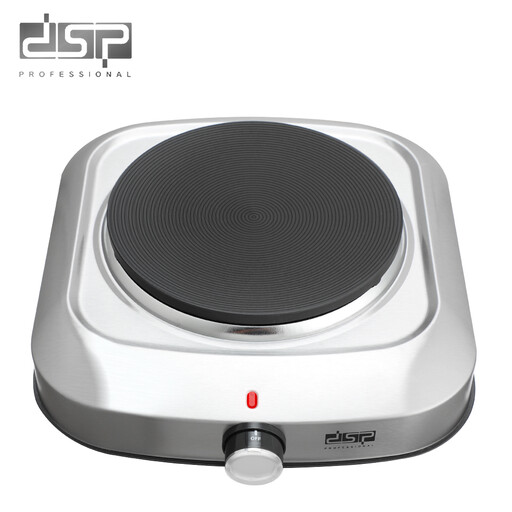 No image available
A portable electric single hob for anyone who wants to use one pan without the specific requirement for an induction-compatible base.
The product name lists 1500 W and adjustable temperature. The product description says that a little smoke and odour may occur the first time you use it; run the hob for 3–5 minutes in a well-ventilated room before cooking.
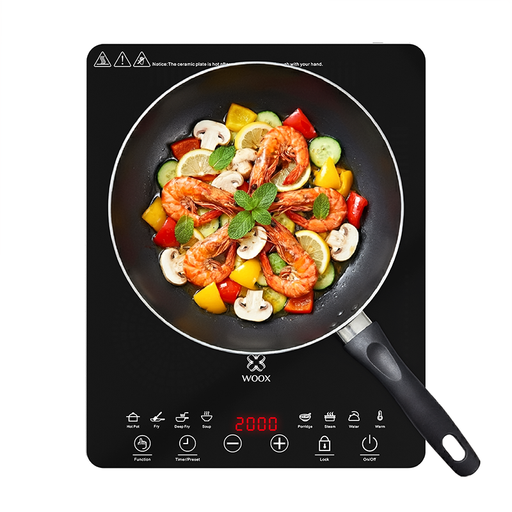 No image available
A portable single-zone induction hob for anyone using one pan who wants to adjust the cooking setting.
The product name lists 2000 W, 8 temperature and power levels, a timer and a heating coil radius of 155 mm. Use cookware that’s suitable for induction.
Only if the pan base is suitable for induction. Check that it’s magnetic and flat, and compare its size with the cooking zone; a magnet can help with an initial check.
Stir as you cook and adjust the heat if needed; Albert Heijn Allerhande’s recipe uses a low heat. Stay nearby while cooking. Follow the instructions for the exact model when cleaning and drying it.
Not automatically. The Dutch government explains that there is no fixed two-year statutory guarantee period in the Netherlands, and that the retailer is your point of contact if a product is faulty. Check what paid-for extra cover offers before taking it out.
According to the Netherlands Food and Consumer Product Safety Authority, CE marking is required for the relevant electrical products. This legal requirement is not, in itself, an independent real-world test of a specific model.