
Cook who heats cheese sauce while stirring
You want to be able to turn the heat down easily as the sauce thickens, or briefly take the pan off the hob. The controls and pan size matter here, not just the peak power.


First, measure the space for your hob and check which saucepan you want to use. A portable induction hob works with an induction-compatible pan that falls within the stated pan size range. If your pan is not compatible, you could compare a conventional or ceramic electric hob, bearing in mind that its cooking surface may remain hot. The number of settings or maximum power rating does not tell you how evenly your sauce will heat.
You want to be able to turn the heat down easily as the sauce thickens, or briefly take the pan off the hob. The controls and pan size matter here, not just the peak power.
You need one cooking zone, want to measure the appliance before putting it away, and need to allow for the ventilation space specified in the instruction manual while it is in use.
First check whether the base is suitable for induction and whether the pan size is right. If not, a conventional or ceramic electric hob could be an alternative to compare.
Choose this if: your saucepan has a suitable magnetic base and falls within the stated pan size range for the model you choose. Milieu Centraal and the Consumentenbond highlight pan compatibility and size as points to consider.
Consider: you’ll need to check your pan and the model-specific ventilation instructions. The number of settings doesn’t tell you how hot your sauce will get.
Choose this if: your existing pan isn’t suitable for induction and you want to compare a compact hotplate with a rotary control. Tristar lists a 15 cm cast-iron plate and a 24.5 × 22 cm casing for the KP-6185.
Consider: the cast-iron plate gets hot and retains heat. If it gets too hot, take the pan off the plate.
Choose this if: you want to compare a smooth cooking surface without the induction requirement for the pan base. Princess lists a 19 cm cooking zone for the 303020.
Consider: Princess says the 303020 stays hot for a long time, so remember to measure the clear space you’ll need around it.
| What to consider | What to look for | Who it matters most to |
|---|---|---|
| Adjusting the heat | Compare the controls and lower settings; also check whether you can safely take the pan off the hob. | When I see the sauce thickening, I want to be able to turn the heat down quickly or briefly take the pan off the hob; around 33% of consumers prioritise heat control. |
| Storage and set-up | Measure the cupboard, worktop and appliance. Follow the ventilation clearances in the manual for the exact model. | With limited cupboard space, I want to be able to put the appliance away and still leave enough room around it when it’s in use; around 27% of consumers prioritise storage space. |
| Existing saucepan | For induction, check that the base is magnetic and that the pan size is suitable for the model you choose. | I want to keep using my current saucepan, so I’ll first choose a heating method that works with its base; around 20% of consumers prioritise keeping their pan. |
| Safe cooking area | Read the connection and placement instructions, and consider other appliances on the same circuit. | Before setting up my cooking area, I want to know whether the surface, available space and connection are suitable; around 20% of consumers prioritise safe use. |
A pan that isn’t suitable for induction, or isn’t the right size for the model, may not work on that hob.
Check the base and pan size before choosing between induction and a conventional or ceramic hob.
The KI120T is a single-zone induction option with a model-specific stated pan size range.
The KP-6185 is a conventional single hotplate; the IK-6178 is a separate induction model.
The KP 1071 is a portable induction hob to compare for features such as pan detection and service information.
The 303020 is a ceramic single hotplate; the separate 303012 is a single-zone induction hob.
The S-Line 2100 is a single-zone induction option for comparing the stated control settings.
These portable induction hobs are worth comparing for a small cooking area. Before buying, check that your saucepan is suitable and that the exact version meets your needs.
 No image available
A single-zone induction option to compare if you want to adjust the heat as you stir. The product name lists 2000 W, 10 power settings, touch controls and six functions. Use induction-compatible pans only.
 No image available
This portable induction hob is an option if your saucepan is induction-compatible. The product name lists 2000 W, an XL cooking zone of Ø 26 cm, 10 power levels and a timer. Check that the pan size suits your saucepan.
 No image available
A single-zone induction option to compare if your pan is induction-compatible. Check the pan size and specifications of the exact version before choosing.
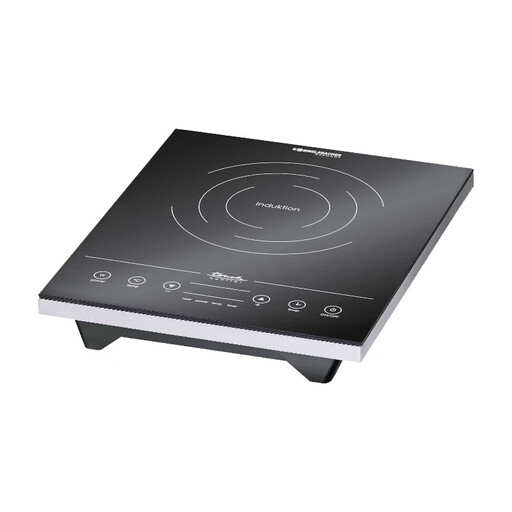 No image available
This portable induction hob is worth comparing if you have an induction-compatible saucepan. Check the pan size and instructions for the exact version.
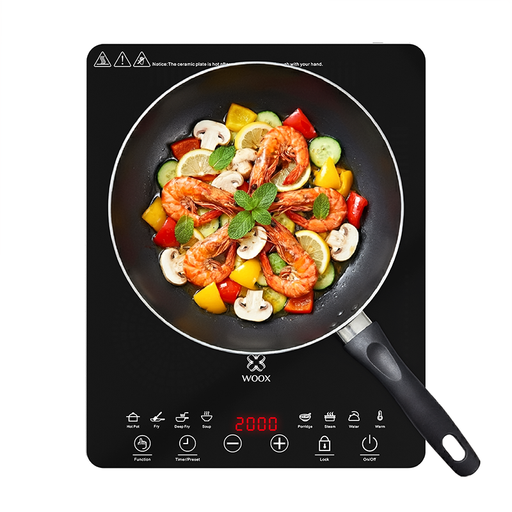 No image available
A portable single-zone induction hob to compare for a small cooking area. The product name lists 2000 W, a 155 mm heating coil radius, and 8 temperature and power levels. Keep the ventilation openings clear.
Only if its base is suitable for induction and the pan size is right for the model you choose. Check for the induction symbol or a magnetic base, and read the stated pan size range. For example, Inventum lists 15–20 cm for the KI120T.
Follow the manual for the exact appliance. For the KI120T, Inventum specifies at least 10 cm of clearance at the sides and rear; this distance doesn’t automatically apply to other models. Keep flammable materials away from the cooking area.
Stir as you heat the sauce and adjust the heat as needed. The Good Food recipe takes the pan off the heat before adding the cheese, then warms it gently if needed. A hob setting doesn’t guarantee a particular temperature in your sauce.
It depends on the appliance and the connection. Inventum says the KI120T works with an earthed Dutch socket without adapting the consumer unit. Check the model’s instructions and take other appliances on the same circuit into account.
Electrical appliances must meet the applicable European requirements. According to Ondernemersplein, a compliant appliance should carry a CE mark, and the manufacturer must draw up and sign an EU declaration of conformity. A CE mark alone is not an independent check of an individual product.