
If you want to simmer a one-pan dish
You want to make a one-pan stew after a trip to the market. Look for controls that work well on low settings and a timer, but bear in mind that these features don’t replace testing the hob with your own pan.


For a one-pan lentil and vegetable stew, a single-zone hob is often the most space-saving choice, provided your pan suits the cooking zone and your electrical connection is suitable. Induction requires a magnetisable pan base; a ceramic radiant hob may be an option if you don’t have one. Choose two zones only if you regularly use a second pan at the same time, and don’t treat power settings or timers as proof that a hob will simmer your stew evenly.
You want to make a one-pan stew after a trip to the market. Look for controls that work well on low settings and a timer, but bear in mind that these features don’t replace testing the hob with your own pan.
You want to carry on using your current casserole pan. With induction, the base must be magnetisable and fall within the cooking zone’s specified range; a suitable electric radiant hob could be an alternative.
You’re looking for a hob that fits on your worktop with the pan, cable and space around it. If you want to cook a second dish at the same time, the number of zones matters too.
Suitable if: you’re making your stew in one induction-compatible pan and have limited space.
Bear in mind: you’ll need a magnetisable pan base and a pan of a suitable size; power settings and timers don’t tell you how evenly your stew will simmer.
Suitable if: your pan isn’t induction-compatible but can be used on the electric cooking zone you’ve chosen.
Bear in mind: the hob retains heat after it’s switched off; let it cool before putting it away.
Suitable if: you regularly use a second pan alongside your stew and want to control each zone separately.
Bear in mind: you’ll need more worktop space, and you should check the total power draw when both zones are on.
| What to consider | What should you check? | Who should take this into account? |
|---|---|---|
| Simmer control | Low settings, controls and timer on the exact model. | If I want to leave my stew to cook gently after bringing it up to temperature, I’m looking for a useful low setting; around 39% of consumers put this type of control first. |
| Pan compatibility | Test the base with a magnet and compare its diameter with the specified range. | If I want to keep using my current casserole pan, I’ll check that it’s compatible with the hob; around 23% of consumers prioritise keeping their existing pan. |
| Space and electrical connection | Measure the space for the hob, pan and cable; check the instructions and any other appliances on the same circuit. | If my worktop space is limited, I want to be able to position and connect the hob safely; around 23% of consumers look at this first. |
| Using two pans at once | Check pan sizes, controls for each zone and the total electrical load. | If I use a second pan alongside my stew, I need space for two zones; around 15% of consumers put cooking with two pans at once first. |
A timer limits the cooking time you set, but it doesn’t replace supervision. Stay nearby while cooking, as the Fire Service advises.
A manufacturer may specify settings and temperature ranges, but that doesn’t tell you how a full pan will behave on a low setting.
Compare the low settings and controls on the exact model. Keep an eye on your food while it cooks, and treat any stated temperature as a product specification, not a measurement taken from your pan.
An induction hob only works with a compatible pan that has a magnetisable base and suits the cooking zone.
Test the base with a magnet before buying, then compare its diameter with the specified range. Also check that you can position the pan comfortably on the zone.
Two zones take up more space and may place a greater demand on your electrical connection when used at the same time. An extra zone doesn’t mean other appliances on the same circuit can run alongside it without limit.
Choose two zones only if you’ll use them. Check the total connected load, your electrical circuit and the space available for both pans. The Fire Service recommends plugging a high-power appliance directly into a socket, rather than using a multi-socket adaptor or cable reel.
A heated ceramic zone may still be hot after it’s switched off; some models have a residual heat indicator.
Leave enough space around it and follow the cooling and storage instructions for the model you choose.
The KI120T is a single-zone induction hob for anyone with a compatible pan with a base diameter of 15 to 20 cm.
The IK-6178 is a single-zone induction hob; the KP-6245 has two traditionally electrically heated zones for anyone who uses a second pan at the same time.
The CT 2200/E is a ceramic radiant hob for anyone who doesn’t want induction; the CT 2020/IN is the brand’s induction option.
The 303011 is a double induction hob for anyone who wants to use a second pan alongside their stew.
This selection includes portable hobs with one or two zones. Compare pan compatibility, controls, available space and electrical connection with the way you cook.
 No image available
May be suitable if your casserole pan has a flat, induction-compatible base within the specified range.
Power: 200–2000 W; 10 power settings; pan range: 12–26 cm; timer up to 3 hours. The product information advises users with a pacemaker to consult their doctor before use.
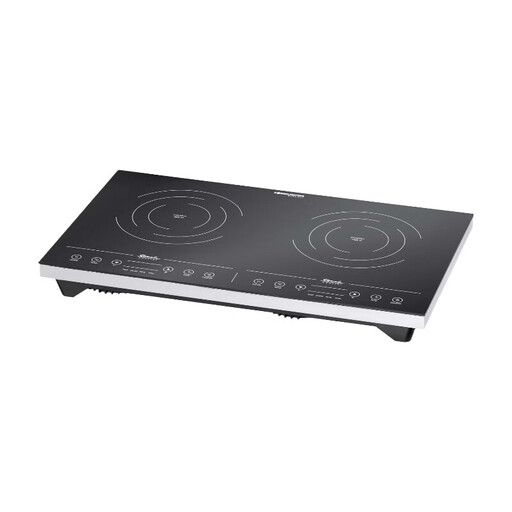 No image available
The two zones provide space for a casserole pan and possibly a second pan; you’ll need compatible pans for induction.
Two zones rated at 1400 and 2000 W; temperature settings from 60–240 °C; 10 power levels; timer up to 180 minutes with automatic shut-off. The hob and its surface may get hot during and after use.
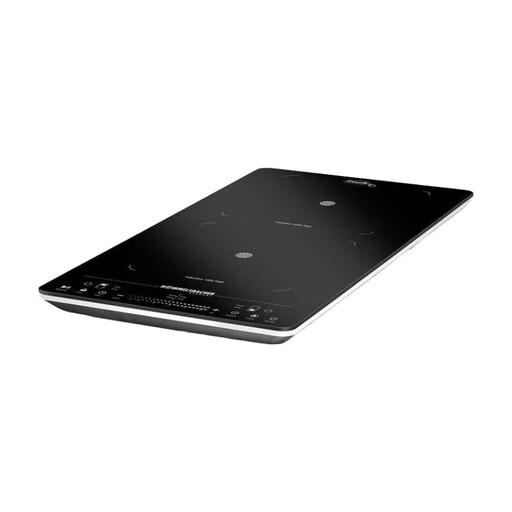 No image available
The two zones may suit you if you regularly use a second pan alongside your stew and both pans are induction-compatible.
Pan range: 120–260 mm; 10 power settings and 10 temperature settings; timer up to 180 minutes with automatic shut-off. Keep flammable materials more than 30 cm away and don’t block the ventilation openings.
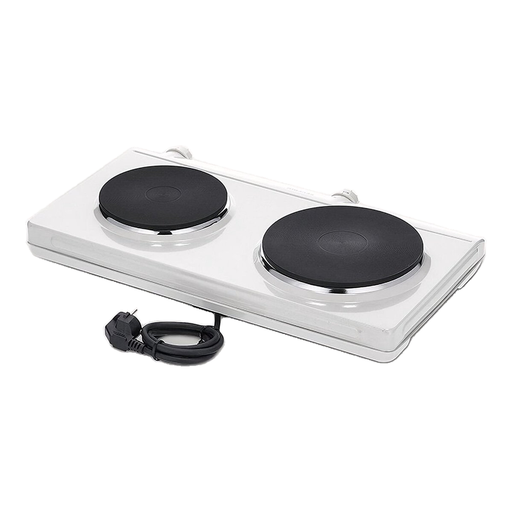 No image available
The two independently controlled zones are useful if you want to heat your stew and a second pan at the same time.
Power: 2500 W; separate, stepless temperature control for each zone. Place the hob on a stable, flat, heat-resistant surface, keep flammable materials away and don’t leave the appliance unattended.
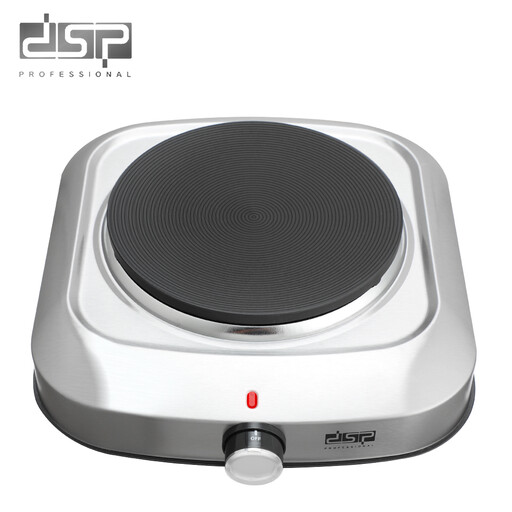 No image available
A single electric cooking zone may suit you if you use one casserole pan and can position the hob in a suitable place.
Power: 1500 W; hob diameter: 185 mm; adjustable heat control. When using it for the first time, run the appliance for 3–5 minutes in a well-ventilated room; the product information states that an initial smell and light smoke may occur.
It depends on the base and the pan size. Test with a magnet to see if the base is magnetisable, and compare its diameter with the range specified for the exact model. Inventum specifies a range of 15 to 20 cm for the KI120T; that doesn’t automatically apply to other hobs.
No, stay nearby while it’s cooking. That’s the Fire Service’s advice; a timer or automatic shut-off isn’t a substitute for supervision.
Follow the instructions for the exact model and check which other appliances are connected to the same circuit. According to the Consumers’ Association, most freestanding induction hobs can be plugged into an earthed socket; however, the available power may be a limiting factor when using multiple zones. The Fire Service advises plugging high-power appliances directly into a socket, rather than using a multi-socket adaptor or cable reel.
Yes. The Netherlands Food and Consumer Product Safety Authority states that CE marking is compulsory for electrical products and gas appliances. Check the marking on the exact model; the general requirement doesn’t in itself confirm that a specific model or individual item has been checked.
Contact the seller. ACM ConsuWijzer explains that a product must last as long as you can reasonably expect it to under normal use; if it doesn’t, the seller is responsible for providing a suitable solution free of charge. The assessment depends on the product and the circumstances.