
One-pan broth cook
You want to bring broth to the boil and then turn the heat down, without installing a built-in hob. The Dutch Consumers’ Association notes that a portable hob doesn’t require a cut-out in the worktop.


For a single pan of noodle broth, a single-zone induction hob is an option if your pan has a magnetic base and falls within the hob’s stated pan-size range. A conventional electric hob may suit you if you want to keep using your existing pan, but it responds more slowly when you turn the heat down and stays hot for longer. If you want to use a second pan at the same time, consider a double hob and check the available worktop space and electrical connection.
You want to bring broth to the boil and then turn the heat down, without installing a built-in hob. The Dutch Consumers’ Association notes that a portable hob doesn’t require a cut-out in the worktop.
Your choice starts with the pan’s base and size: these help determine whether a single-zone induction hob will work or another type of hob would be a better fit. Milieu Centraal recommends using a pan with a magnetic steel layer in its base for induction.
You want to use a second pan alongside the broth, so you’ll also need to assess the worktop space and electrical load. Tristar states that the KP-6245 has two independently controlled zones.
Choose this if: you’re using one suitable pan indoors and want to turn the heat down quickly once the broth has boiled.
Keep in mind: your pan must be suitable; a single zone won’t accommodate two pans at once.
Choose this if: you want to use a pan that isn’t suitable for induction and one cooking zone is enough.
Keep in mind: a conventional electric zone responds more slowly and stays hot for longer than induction.
Choose this if: you want to use a pan of broth and a second pan on the worktop at the same time.
Keep in mind: the appliance needs more space. Also check its total power and what else is running on the same electrical circuit.
Choose this only if: you’ll actually be cooking outdoors and the specific appliance is designed for that location and connection.
Keep in mind: an appliance designed for outdoor use isn’t an indoor alternative. Follow the requirements for gas and ventilation.
| Buying concern | What should you check? | Who is this important for? |
|---|---|---|
| Controlling the heat | Check the controls and low heat settings in the manual for the exact model; a power setting doesn’t show how gently it will simmer broth. | If I want to let the broth simmer gently after it boils, I look at how easily I can adjust the heat. Around 31% of consumers say controllable heat is their top buying priority. |
| Using an existing pan | Check that a magnet sticks to the base of the pan and compare its flat base with the appliance’s stated pan-size range. | If I want to keep my current pan, I choose the type of hob based on its base and size. Around 31% of consumers put compatibility with their existing pan first. |
| Positioning and connection | Measure the worktop and check the installation instructions, plug and electrical circuit load. Ideally, plug a high-power appliance directly into a socket. | In a small kitchen, I need to know where the hob can be positioned safely and how it should be connected. Around 23% of consumers say positioning and connection are their main buying concern. |
| Two pans at once | Check the number of zones, their diameters, the controls, total power and available worktop space. | If I want to prepare broth alongside noodles or other ingredients, I need room for a second pan. Around 15% of consumers give simultaneous cooking top priority. |
An induction hob needs a suitable pan; a conventional electric hob heats the cooking zone itself. A pan that isn’t compatible with the type of hob you choose may not work with the appliance.
Check the type of hob and pan requirements for the exact model with the manufacturer. For induction, test whether a magnet sticks to the base and compare the pan size with the stated range.
If your existing pan isn’t compatible, you may need another one.
The stated power doesn’t tell you how the appliance regulates heat on a low setting with your pan. Conventional electric zones also respond more slowly than induction.
Compare the controls and available low heat settings in the manual for the exact model. Don’t treat the manufacturer’s settings as a measured cooking result.
Listings for the Severin KP 1071 and Rommelsbacher CT 2010/IN differ from the manufacturers’ specifications in important respects.
Before buying, ask for confirmation of the version, type of hob, controls and pan-size range of the appliance being offered.
The manufacturer describes the CamPart Travel KO-6383 as an outdoor appliance. The Fire Service warns that burning gas in a poorly ventilated space can cause carbon monoxide poisoning.
Use the appliance only in the specified location and follow the requirements for the gas cylinder, hose and pressure regulator.
You may need a gas cylinder and the specified connection parts for the appliance.
The KI120T is a single-zone induction hob for a pan within its stated size range.
The IK-6178, KP-6185 and KP-6245 offer different options for one or two cooking zones.
The manufacturer describes the KP 1071 as a single-zone induction hob with pan detection and touch controls.
The 303010 freestanding induction hob has one cooking zone.
According to the manufacturer, the CT 2010/IN is a single-zone induction hob with adjustable power settings.
These product picks cover portable induction hobs with one or two cooking zones. Check that your pan has a suitable base and that the appliance is right for the space and connection available.
 No image available
The two zones are designed for anyone who wants to use a pan of broth and a second pan at the same time; also check the available space and connection.
The product name specifies five temperature settings. Induction requires a pan with a magnetic base.
 No image available
The product description specifies one cooking zone and adjustable temperature control; check that a single zone suits the way you cook.
The product name specifies 220V/240V/2100. Induction requires a pan with a magnetic base.
 No image available
This portable model may suit you if you’re looking for a separate cooking zone; check the space you have and the controls for the way you plan to use it.
The product name specifies 2000 W and ten power settings. Induction requires a pan with a magnetic base.
 No image available
With one cooking zone, this model is designed for one pan at a time; compare your pan’s base with the stated zone range.
The product information specifies 2000 W, ten power settings and a zone range of 12–26 cm. Induction requires a pan with a magnetic base.
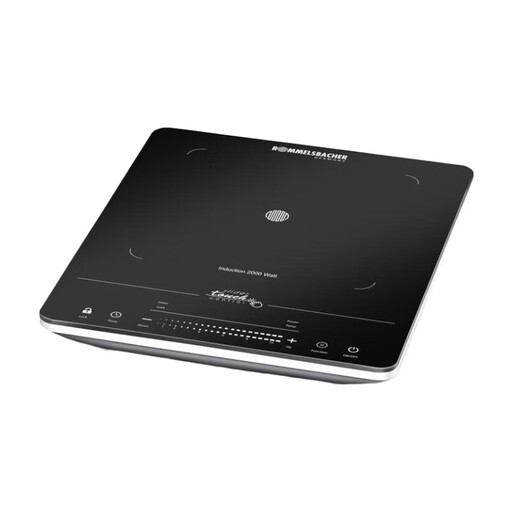 No image available
The product description specifies one cooking zone and adjustable power; check that this single-zone hob meets your needs.
The same description specifies ten power levels, a 99-minute timer and temperature settings of 60–240 °C. Induction requires a pan with a magnetic base.
Check that a magnet sticks to the pan’s base and compare its diameter with the range for the exact appliance. Inventum specifies a pan-size range of 15–20 cm for the KI120T; this doesn’t automatically apply to other hobs.
An induction hob responds more quickly to a change in setting than a conventional electric hob, provided your pan is suitable for induction. Check the controls and low heat settings for the exact model; the manufacturer’s settings aren’t a measure of simmering performance.
The Fire Service recommends plugging high-power appliances directly into a socket wherever possible, rather than using an extension lead or cable reel. Also check the manual and what else is connected to the same electrical circuit.
Not if the appliance you’ve chosen is designed for outdoor use; the CamPart Travel KO-6383 is specifically described as an outdoor cooking appliance. The Fire Service warns that burning gas in a poorly ventilated space can cause carbon monoxide poisoning. Follow the instructions for use for every gas appliance.
Yes, stay nearby while you’re cooking. The Fire Service advises keeping flammable materials away from the hob; also follow the instructions for positioning and use. A timer is no substitute for supervision.