
Chicory braiser with limited cupboard space
You want to braise gently in a lidded pan, then put the hob away. Compare the appliance’s external dimensions and consider whether its lowest usable setting gives you enough control over the heat.


First, choose a lidded pan with a thick base that fits your halved chicory. Voedingscentrum advises bringing the contents almost to the boil, then braising them over a low heat. Next, choose a hob that suits your pan base and storage space: induction requires a magnetisable pan base, while a conventional electric hob may be an alternative. A stated wattage or number of settings alone doesn’t show how gently your pan will simmer.
You want to braise gently in a lidded pan, then put the hob away. Compare the appliance’s external dimensions and consider whether its lowest usable setting gives you enough control over the heat.
You want to keep using your current pan. Milieu Centraal advises checking whether the pan base is magnetisable before choosing induction. Otherwise, compare a conventional electric hob’s cooking zone with the size of your pan.
You sometimes prepare a side dish at the same time. Weigh up the convenience of a second cooking zone against the extra space the hob takes up and the electrical connection the model requires.
When braising chicory, the main things to consider are gentle heat control, storage space, your existing pan and a suitable electrical connection.
Suitable when: your pan has a magnetisable base and falls within the hob’s stated size range.
Trade-off: your existing pan may not be suitable; the number of settings alone doesn’t tell you how gently the contents will cook in your pan.
Suitable when: your pan isn’t suitable for induction and its base fits the cooking zone.
Trade-off: a cast-iron cooking zone can stay hot after you switch it off, so let the hob cool before putting it away.
Suitable when: you regularly use a second pan at the same time and have enough worktop and cupboard space.
Trade-off: an extra cooking zone takes up more space. On some portable induction hobs, the available power may limit cooking on high settings at the same time.
| What to consider | What to look for | Who it matters to |
|---|---|---|
| Gentle braising | Look at the heat controls and use a lidded pan with a thick base. Check while braising that the contents are just below boiling point. | If you want to cook chicory gently after heating it, you’ll need to be able to turn the heat down low and keep an eye on the cooking. Around 36% of consumers give controlled braising their highest priority. |
| Storing in a small cupboard | Measure the available cupboard space and compare it with the appliance’s external dimensions. Also check the number of cooking zones. | If the hob needs to fit in a small cupboard after use, you’ll want to know in advance whether the measured space is big enough. Storage space comes first for around 29% of consumers. |
| Using your existing pan | For induction, test with a magnet to see if the base is magnetisable and compare its diameter with the hob’s stated range. For a conventional hob, measure the cooking zone. | If you want to keep your current braising pan, you’ll need to know whether its base suits the cooking method and zone you choose. Around 21% of consumers give keeping their existing pan their highest priority. |
| Electrical connection and safe use | Check the connection and installation instructions for the exact model. Keep flammable items away and don’t put a hot hob away straight after use. | If you want to check first that you can connect and position the hob safely, also look at the CE marking and conformity information for the exact model. Around 14% of consumers put the electrical connection and safe use first. |
A stated wattage, temperature range or number of settings doesn’t measure how gently food will braise in your pan. The pan and its contents also make a difference.
First, choose a suitable lidded pan, then compare the controls. Check while cooking that the contents are just below boiling point.
The appliance’s external dimensions don’t tell you whether the cooking zone suits the base of your pan. With induction, the pan must also be suitable for that cooking method.
Measure the pan base and the available space separately. Milieu Centraal advises checking an induction pan’s base with a magnet.
If your pan isn’t suitable for induction, you’ll need to reconsider your choice of hob and pan.
A conventional cooking zone can stay hot after you switch it off. Brandweer Nederland advises keeping flammable materials away from electrical appliances.
Stay nearby while cooking, set aside a safe place for the hob to cool and follow the instructions for the exact model.
The KI120T is a portable single induction hob for induction-compatible pans with a stated diameter of 15–20 cm.
The KP-6185 is a single-ring cast-iron hot plate for anyone looking for a conventional electric cooking zone.
The KP 1091 is a single-ring cast-iron hot plate with a stated cooking zone of 18,5 cm.
The 303010 is a portable single induction hob with adjustable temperature and a timer.
The S-Line 2100 is a portable single induction hob with a stated pan size range of 12–24 cm.
This selection includes portable single induction hobs and a conventional single electric hot plate for cooking with one pan.
 No image available
This single induction hob is designed for cooking with one pan on a portable appliance.
The title lists five power settings and 1000 W. The description gives dimensions of 21,5 × 21,5 × 4,7 cm and a rotary control. Use a pan with a magnetisable base.
 No image available
This single induction hob is designed for cooking with one pan.
The description lists automatic pan detection, a child lock, adjustable temperature and several power settings. Use a pan with a magnetisable base.
 No image available
This portable induction hob is designed for cooking with one pan; the description mentions a slim design for limited space.
The title lists ten power settings and a safety lock. Use only pans that are suitable for induction.
 No image available
This single induction hob is designed for one pan. Its stated cooking zone for pans measuring 12–26 cm may be useful if your pan base is larger.
The description lists ten settings, an adjustable range of 60–240 °C, a timer of up to three hours and external dimensions of 392 × 368 × 100 mm. The pan must be induction-compatible and have a flat base.
 No image available
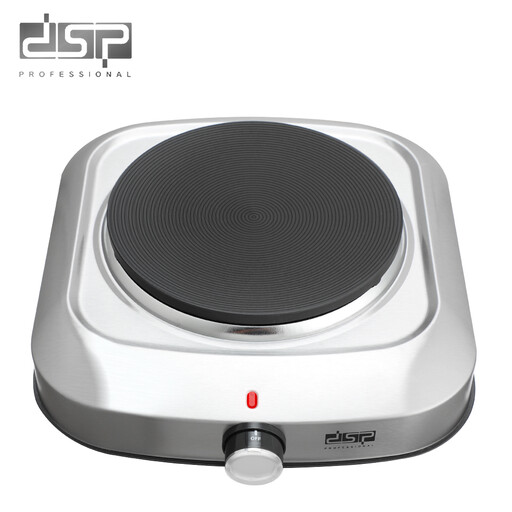
This conventional electric hot plate is designed for one pan and is an alternative if you’re not looking for an induction hob.
The title lists 1500 W; the description mentions a fixed 185 mm plate and an adjustable temperature control. It says the plate can be used for simmering, but gives no independent performance measurements.
Use a lidded pan with a thick base that fits the chicory halves. Add liquid according to your recipe, bring the contents just below boiling point, then turn the heat down low. Check as it cooks that the chicory is becoming tender.
Not necessarily. Check with a magnet whether the pan base is magnetisable, and compare its diameter with the range stated for the exact model.
No, check the connection requirements for each model. Inventum lists an earthed socket for the KI120T; Consumentenbond points out that some more powerful portable induction hobs require a Perilex connection. Also check which other appliances are connected to the same circuit.
Stay nearby while cooking and keep flammable materials away from the hob. In particular, let a conventional cooking zone cool completely before cleaning the appliance or putting it in a cupboard.
The NVWA states that electrical products covered by the relevant rules must carry a CE marking. Check the marking and conformity information for the exact model and item; a statement on a sales page doesn’t in itself verify this.