
Cook with limited worktop space
You usually cook chicory in a single pan and want to be able to put the portable hob away after use. Allow for the size of the hob and the space the pan, handles and lid take up while you’re cooking.


For a single pan of halved chicory on a small worktop, a portable single-zone hob is a sensible place to start. Be sure to measure the hob and the pan, including its handles and lid. Choose induction only if the pan base is magnetic; conventional electric and ceramic hobs work with other pans, but you’ll need to take residual heat into account. Compare the low heat settings for braising, and check the documentation and applicable safety requirements for the exact model before you buy. The stated settings don’t prove that it will braise in a particular way.
You usually cook chicory in a single pan and want to be able to put the portable hob away after use. Allow for the size of the hob and the space the pan, handles and lid take up while you’re cooking.
You first brown the halved chicory, then leave it to cook gently under a lid. The low heat control is therefore more important than maximum power alone.
You want to know in advance whether your braising pan will work on induction. Milieu Centraal recommends checking the base with a magnet. If it isn’t magnetic, compare electric and ceramic hobs too.
When you brown chicory first, then cook it gently under a closed lid, compare the complete cooking set-up, low heat control and pan compatibility. The recipe from Koken met Koos describes this cooking method; it isn’t a test of a hob.
A good fit if: your pan has a magnetic base and is suitable for the cooking zone.
Keep in mind: an unsuitable pan won’t work on induction; check how the low settings are controlled too.
A good fit if: you want to use your existing pan and its base is the right size for the cooking zone.
Keep in mind: the heated zone needs to cool down before you clean or put the hob away.
A good fit if: you want a smooth cooking surface and the heating ring suits the base of your pan.
Keep in mind: allow for residual heat and check that the appliance will fit on your worktop.
| What to consider | What to look for | Who it matters to |
|---|---|---|
| Space for the complete set-up | Measure the hob and compare its size with the pan base, handles and the space needed for the lid. | When I’m cooking on a cramped worktop, I want to know in advance whether everything will fit. Around 36% of consumers name worktop space as their top buying priority. |
| Low heat control for gentle braising | Check the low settings and controls on the exact model. A timer won’t stop the cooking process automatically unless the manual says it does. | I want to cook the chicory gently after browning it, so I look for good heat control. Around 29% of consumers put this need first. |
| Pan compatibility | For induction, test the base with a magnet and compare the pan size with the cooking zone. | If I want to keep using my current braising pan, I first check that it’s compatible with the hob. Around 21% of consumers prioritise keeping their existing pan. |
| Connection and placement | Check the stated power, available electrical connection and space for positioning the hob, as set out in the manual. | If my electrical connection or available space limits my choice, I want to check what will work there first. Around 14% of consumers make connection and placement their first point of comparison. |
The cooking zone isn’t the whole set-up: the casing, pan and handles, and lid all take up space too.
Measure the space available and compare it with the appliance dimensions and the pan base.
Maximum power doesn’t tell you how a hob performs on a low setting. A recipe for braised chicory calls for gentle cooking under a lid.
Compare the low settings and controls on the exact model, without treating the manufacturer’s specifications as a practical test.
Induction requires a magnetic pan base. Without one, your existing pan won’t be suitable for an induction hob.
Check the base with a magnet, then compare the pan size with the cooking zone.
A conventional electric or ceramic cooking zone may still be hot after cooking.
Let the hob cool down as instructed in the manual, and leave space for it on the worktop.
The TILLREDA is a portable, single-zone induction hob designed for a small kitchen or as an extra cooking spot.
The single-zone induction hob IK-6178CH and conventional electric hob KP-6185 are two different options, each with one cooking zone.
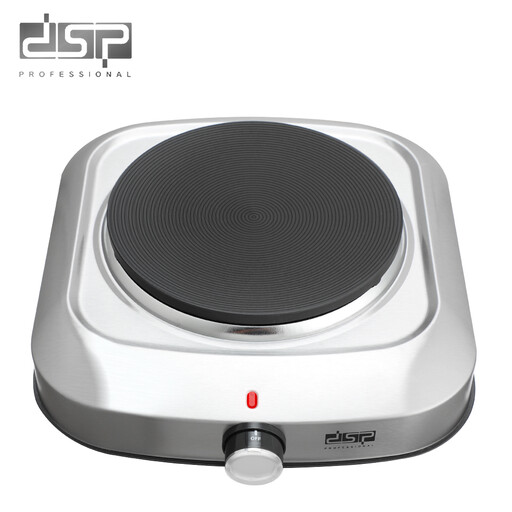
The KP 1091 is a conventional electric hob with a cast-iron zone and rotary control.
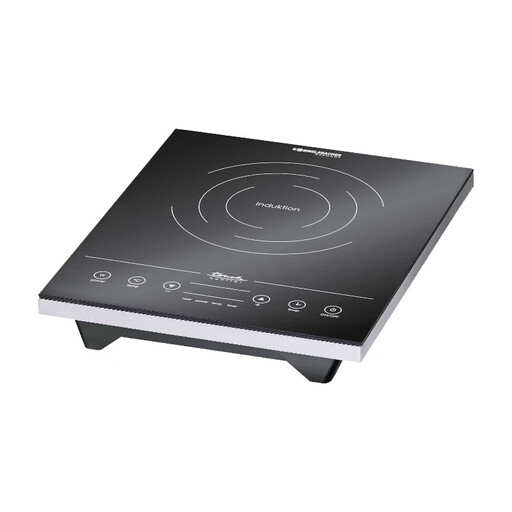
The CT 2200/E is an example of a portable ceramic radiant hob.
This selection includes portable hobs for a single pan, with both induction and conventional electric options.
 No image available
An option if you want to use one pan in a limited space.
The product title lists five power settings and 1.000 W; the product description gives dimensions of 21,5 × 21,5 × 4,7 cm and a rotary control.
The pan base must be magnetic.
 No image available
An option if you’re looking for a portable induction hob with touch controls.
The product information lists 2.000 W, ten power settings, six functions and a safety lock.
Check that your pan has a magnetic base.
 No image available
An option if you want to use a single pan and match the cooking zone size to the pan base.
The product information lists a single induction zone with a diameter range of 12–23 cm, ten power levels, ten temperature settings and a timer of up to 180 minutes.
The stated appliance dimensions are 36,5 × 28,5 × 7 cm. The pan must have a ferromagnetic base.
 No image available
An option if you use one pan and want the cooking zone diameter to suit its base.
The product information describes a single induction zone with a diameter of 100–200 mm, temperature control in ten steps and a 180-minute timer.
The stated appliance dimensions are 30 × 38 × 6 cm. According to the product information, the hob isn’t suitable for pans that aren’t induction-compatible.
 No image available
An option if you’re looking for a conventional electric cooking zone with a temperature dial.
The product title lists 1.500 W; the product description specifies a 185 mm cooking zone and an adjustable temperature dial.
The product information notes that a slight smell and some smoke may occur the first time it’s used; follow the manual before using it for the first time.
Check whether the pan base is magnetic using a magnet, then compare the pan size with the cooking zone on the model you’re considering. A non-magnetic base isn’t suitable for induction; Milieu Centraal describes this magnet test as a way to check.
No. Maximum power alone doesn’t tell you how the hob performs on a low setting. Compare the low settings and controls on the exact model; the stated settings aren’t a measure of braising performance.
Compare the full appliance dimensions with the space available, and allow extra room for the pan, handles and lid. The diameter of the cooking zone alone doesn’t show how much space the complete cooking set-up will take up.
Follow the manual and check the power and available electrical connection. Brandweer Nederland recommends plugging high-power appliances directly into a wall socket rather than using an extension block or cable reel. EUR-Lex explains that Directive 2014/35/EU applies to electrical equipment within the scope of 50–1.000 V AC. Equipment within that scope that is placed on the EU market must meet the applicable safety requirements and carry the CE marking. This general framework doesn’t confirm that a specific model complies.
Let a heated cooking zone cool down first, and follow the manual for the exact model. For the TILLREDA, IKEA recommends removing food residue with a damp cloth and mild detergent, then drying the hob gently.