
Anyone cooking small portions
If you blanch one pan of vegetables at a time, you can put a portable cooking zone away after use. Compare the pan diameter and stated power, and check how much space you’ll need to set it up.


Choose a portable hob that suits your pan and the available power supply. For induction, your pan must have a suitable base. Compare the stated power and permitted pan diameter, but don’t assume these guarantee a particular boiling time. Check the clearance required in the instruction manual, too, and cool the vegetables quickly in iced water after blanching.
If you blanch one pan of vegetables at a time, you can put a portable cooking zone away after use. Compare the pan diameter and stated power, and check how much space you’ll need to set it up.
In a shared kitchen, it’s important to know which power supply is available and which other appliances will be in use at the same time. Brandweer Nederland advises plugging high-power appliances directly into a wall socket rather than using a multi-socket adaptor or cable reel.
If you want to keep using your current pan, first check whether its base is suitable for induction. The Consumentenbond identifies the induction symbol on the pan or packaging as a way to check; a conventional hob is another option to compare.
A good fit if: you use one pan at a time and already have a pan with a suitable induction base.
Bear in mind: the permitted pan size varies by model, and a portable hob isn’t necessarily as powerful as a built-in one.
A good fit if: you want to use an existing pan without needing to check that it’s induction-compatible.
Bear in mind: compare the cooking zone’s diameter with your pan, and take care around the hot surface after use.
A good fit if: you genuinely need to use a second pan at the same time as your blanching pan.
Bear in mind: two zones need more worktop space. Don’t assume the total power is available to each zone when both are in use.
| What to consider | What to look for | Who this matters to |
|---|---|---|
| Bringing water to the boil | Compare the stated power per cooking zone with your pan and the amount of water; this doesn’t tell you the measured boiling time. | If I want to boil water for a portion of vegetables in one pan, I compare the power without assuming it gives me a fixed blanching time. Around 29% of consumers mainly want to boil water for vegetables. |
| Power supply and set-up space | Check the plug, which other appliances will be running at the same time, and the clearance specified in the instruction manual. | In a kitchen I share with others, I want to know whether the power supply and space are suitable for the way I’ll use the hob. Around 29% of consumers mainly want to make sure the power supply and set-up space are suitable. |
| Finding a suitable pan | For induction, check both the pan base and the permitted pan diameter for the model you’ve chosen. For a conventional hob, compare the pan with the cooking zone. | If I want to keep using my existing pan, I want to know in advance whether it’s suitable for the hob. Pan compatibility is the main priority for around 24% of consumers. |
| Worktop space and storage | Compare the overall dimensions and number of zones with the space available, and check the cleaning instructions. | When I share a worktop, I want to be able to put the hob away after use rather than leave the cooking area cluttered. Around 18% of consumers mainly want to keep their worktop clear. |
Induction only works with a suitable pan base, and some models have a limited permitted pan diameter.
Check for the induction symbol or confirm that the pan base is suitable, then compare its diameter with the guidance for the exact model. Otherwise, consider a conventional electric hob.
The stated power doesn’t tell you how long it will take to boil water in your pan, with your amount of water and under your particular conditions.
Use wattage as one factor when choosing, and check the pan size and power supply as well. Don’t base a fixed cooking time on the stated power alone.
Compact dimensions don’t override the appliance’s set-up instructions. For example, the Inventum KI120T manual specifies a flat, heat-resistant surface and at least 10 cm of clearance at the sides and back.
Read the manual for the model you’re considering and set aside a suitable, clear space.
The KI120T is a compact single-zone induction option for anyone using one suitable pan.
The KP-6185 is an example of a conventional single-zone electric hob.
The ProSlim 2000 is a portable single-zone induction option if your pan is within the stated size range.
The DK 1031 has two induction zones for anyone who genuinely wants to use two pans at the same time.
The CTS 2000/IN is a single-zone induction option with control and safety features.
This selection mainly features portable single-zone induction hobs, plus a double electric hob for anyone using a second pan at the same time.
 No image available
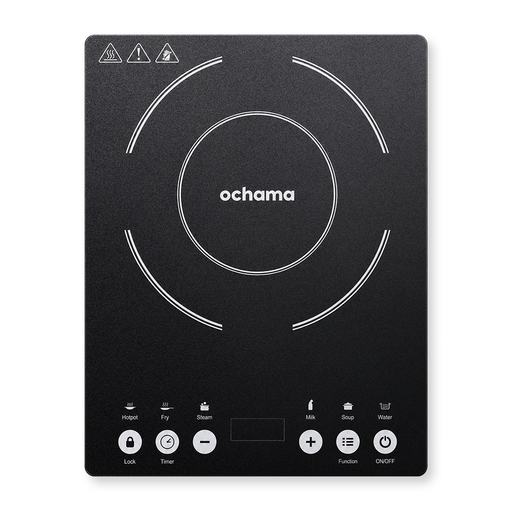
A portable single-zone induction hob for heating water in one pan; use only a suitable pan.
The product name lists 2000 W, 8 power settings, temperature control from 60–270°C, 7 cooking programmes, a 3-hour timer and a child lock.
The product information gives a suitable pan range of 12–26 cm and requires a flat, induction-compatible base.
 No image available
A portable induction hob for one pan; the pan must be suitable for induction.
The product name lists 2000 W, 10 power settings, 6 functions, touch controls and a safety lock.
According to the product information, the hob works only with magnetic cookware.
 No image available
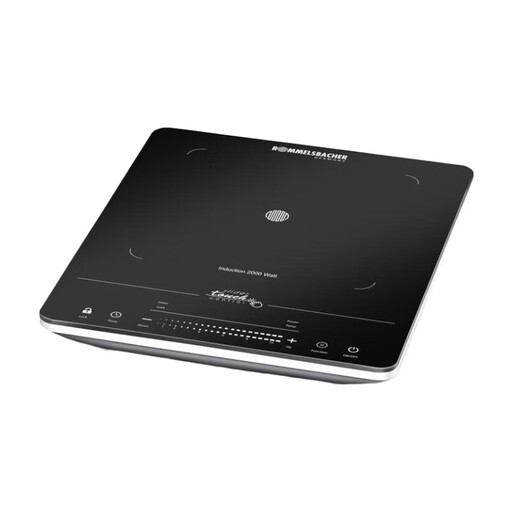
A portable induction zone for one pan; check that its base is induction-compatible.
The product name lists 2000 W, a Ø 26 cm cooking zone, 10 power settings, touchscreen controls and a timer.
The product information gives a suitable pan range of 12–26 cm.
 No image available
A portable induction hob with one cooking zone for anyone looking for an extra cooking area; use a suitable induction pan.
The product name identifies it as a ceramic single-zone induction hob.
The product information states that pan detection works only with suitable induction pans.
 No image available
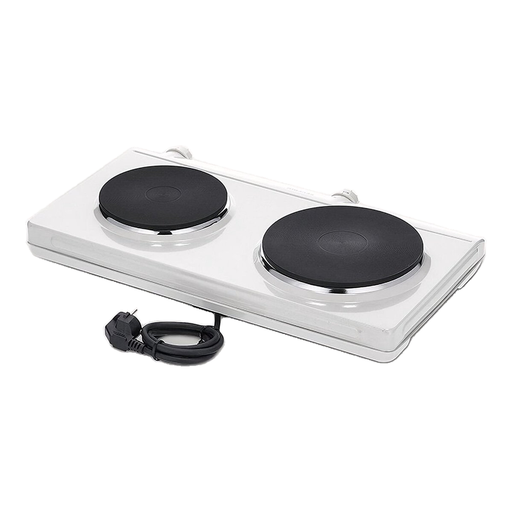
The two cooking zones are designed for anyone who wants to use a second pan alongside the blanching pan.
The product name lists a combined power of 2500 W and stepless temperature control.
The cooking zones and surfaces get very hot during use; according to the product information, don’t leave the hob unattended.
Bring water to the boil in a suitable pan, cook the vegetables briefly until just tender, then cool them quickly in iced water. Voedingscentrum describes this rapid cooling as part of blanching; adjust the cooking time to suit the vegetable and how tender you want it.
Check the instruction manual and your electrical set-up before plugging in the hob. Brandweer Nederland advises plugging high-power appliances directly into a wall socket rather than using a multi-socket adaptor or cable reel; this is safety advice, not a specific legal requirement for every model.
You need a pan with an induction-compatible base. The Consumentenbond identifies the induction symbol on the pan or packaging as a way to check. Also check the hob’s permitted pan size, as this varies by model.
If you buy in the Netherlands, you’re covered by the legal guarantee: you’re entitled to a product that works properly. A manufacturer’s guarantee, seller’s guarantee or paid-for extended warranty may also apply. Check the terms and keep these separate from your statutory rights. The Rijksoverheid explains the distinction.
For electrical equipment covered by the Dutch Commodities Act Decree on Electrical Equipment, CE marking is compulsory when the rated AC voltage is between 50 and 1000 V. The Nederlandse Voedsel- en Warenautoriteit explains that the manufacturer uses the mark to declare that the product meets the applicable European requirements; CE marking alone doesn’t mean that every individual item has been independently tested.