Choose a hob that suits your pan’s base and size, your worktop and the available connection. A single-zone induction hob is one option if you have a suitable magnetic pan. A cast-iron or ceramic hob may be a better fit if you want to keep using your existing pan, but bear in mind that the surface can get hot and retain heat. Then compare how well the hob handles low settings: a high maximum power rating doesn’t prove that your chilli will simmer evenly.
Who is a portable hob right for?
Cooking with one small pan
You’re making one portion and want to let the chilli simmer gently after browning the ingredients. Pan size and control at low settings matter more than extra cooking zones. Consumentenbond, CASO Design and Voedingscentrum cover points to consider around pan size and electric cooking.
Cooking with a pan you already own
You want to keep using your current pan, so first check whether its base is suitable for induction. If it isn’t, you can also compare cast-iron or ceramic hobs. Consumentenbond, Milieu Centraal and Rommelsbacher cover this compatibility question.
Cooking with limited worktop space
You’re looking for a standalone cooking zone that sits securely on the worktop and can be put away once it has cooled down. Consumentenbond, IKEA Nederland and Voedingscentrum offer information on portable hobs and cooking techniques.
What should you look for when buying?
Single-zone induction
A good fit if: your pan has a suitable magnetic base and falls within the specified pan size.
Bear in mind: a pan that’s too small or unsuitable may not be detected properly; the glass may stay warm after use.
Cast-iron hob
A good fit if: you want to keep using an existing pan without an induction-compatible base.
Bear in mind: according to Rommelsbacher, cast iron heats up more slowly than induction and stays hot for longer.
Ceramic hob with heating element
A good fit if: your pan isn’t suitable for induction and you want a smooth cooking surface.
Bear in mind: the element heats the glass surface first, so heating up, cooling down and residual heat all need consideration.
| What to consider |
What should you check? |
Who is this most relevant for? |
| Adjusting the heat |
Controls for low settings and, if available, a timer; check the features of the exact model. |
If I want to brown the ingredients first and then let the chilli simmer gently, I’ll look at how adjustable the heat is. Around 33% of consumers prioritise this transition when choosing. |
| Finding the right pan |
Test the base with a magnet and compare its diameter with the specified pan size. |
If I want to keep my existing pan, I’ll first check that its base is suitable for the cooking method. Around 27% of consumers prioritise pan compatibility. |
| Worktop space and storage |
Measure the worktop, the hob and the pan base; consider where you can store the hob once it has cooled. |
If I have limited worktop space, I want to know whether the hob and pan will fit securely and can be put away after use. Around 20% of consumers prioritise space and storage. |
| Connection and positioning |
Check the plug, mains voltage, rated power, positioning instructions and the load on the circuit. |
If I’m using a portable hob on my worktop, I want to know in advance whether the connection and set-up are suitable. Around 20% of consumers prioritise connection and positioning. |
Common buying mistakes
-
Assuming every smooth glass hob is an induction hob
A hob with a glass-ceramic surface may also use a heating element. The heating method affects how the surface heats up and retains residual heat.
Check the product specifications to confirm the heating method, and read the guidance on residual heat.
-
Choosing an induction hob without checking your pan
A non-magnetic base won’t work on induction, and a base that’s too small may not be detected either.
Test the base with a magnet and compare its diameter with the model specifications. You may need a different, suitable pan.
-
Assuming a high wattage means it will simmer well
The stated maximum power doesn’t tell you how gently or evenly a particular pan of chilli will cook on a low setting.
Compare the controls and adjustable low settings, but don’t treat stated settings as measured cooking results.
Brands to compare
Tristar
The IK-6178 and KP-6185 models let you compare a portable induction hob with a cast-iron electric hob.
- According to Tristar, the IK-6178 has adjustable power and a timer of up to 180 minutes. The KP-6185 has a 15 cm cast-iron cooking zone, five knob settings and a stated power rating of 1000 W.
- These specifications aren’t an independent comparison of simmering performance.
Princess
Model 303010 is a freestanding single-zone induction hob worth comparing if you’re looking for an adjustable timer.
- Princess lists a maximum power of 1800 W and a timer of up to 180 minutes.
- You’ll need a suitable induction pan; the stated specifications don’t tell you how evenly it will simmer one portion of chilli.
IKEA
The single-zone TILLREDA is an option to compare for a small kitchen or an extra cooking spot that you can put away.
- For article 805.901.55, IKEA Nederland lists one 170 mm induction zone rated at 2000 W, with a plug included.
- Check that your pan’s base is suitable for induction.
CASO Design
The portable PRO Menu 2100 is worth comparing if the specified pan sizes and adjustable settings matter to you.
- For model 2224, CASO Design lists twelve power and temperature settings, a timer from 1–180 minutes and a suitable pan diameter of 12–24 cm.
- When buying, check that the version and connection are suitable for your use in the Netherlands; the stated specifications don’t prove how well it simmers.
Rommelsbacher
The CT 2200/E shows that a portable glass-ceramic hob can use a heating element rather than induction.
- Rommelsbacher lists a switchable 140/210 mm cooking zone and a residual heat indicator.
- The manufacturer says cast iron heats up more slowly than induction; this isn’t an independent comparison of the CT 2200/E with the other models mentioned.
Portable hobs at Joybuy
This selection at Joybuy includes portable induction hobs with one or two cooking zones and different heat adjustment settings.
 No image available
Induction hob with two cooking zones, 5 temperature settings
A good fit if you want to use two independently controlled cooking zones.
Five temperature settings.
Requires a pan suitable for induction.
Joybuy
 No image available
Portable induction hob with one cooking zone, 5 settings, 1000 W
A good fit if you’re looking for one portable cooking zone with step-by-step heat adjustment.
One cooking zone, five power settings and a stated power rating of 1000 W.
Requires a pan suitable for induction.
Joybuy
 No image available
ochama induction hob, 2000 W, 10 settings
A good fit if you’re looking for a portable hob with several heat settings.
Stated power rating of 2000 W, ten heat settings, touch controls and six preset functions.
Requires a pan suitable for induction.
Joybuy
 No image available
Fritel IP 1266, single-zone induction hob
A good fit if you’re looking for one cooking zone with adjustable power for a single pan.
Ten power settings and a stated pan diameter of 12–26 cm.
The product information lists a timer of up to three hours and controls with a touch sensor and rotary knob. Requires a pan suitable for induction.
Joybuy
 No image available
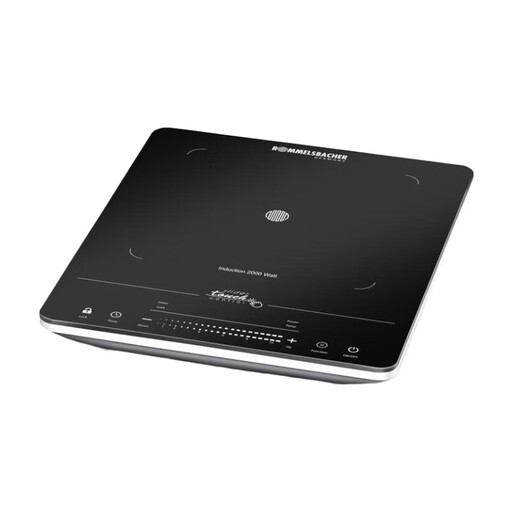
Rommelsbacher CT 2020/IN induction hob
A good fit if you’re looking for a portable induction cooking zone with adjustable settings.
Ten power settings and a stated temperature range of 60–240 °C.
The product information lists a 99-minute timer with automatic shut-off and automatic pan detection. Requires a pan suitable for induction.
Joybuy
Frequently asked questions
How can I check whether my pan will work on a portable induction hob?
Hold a magnet against the base and also check the permitted pan diameter for your chosen model. The base must be magnetic; a pan that’s too small may still not be detected.
How can I tell whether a hob is suitable for gently simmering chilli?
Look at the controls and adjustable low settings, but don’t take the maximum power rating as proof that it will simmer evenly. The result also depends on the combination of hob and pan.
Can I plug a portable hob into an extension lead?
The fire service advises connecting high-power appliances directly to a wall socket wherever possible. Fully unwind a cable reel if you use one, and also check your hob’s rated power and instructions.
Is a CE mark required on a new electric hob?
According to the Netherlands Food and Consumer Product Safety Authority, electrical products placed on the Dutch market under the applicable rules must carry a CE mark. The mark isn’t an independent cooking test.
Is induction suitable if I have a pacemaker?
Ask your pacemaker technician or cardiologist about your individual circumstances beforehand. Milieu Centraal advises people with a pacemaker to discuss this with one of them; another type of electric hob may be an alternative.


