
Vandaag of morgen in huis

Kwaliteit gegarandeerd

Welkomstaanbiedingen ontgrendelen: GRATIS bezorging | Tot 80% korting | Gratis 30 dagen JoyPlus-proefperiode
Download de app
A portable EV charger Type 2 3.5 kW is handy when you want to charge at home, on the road, or as a backup via a suitable 230V socket. You take the charger with you in the car and use it when no fixed charging point is available. For owners of an electric car or plug-in hybrid, this can be practical, but not every mobile car charger is suitable for every situation.
The main pitfalls are not just about charging power. The connection, adjustable current, cable length and safety features also determine whether a charger is usable in your garage or at a holiday destination.
A rating of 3.5 kW does not mean your car will always charge at exactly that power. The actual speed depends on the car's built-in AC charger, the battery status and the electrical installation. A plug-in hybrid, for example, may accept less power.
At 230 V and 16 A, the theoretical maximum is around 3.5 to 3.7 kW. A lower setting, such as 8 A or 10 A, reduces the load on the socket and the circuit.
A portable Type 2 car charger should be connected directly to a suitable, earthed socket. Unapproved adapters, multi-socket extensions and extension leads can become hot or offer insufficient protection. If in doubt, check the installation and have the circuit capacity assessed by a qualified electrician.
WiFi, Bluetooth and an app are useful for scheduling and remote control. However, they do not replace correct earthing, a suitable circuit or built-in protection. Therefore, also check features such as overcurrent, overheat, earth leakage and overvoltage protection.
Type 2 according to IEC 62196-2 is a widely used connection for European electric cars and plug-in hybrids. The mains plug is at least as important. A model with a Type F or Schuko plug is intended for a suitable European domestic socket.
Always check:
A Type 2 charging cable of 5 metres often gives more freedom of movement in a garage or driveway. Measure the distance between the socket and the charging port beforehand. A longer cable is not automatically more convenient if it is difficult to store.
A 16A EV charger can deliver up to about 3.5 kW on 230 V, but the maximum setting is not always suitable for every wall socket. With an adjustable charging current of 8A, 10A, 13A and 16A, you can adapt the load to the situation.
For example, use a lower setting when:
Only choose 16 A when the installation is suitable for it. Stop immediately if you notice a loose plug, abnormal heat, a damaged cable or an error message.
An IP rating indicates how well a housing is protected against dust and water. The exact protection can differ per component: a charging box and vehicle connector do not always have the same rating. A product listing with IP65 or IP66 therefore does not mean you can submerge the charger in water or clean it with a pressure washer.
Also pay attention to:
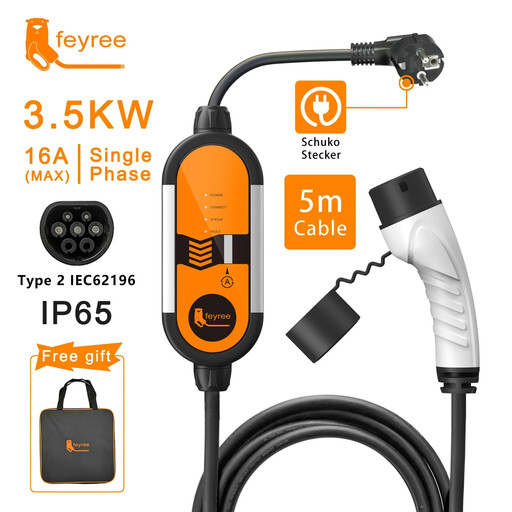
Why this fits: A straightforward mobile charger for home, visiting addresses and emergency use, with a Schuko plug and Type 2 connector.
According to the product information, 8A, 10A, 13A and 16A are adjustable. This allows you to adapt the charging current instead of always using the highest setting.
5 metre cable, OLED status display, carry case and, according to the product listing, protection against overcurrent, overheating and leakage current.
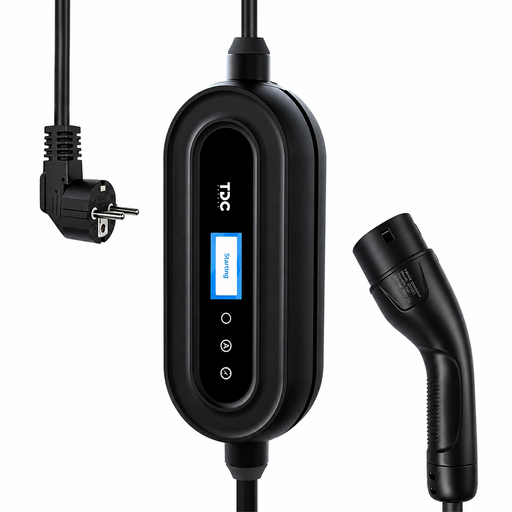
Why this fits: For drivers looking for a portable 230V EV charger with scheduling, app features and clear status information.
The product information mentions four current settings, a Type F plug and protections for voltage, temperature, earthing and leakage current, among others.
WiFi and Bluetooth, app and button scheduling, 1.9-inch LCD screen, 5 metre cable and IP66 according to the product listing.
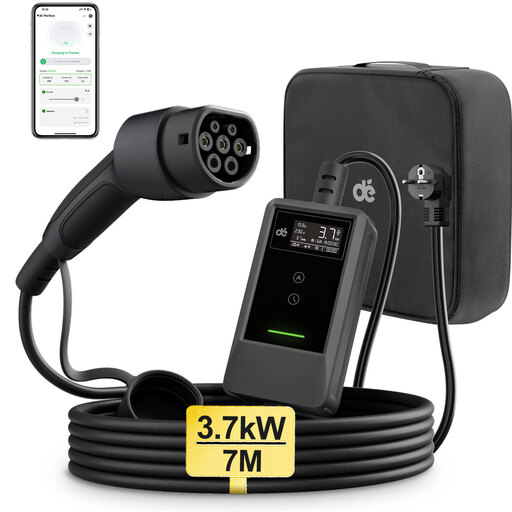
Why this fits: A longer cable can be practical when the socket is not directly next to the charging port.
The listing mentions an adjustable range from 6A to 16A. Before purchasing, do check the supplied plug, app requirements and full safety specifications.
7 metre cable, WiFi and an LCD screen according to the product title; suitable for vehicles that support Type 2 AC charging.
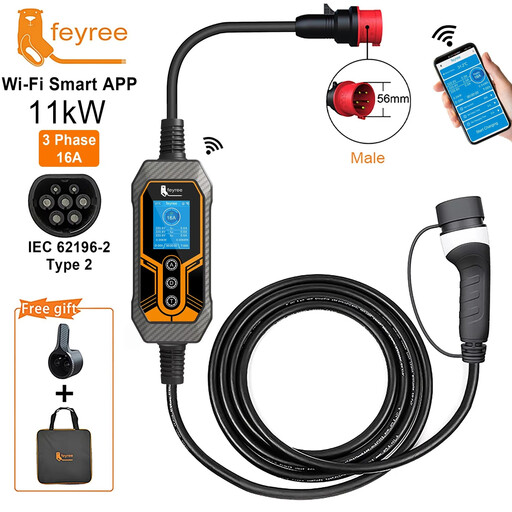
Why this fits: For those who, alongside a 230V backup, also use a suitable CEE connection. This is not a direct replacement for a 3.5kW charger via a domestic socket.
The product information mentions a CEE plug and an adjustable current from 8A to 16A. Only use this model with a suitable 3-phase installation.
WiFi, Bluetooth, scheduling and a 2.8-inch LCD screen according to the product description. The car must support 3-phase AC charging.
Browse a current selection of Type 2 chargers and compare charging power, connection, cable length and smart features for your use case.
Check the plug, cable and Type 2 connector before every charging session. Keep the contacts clean and dry. First stop the charging session via the car or charger before removing the plug. Allow a portable charger to cool down for a few minutes after use before storing it.
An app only works when the charger can connect to a compatible WiFi network. If the connection drops, a physical button, display or Plug & Charge function is practical. Therefore, check whether you can also use the charger without an app.
No. Use a correctly earthed and suitable 230V Type F socket. The capacity of the circuit, wiring and connection must match the chosen charging current. Do not use any random extension lead or adapter.
As a guideline, 3.5 kW delivers approximately 3.5 kWh to the car per hour, but charging losses and the built-in charger also play a role. Fully charging a 35 kWh battery theoretically takes about ten hours; in practice, it may take longer. A plug-in hybrid typically has a smaller battery, but the actual time varies by model.
Multiply the kilowatt-hours used by your electricity rate. At around 10 kWh and a rate of €0.30 per kWh, that works out at approximately €3, excluding charging losses. The final cost depends on your contract, charging speed, losses and any costs at an external location.
