
Same-day & Next-day Delivery

Quality Guaranteed

Unlock Your Welcome Offers: FREE Delivery | Up to 80% OFF | Free 30-day JoyPlus trial
Download the APP
A portable electric tyre inflator is handy when your tyre pressure is low, whether you’re on the road, at home or on a campsite. However, not every compact air pump is suitable for every vehicle. A model that works perfectly well for a bicycle tyre may be slow or overheat when used on a car tyre. Conversely, a powerful compressor may be unnecessarily bulky if you only need to inflate a road bike tyre or a ball.
So don’t focus only on claims such as “fast”, “powerful” or “150 PSI”. Pay particular attention to the practical specifications and how you plan to use the pump.
A 150 PSI tyre inflator sounds powerful, but the maximum pressure doesn’t tell you exactly how quickly it will inflate a car tyre. The recommended tyre pressure for most cars is much lower. Airflow, operating time and heat build-up are more important.
A high PSI rating can be useful for different applications, including bicycle tyres, motorbike tyres and sports balls. However, don’t use maximum pressure as your only point of comparison.
A cordless tyre inflator is convenient because you don’t need a 12V socket or a long cable. However, the battery can run down more quickly when inflating larger car tyres or several tyres in a row. So check:
A rechargeable tyre inflator is practical for everyday use, but don’t leave its battery completely flat in the car for months at a time.
A tyre inflator for cars, bicycles, motorbikes and balls will usually need several adapters. Check whether it comes with a Schrader valve connection for car tyres, a Presta adapter for road bikes and a needle for balls. A suitable hose and a secure connection help minimise air loss while inflating.
A digital tyre inflator usually displays the set pressure in PSI, bar or kPa. This is easier to read than a basic analogue gauge, particularly when you want to set the tyre pressure precisely.
A tyre inflator with automatic stop switches off when the selected pressure is reached, according to the product’s stated functionality. Before use, always check the recommended tyre pressure for your car, motorbike, bicycle or other inflatable item. The pump is not a substitute for checking the guidance from your vehicle manufacturer or tyre supplier.
For car tyres, a steady airflow matters more than a high maximum pressure alone. Check the stated inflation time too, but treat it as a guide: tyre size, starting temperature, battery charge and outdoor temperature all affect the result.
A mini compressor for car tyres is primarily suitable for topping up the pressure. A completely flat, large tyre may take longer to inflate. If the instructions advise it, let a compact compressor cool down between uses.
A lightweight pump fits in a glove compartment, cycle bag or motorbike pannier. A larger model, on the other hand, may have a higher-capacity battery, a longer hose or an additional power supply. A USB-C connection is handy for camping, while a 12V cable can be useful as a backup if you break down on the road.
Also check the casing, ventilation openings and storage requirements. Electric pumps should be stored in a dry place and must not be covered while in use.
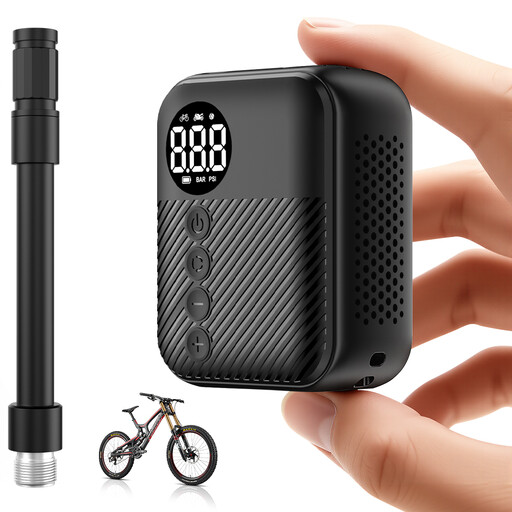
Why it suits this type of user: This compact model is aimed at cyclists and anyone looking for a small pump to take on the road. According to the product information, it’s rechargeable, has a digital gauge and is suitable for bicycle, motorbike and car tyres.
The digital pressure display makes it easier to inflate accurately, rather than relying on guesswork. Its pocket-sized design also takes up very little storage space.
Digital gauge, built-in rechargeable battery and maximum pressure of 150 PSI, according to the product listing.
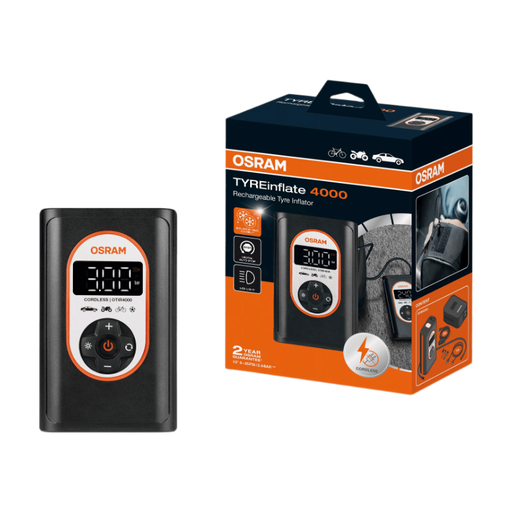
Why it suits this type of user: This model combines cordless operation with USB-C charging and a 12V car cable. It’s a good fit for drivers who want an additional power option at home and on the road.
Having two power options reduces the risk of running out of charge. The automatic stop function and selectable pressure units also help you use it with confidence.
Maximum working pressure of 8,3 bar, pressure memory for four vehicles, LED lighting and three adapters, according to the product details.
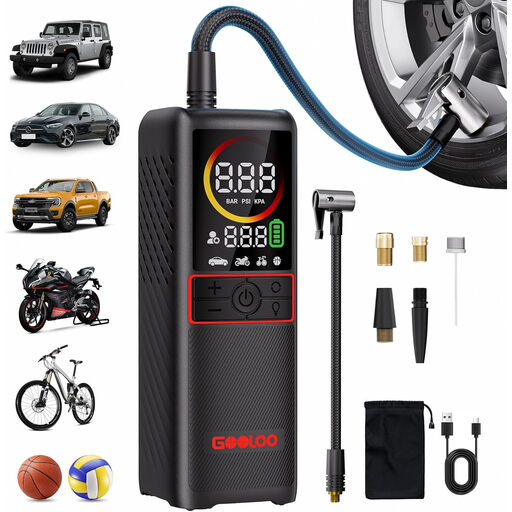
Why it suits this type of user: With a 7500mAh battery, several preset modes and a maximum pressure of 160 PSI, this model suits users who want one device to maintain tyres on their car, motorbike and bicycle, as well as inflate balls.
Its battery capacity and preset modes make it easier to avoid trying to inflate several car tyres in a row with a small bicycle compressor.
Four inflation modes, automatic shut-off, an LED screen and a stated operating time of up to 45 minutes.
We’ve put together a full, up-to-date list of products that meet these strict selection criteria and current European safety regulations.
Yes, some models are suitable for car tyres, according to their product information. Always check the maximum pressure, expected inflation time, battery capacity and recommended rest periods. A small bicycle pump isn’t automatically suitable for regular use with a car.
Its lifespan depends on the battery, storage temperature, charging frequency and how long it’s used in each session. Store the pump in a dry place, avoid leaving it in a hot, enclosed car for long periods and charge the battery according to the instructions. Let the compressor cool down when advised.
The electricity cost of charging a small battery is usually low. For a model with a 12V power supply, running costs also depend on the car battery. The main differences in cost usually come down to the purchase price, battery capacity, accessories and warranty terms.
