
Vandaag of morgen in huis

Kwaliteit gegarandeerd

Welkomstaanbiedingen ontgrendelen: GRATIS bezorging | Tot 80% korting | Gratis 30 dagen JoyPlus-proefperiode
Download de app
A flat or underinflated tyre rarely happens at a convenient time. Keep a portable electric tyre inflator in your car, bike bag or camping kit and you can top up your tyre pressure on the go, without pumping by hand or looking for a petrol station. But many models look alike. A high PSI rating, compact size and terms such as “fast” or “smart” don’t tell the whole story.
The following points will help you choose the right cordless tyre inflator, mini car compressor or rechargeable air pump.
A 150 PSI tyre inflator sounds powerful, but maximum pressure is only one specification. Actual run time also depends on airflow, battery capacity, the hose and heat build-up. A pump for bike tyres and sports balls may quote a high theoretical pressure, yet be less suitable for inflating several car tyres in a row.
So be sure to check:
A cordless tyre inflator runs on a built-in battery. You’ll need to charge it beforehand, and the battery can slowly lose charge if the device is left in the car for months. Check the charging time, capacity and charging port. A Type-C port is handy, but also check whether a charging cable is included.
A 12V model with a cable may be better suited to extended use, as long as your car has a compatible socket. A rechargeable tyre inflator is especially useful for cyclists, motorcyclists and drivers who don’t want to use a cable.
Some electric air pumps are designed for air beds, pool toys or other low-pressure items. For example, the product information for the Baseus PocketGo Portable Air Pump states a pressure of 3.5 kPa, or around 0.5 PSI. This type of product isn’t suitable for car tyres and may not be suitable for many bike tyres either.
Always check that the product page specifically mentions car, motorbike or bike tyres. A high airflow rate in litres per minute at low pressure isn’t the same as providing enough pressure for a car tyre.
The recommended tyre pressure for cars is often around a few bar, but the correct value can be found on the sticker inside the door frame, on the fuel flap or in your vehicle’s manual. Use that figure rather than automatically choosing the pump’s maximum pressure.
A tyre inflator with a digital pressure gauge makes it easier to set and check the pressure. Look at the available units, such as PSI, BAR and kPa, and the stated measurement accuracy. Automatic shut-off is handy: set the pressure you want and, according to the product description, the pump stops when it reaches that level. You can also check the tyre pressure afterwards with a separate gauge if you wish.
Compare the battery capacity in mAh with the stated run time. A model with 4,000 mAh may run for around 25 minutes according to the product information, for example, but actual run time varies depending on the tyre, pressure and temperature.
A small battery may be enough for everyday cycling. For two flat car tyres, you’ll want more reserve. Don’t leave a cordless tyre inflator completely flat in your car, and recharge it periodically. Lithium batteries can be less predictable in extreme cold or heat, so follow the manufacturer’s temperature and storage instructions.
A lightweight mini car compressor is easy to carry, but a very small device may be less suitable for inflating several large tyres. Also check:
Never use a compressor for longer than the manual allows. Let the device cool down if its casing gets hot.
The options below are based on the product features listed, not on general marketing claims. Always check the latest specifications, price, availability and usage restrictions on the product page before buying.
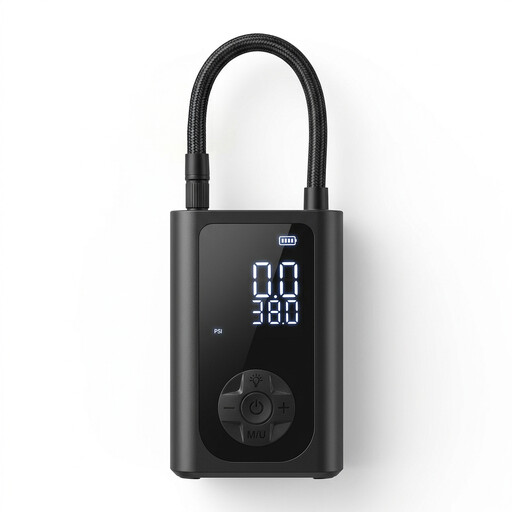
Why it suits this profile: The Q19 combines a 4,000mAh battery with five modes for cars, motorbikes, bikes, balls and a custom setting. According to the product information, it has an airflow rate of 26 l/min and a maximum pressure of 150 PSI.
The different modes make it clear what the pump is designed for. The stated inflation time of around 7.5 minutes for a flat tyre helps set more realistic expectations than a PSI figure alone.
Type-C charging, two-mode LED lighting and a stated run time of up to 25 minutes.
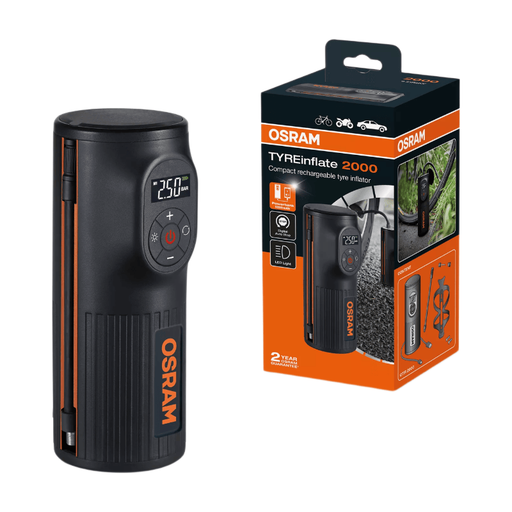
Why it suits this profile: According to the product description, this model has a digital display with a memory function, three pressure units and automatic shut-off. Its stated maximum pressure is 5.5 bar.
The pressure isn’t listed only as a maximum PSI figure; the product information also specifies bar, kPa and PSI, along with a memory function and automatic shut-off. That makes regular top-ups easier to manage.
USB charging, LED lighting, a storage bag and a stated inflation time of around two minutes according to the product description.
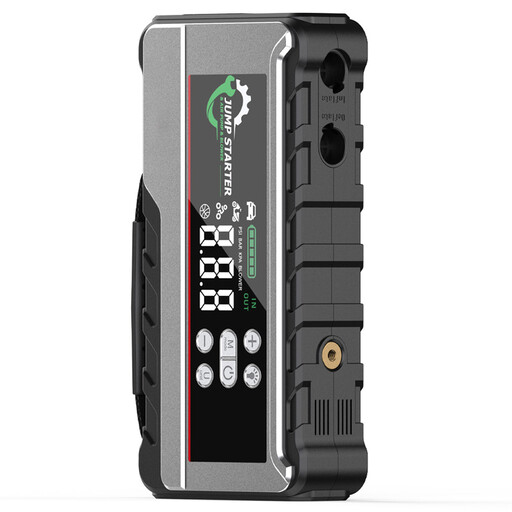
Why it suits this profile: According to the product information, this device combines a jump starter for 12V vehicles, a 150 PSI compressor, a power bank and an air blower. It’s a good fit for drivers, campers and outdoor enthusiasts looking for several functions in one device.
The functions and dimensions are clearly specified: 24,800 mAh, around 1,100 grams and 245 × 115 × 55 mm. So you can see at a glance that this isn’t an ultra-light bike pump.
PD65W Type-C charging, 12V jump-start function, an air blower for larger inflatables and three LED modes.
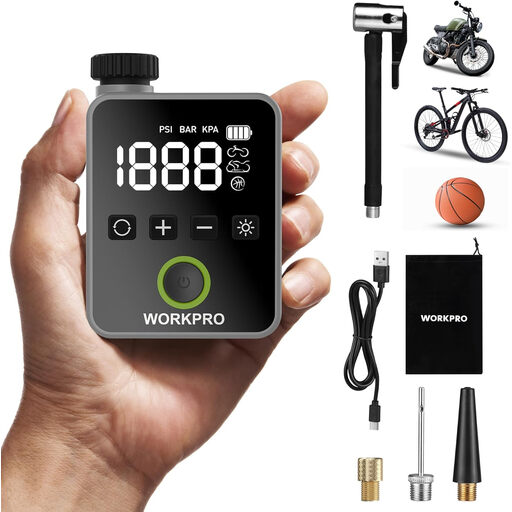
Why it suits this profile: The product description states that it weighs 270 grams and has four modes, a pressure range of 3 to 140 PSI and an automatic shut-off function. That makes it handy for bike rides, motorbike trips and camping.
The manufacturer clearly states that this model isn’t suitable for lorry or trailer tyres. This limitation helps you avoid buying a compact pump for a job that’s too demanding.
Supports PSI, BAR and kPa, with four nozzles, an LED display and built-in emergency lighting.
We’ve put together a complete, up-to-date list of products that meet these strict selection criteria and the applicable European safety regulations.
That depends on its pressure range, airflow and stated use. Choose a model whose product information specifically mentions car tyres. A pump for air beds or other low-pressure items isn’t suitable for a car.
Its lifespan depends on charging cycles, storage temperature, run time and maintenance. Don’t leave the pump completely flat for a long time, keep it away from moisture and don’t use it continuously for longer than recommended. Run time per charge isn’t the same as the battery’s overall lifespan.
Usually not. The recommended pressure for a tyre is generally much lower than 150 PSI. A higher maximum pressure mainly gives you a wider range, but doesn’t automatically say anything about speed or suitability. Check the digital pressure gauge, airflow and how many tyres you want to inflate on a single charge.
