
Vandaag of morgen in huis

Kwaliteit gegarandeerd

Welkomstaanbiedingen ontgrendelen: GRATIS bezorging | Tot 80% korting | Gratis 30 dagen JoyPlus-proefperiode
Download de app
A portable electric tyre inflator can come in handy if your tyre pressure is low, whether you’re on the road or at home in the garage. However, not every compact air pump is suitable for car tyres. Some models are designed for bicycle tyres or balls, while others stand out mainly for their high PSI rating, with little clear information about battery life, running time or cooling.
If you focus only on the maximum pressure, you could end up with an impractical purchase. Look out for these three common pitfalls:
A 150 PSI tyre inflator has plenty of pressure in reserve on paper. The recommended tyre pressure for a typical car is usually much lower. So check not only the maximum pressure, but also the airflow rate, for example in litres per minute, and the stated inflation time.
For example, according to the product information, a model with a flow rate of 26 l/min can inflate a flat car tyre in around 7.5 minutes, while topping up a tyre may take only around 30 seconds. The actual time depends on tyre size, starting pressure, temperature and the valve connection.
A rechargeable tyre inflator is convenient because you don’t need a 12V socket or a long cable. However, check the following:
A larger battery doesn’t automatically mean the pump works faster. And even a device with a long running time may be less suitable if it builds pressure slowly. For frequent use, a model with both a battery and 12V power can be a practical back-up.
A digital tyre inflator with adjustable pressure makes it easier to set a target pressure. An automatic shut-off helps prevent the pump from continuing to run once the set pressure has been reached. Always check the recommended tyre pressure for your car, motorbike or bicycle beforehand. You’ll usually find it on a sticker, in the manual or on the manufacturer’s website.
Check which adapters are included, too. You may need a Presta connection for bicycle tyres, while car tyres usually use a Schrader valve. A ball needle is useful for sports balls, but doesn’t indicate whether the pump is suitable for car tyres.
The selection below is based on the listed product dimensions, connections, battery details, pressure ratings and features. Claims about speed or the number of applications are taken from the product descriptions provided by the respective brands.
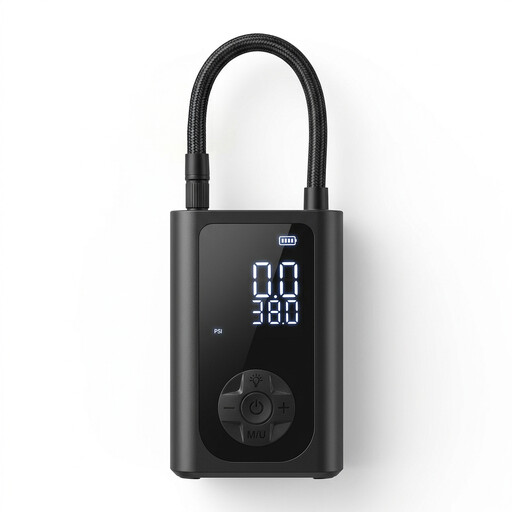
Why it suits this profile: This compact model has a 4000mAh battery, five modes for cars, motorbikes, bicycles, balls and custom settings, and a stated maximum pressure of 150 PSI. That makes it a good fit for anyone looking for one device for a range of uses.
The product information lists the battery, estimated running time and inflation time. This makes it easier to decide in advance whether the pump is right for occasional use.
4000mAh battery, 26 l/min airflow, USB-C connection and LED light with steady and SOS modes.
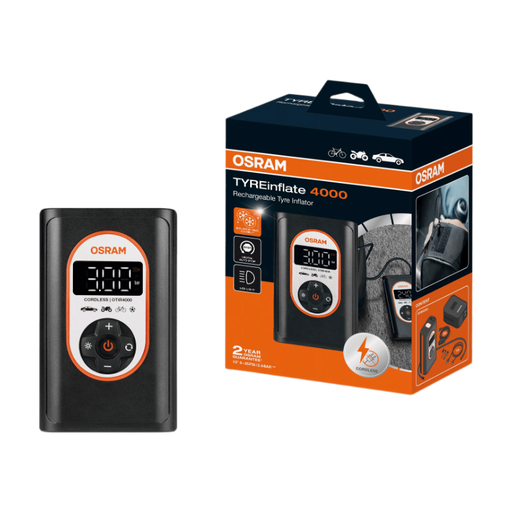
Why it suits this profile: The product description mentions an aluminium housing, pressure memory for up to four vehicles, and both USB-C and 12V power. This makes it a good choice for motorists who value features for regular use.
As well as cordless operation, it has a 12V cable as an alternative if the battery doesn’t have enough charge. The automatic stop also helps prevent unnecessary inflation.

Why it suits this profile: With a stated 7500mAh battery, 35 l/min airflow and maximum pressure of 160 PSI, according to the product description, this model is aimed at people who want to inflate tyres on several vehicles or a range of inflatables.
The digital pressure setting, automatic stop and range of measurement units make it easy to keep inflation under control. The stated capacity helps you gauge how useful it will be on the road.
Four preset modes, manual settings from 4 to 160 PSI, a power bank function and LED lighting with two modes.
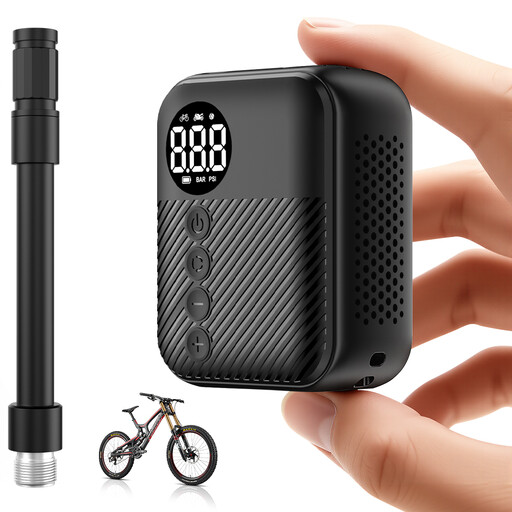
Why it suits this profile: Its pocket-sized design, digital gauge and rechargeable battery make it a practical option for cyclists, motorcyclists and anyone short on space in a bag or vehicle.
The digital gauge shows you the pressure, so you don’t have to rely on guesswork. Before buying, make sure the included connection fits your valve.
Stated maximum pressure of 150 PSI, compact design, digital gauge and, according to the product information, suitability for bicycle, motorbike and car tyres.
We’ve put together a complete, up-to-date list of products that meet these strict selection criteria and the current European safety requirements.
No. Check the maximum pressure, airflow, inflation time and connections. A pump designed only for low-pressure products isn’t suitable for a car tyre. Also check the maximum running time and whether breaks are needed to prevent overheating.
Its lifespan depends on battery quality, charging cycles, storage and how long it’s used in each session. Keep the device dry, charge the battery according to the manual and don’t run the compressor for longer than recommended. A model with 12V back-up can be useful if you’re often on the road.
The electricity cost per charge is usually low, but the purchase price is higher than for a basic hand pump. The main benefits are speed, automatic shut-off and a pressure reading you can check. So choose according to how you plan to use it: for a car, motorbike, bicycle, sports balls or a combination of these.
