
Vandaag of morgen in huis

Kwaliteit gegarandeerd

Welkomstaanbiedingen ontgrendelen: GRATIS bezorging | Tot 80% korting | Gratis 30 dagen JoyPlus-proefperiode
Download de app
A portable electric tyre inflator is handy if your car tyre is losing pressure while you’re out, you need to pump up a bike tyre before setting off, or you want to inflate a ball at the campsite. However, many models look similar, even though there can be big differences in battery life, pressure readings and what they can be used for. A compact design or a “150 PSI” rating doesn’t tell the whole story.
So, look out for these three common pitfalls:
Whether you’re inflating a bike, motorbike or car tyre, you need an inflator that can reach the required pressure. A 150 PSI tyre inflator offers enough range on paper for many vehicles, but the recommended tyre pressure is usually much lower. So, check the airflow too, which may be given in litres per minute.
According to Porbi’s product information, a model with 26 L/min can inflate a flat car tyre in around 7 to 8 minutes. Topping up a tyre that already has some pressure is said to take around 30 seconds. These timings are estimates: temperature, tyre type and starting pressure all affect the result.
A rechargeable tyre inflator gives you flexibility, as you don’t need a mains socket or a running engine. Be sure to check:
A 4000 mAh battery sounds generous, but the product information for the Porbi Q16 and Q19 gives a run time of around 25 minutes on a full charge. According to the description, that should be enough to inflate around two flat car tyres of the type specified. That’s different from topping up your tyres every day or inflating four completely flat tyres.
A tyre inflator with a digital pressure gauge is easier to read than an analogue gauge, especially in the dark. Ideally, choose a model that lets you set the pressure you want and then switches off automatically. Before buying, check that it supports the right unit: bar, PSI or kPa.
An automatic shut-off helps prevent you from continuing to inflate once the set pressure has been reached. If the specified pressure is important, check it again with a separate gauge. The recommended pressure is shown on the vehicle, in the manual or sometimes on the inside of the driver’s door.
A mini tyre inflator is lightweight and easy to carry, but smaller models aren’t always designed for high pressures or large tyres. The Baseus PocketGo, for example, is described as an inflator for low-pressure applications. Its stated pressure of 3,5 kPa doesn’t make it suitable as a compressor for car tyres, SUVs or motorbike tyres. Always check the pressure range and recommended uses.
An electric air pump for cars has a motor that generates heat. Many product descriptions advise against running the pump for long periods without a break. If you’re inflating several tyres, take breaks and follow the instructions. A model with a larger battery isn’t automatically suitable for prolonged continuous use.
A tyre inflator for bikes and motorbikes may need different valve attachments. Check whether it comes with a Presta adapter, a Schrader connection and a needle for balls. An LED light is useful if you break down in the dark, but it’s no substitute for a high-visibility vest, warning triangle or other roadside safety measures.
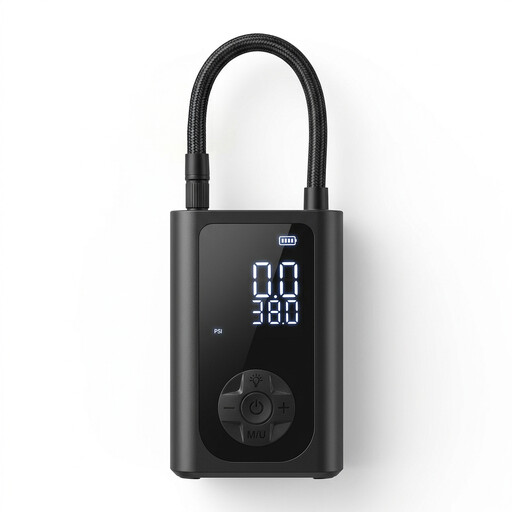
Why it suits this type of user: This model combines five modes for cars, motorbikes, bikes, balls and custom settings with a compact design. According to the product information, it has a 4000 mAh battery and a maximum pressure of 150 PSI.
The product description gives both the airflow of 26 L/min and an estimated inflation time. That gives you more context than a high PSI figure alone.
Digital pressure detection, USB-C, power bank function, two LED modes and a stated run time of around 25 minutes.
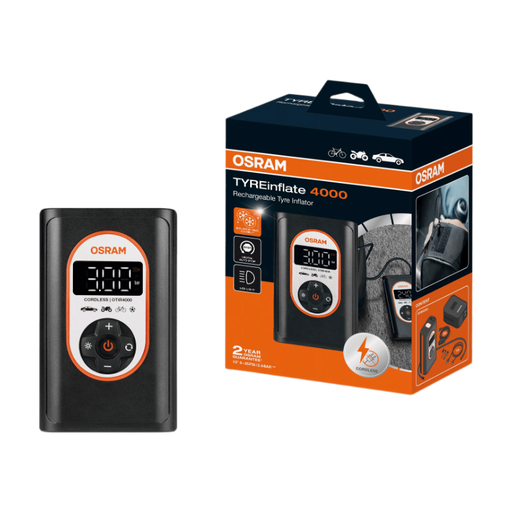
Why it suits this type of user: This model is aimed at drivers who want extra control features. According to the product description, it supports USB-C charging and can be powered via a 12V car connection.
According to the description, a flat battery doesn’t have to mean you can’t use the inflator, as a 12V cable is included as an alternative power source.
Automatic shut-off, memory for up to four vehicles, pressure release, LED light and a metal housing, according to the product information.

Why it suits this type of user: The stated 7500 mAh battery and airflow of 35 L/min are worth considering if you regularly maintain car, motorbike and bike tyres.
The description gives a run time of up to 45 minutes and a manual setting mode. However, check the actual conditions before inflating several flat tyres one after another.
Up to 160 PSI according to the product listing, four preset modes, three pressure units, automatic shut-off and LED lighting.
We’ve put together a full, up-to-date list of products that meet these strict selection criteria and the applicable European safety regulations.
That depends on its pressure range, airflow and stated applications. Choose a model that specifically mentions car tyres. A compact inflator designed for balls or low-pressure items isn’t suitable for a car or motorbike tyre.
Run time varies depending on the battery and the load. Around 25 minutes is stated for the Porbi Q16 and Q19, while the GOOLOO GT160 is listed as offering up to 45 minutes according to the product description. Treat these as product specifications based on certain conditions. Charge the inflator regularly and store it somewhere dry, away from extreme temperatures.
Electricity use per inflation is usually limited, as a tyre inflator only runs for a few minutes. The main ongoing consideration is the battery: its capacity may decrease over time, and you may eventually need to replace the device. A model with USB-C, automatic shut-off and clear pressure settings can also help you avoid running it for longer than necessary.
