
Vandaag of morgen in huis

Kwaliteit gegarandeerd

Welkomstaanbiedingen ontgrendelen: GRATIS bezorging | Tot 80% korting | Gratis 30 dagen JoyPlus-proefperiode
Download de app
A portable electric air pump can come in handy if your car tyre is soft, your bicycle tyre is slowly losing air or you need to inflate something at the campsite. However, models can vary considerably. A compact design tells you little about the pump’s actual capacity, and a rating such as “150 PSI” doesn’t automatically mean it can inflate every tyre quickly.
As Joybuy Product Recommendation Officer, I focus on the product specifications that matter in practice. That way, you can avoid paying extra just for a fancy display or an impressive marketing figure.
A 150 PSI tyre pump can theoretically reach a high pressure, but that doesn’t tell you how much air its motor moves per minute. So check the airflow rate too, usually given in litres per minute. In practice, a pump delivering 26 L/min may perform differently from one with a lower airflow rate, even if both have the same maximum pressure.
A typical car tyre needs far less than 150 PSI. The maximum figure is therefore mainly a technical limit, not an indication that the compressor is particularly fast at inflating car tyres.
A cordless tyre pump is easy to carry, but battery life determines how much you can do with it. Check:
A small rechargeable air pump is suitable for topping up tyres and emergencies, but may be less practical for several completely flat car tyres. If the instructions recommend it, let the pump cool down after extended use.
Not every compact air pump is a tyre pump. The Baseus PocketGo, for example, is listed as having a pressure of 3.5 kPa, or around 0.5 PSI. According to the product information, it is intended for low-pressure applications such as certain inflatables, not car, SUV or motorbike tyres.
Always check the unit: PSI, bar, kPa or kg/cm². An air pump for cars and bicycles needs to be able to deliver enough pressure for the specific type of tyre. A pump for an air bed won’t automatically work as a compressor for car tyres.
Maximum pressure matters, but consider it alongside the airflow rate. A compact pump with a lower volume may work well for bicycle tyres, while car tyres hold more air and therefore take longer to inflate.
For example, the Porbi Q19 product information lists 150 PSI, an airflow rate of 26 L/min and an estimated 7 to 8 minutes to inflate a completely flat 195 car tyre. Topping it up is said to take around 30 seconds. These are stated figures; the actual time depends on tyre size, starting pressure, temperature and battery level.
An air pump with a digital pressure gauge makes it easier to set the pressure than a basic analogue gauge, especially if you want to switch between PSI, bar and kPa. An automatic tyre pump stops when it reaches the set pressure. This helps reduce the risk of overinflating, but after use, check the pressure with your car or bicycle gauge if accuracy is important.
Also check which valves the pump supports. Bicycles may use either Presta or Schrader valves. Balls need a needle adapter. Check which hoses and adapters are included.
A mini compressor with a battery is handy for keeping in your boot, cycle bag or backpack. A model with a 12V cable doesn’t rely on a limited built-in battery, but you’ll need to be close enough to the vehicle. Check the length of the cable and air hose.
Heat is another important consideration. A compact motor can get hot during prolonged use. Follow the instructions, don’t exceed the maximum operating time and store the device somewhere dry. If you’re using it near water, for example with a SUP, make sure the pump itself stays dry.
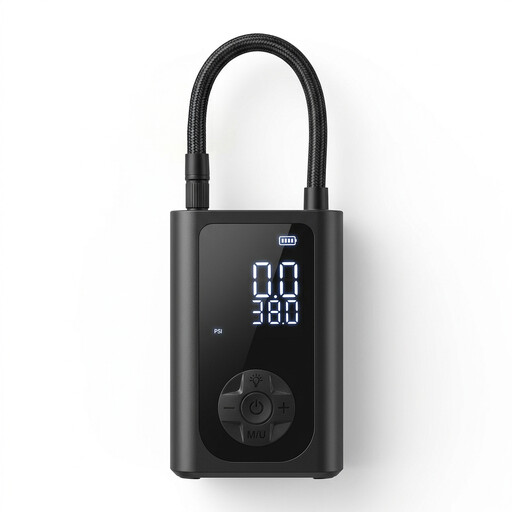
Why it suits this profile: The Q19 combines a compact design with five modes for cars, motorbikes, bicycles, balls and custom settings. It’s a practical choice for occasional top-ups.
The product information lists both the airflow rate of 26 L/min and the maximum pressure of 150 PSI, so you can assess the figures together.
4,000 mAh battery, USB-C connection, LED light and stated pressure measurement accuracy of ±0.01 kg/cm².
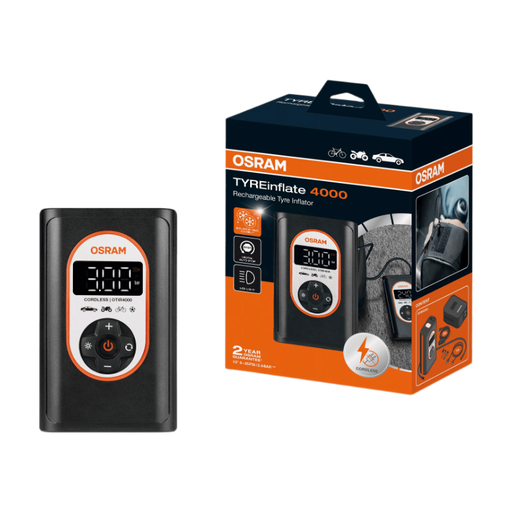
Why it suits this profile: This model is a good fit for drivers who want digital controls, a rechargeable battery and an alternative power source in one device.
As well as USB-C, the product information lists a 12V cable. So, if the battery is flat, you have a second power option in the car.
Automatic stop, pressure memory for four vehicles, LED light, deflation valve and three adapters.
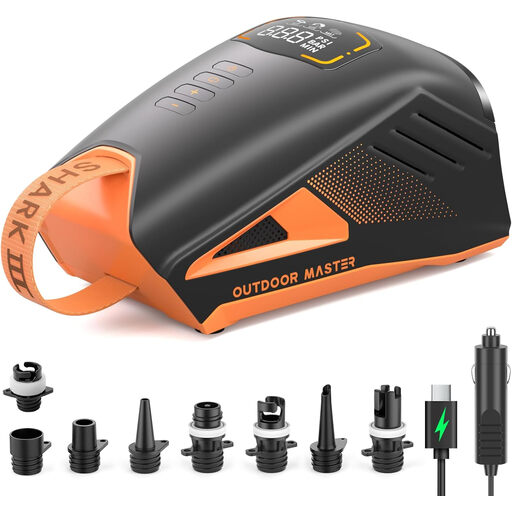
Why it suits this profile: This pump is designed for SUP boards and boats, not car tyres. Its built-in battery and multiple nozzles make it suited to outdoor use away from home.
The maximum pressure is 20 PSI and it is clearly described as a SUP pump. This makes it less likely that you’ll choose it for the wrong purpose.
74 Wh battery, digital pressure setting, automatic shut-off, inflation and deflation, plus eight nozzles.
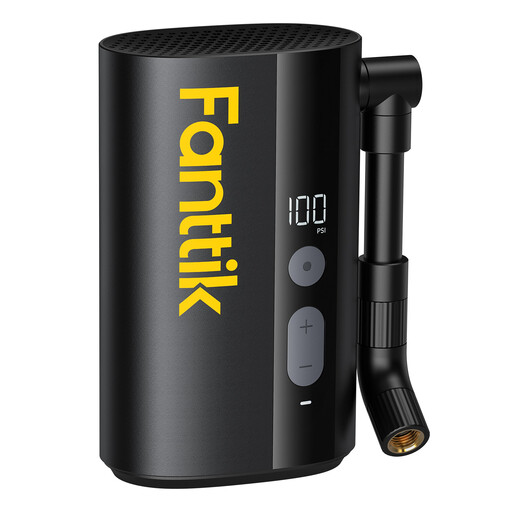
Why it suits this profile: This pump is designed specifically for bicycles, making it a sensible choice for road cyclists, mountain bikers and e-bike riders.
The “for bicycle use” warning makes it clear that this isn’t a compressor for car tyres, helping you avoid using it for the wrong purpose.
150 PSI, automatic shut-off, 5,000 mAh battery and support for Presta and Schrader valves.
We’ve put together a complete, up-to-date list of products that meet these strict selection criteria and the applicable European safety regulations.
Only if the pump is suitable for all of them and has the right adapters. Check the maximum pressure, airflow rate and included valves. A motorbike tyre pump or compact electric pump for car tyres may not be as practical for high-pressure bicycle tyres. A model with car, motorbike and bicycle modes usually offers greater flexibility.
It depends on the battery capacity, tyre type, starting pressure and duration of use. Product information may state, for example, how many minutes the pump can run continuously or how many tyres it can inflate per charge. Treat these figures as a guide. Charge the pump in advance and check whether it can be charged via USB-C or 12V.
A digital gauge is handy for setting the pressure and stopping automatically, but accuracy varies by model. Check whether a measurement tolerance is provided and, if in doubt, use a separate gauge to check the tyre pressure. Also, set the pressure recommended by the car manufacturer or tyre maker, not the pump’s maximum PSI.
