
Vandaag of morgen in huis

Kwaliteit gegarandeerd

Welkomstaanbiedingen ontgrendelen: GRATIS bezorging | Tot 80% korting | Gratis 30 dagen JoyPlus-proefperiode
Download de app
A portable electric air pump for your car can be useful when a tyre is slowly losing pressure, during a long drive or for regular maintenance at home. However, not every mini air pump is suitable for car tyres. Some models are designed for air beds and toys, while others are mainly intended for bicycles or sports balls.
The key differences are not limited to the stated maximum pressure. The power supply, operating time, heat generation, pressure display and connections also determine whether a car air compressor is genuinely practical in everyday use.
A pump labelled 150 PSI may look impressive. However, this is the maximum pressure and does not automatically indicate how quickly the pump will inflate a car tyre. Also check the airflow, motor power and stated inflation time.
For an ordinary passenger car, the recommended tyre pressure is often around 2.2 to 2.8 bar, but the correct value varies according to the vehicle and load. Always check the sticker on the door pillar, the owner’s manual or the vehicle manufacturer’s information.
Also pay attention to the difference between a high-pressure and a low-pressure pump. For example, the Baseus PocketGo specifies a pressure of 3.5 kPa, or approximately 0.5 PSI. According to the product information, this model is not suitable for car, SUV or motorbike tyres. It is better suited to air beds, inflatable toys and other low-pressure applications.
A cordless tyre inflator runs on a built-in battery. This eliminates the need for a cable to the 12V socket, but you do need to charge the battery in good time. When inflating several car tyres one after another, the operating time may be limited.
A 12V tyre inflator with a cable is less flexible, but can be used immediately as long as the car provides power. When using a 12V model, start the engine so that less strain is placed on the vehicle battery. The Baseus GoTrip VA1 is an example: according to the product information, this pump works directly via the 12V socket and does not need to be charged beforehand.
A digital tyre inflator with pressure settings and automatic shut-off makes the pump easier to use. According to the product description, the pump switches off when the set value is reached. Nevertheless, check the tyre pressure afterwards with a reliable gauge, particularly when the pump does not state a clear measurement accuracy.
A tyre inflator with a pressure gauge is especially useful if you want to monitor the pressure while inflating. Pay attention to the selected unit: PSI, bar and kPa are all used. In the UK, bar is generally the most practical.
Choose a pump with a pressure range that suits your needs. For car tyres, a range up to at least around 100 PSI is generally more than sufficient for ordinary passenger cars, but a higher stated maximum can provide extra flexibility for bicycles and sports equipment.
Airflow is often expressed in litres per minute. A higher figure can speed up inflation, but performance also depends on the hose, valve, temperature and the remaining pressure in the tyre.
Check that the hose is long enough to reach all four wheels. A long power cable is useful for a 12V car tyre compressor. For bicycles, Presta and Schrader connections are important; for balls, you will need a needle attachment.
Do not use a pump for longer than the time specified in the manual. Allow the device to cool down if the housing becomes hot. This helps reduce strain on the motor and battery.

Why it suits this profile: This compact 12V tyre inflator works without pre-charging and has presets for cars, motorbikes, bicycles and balls.
The direct 9–15V power supply prevents the internal battery from running flat. According to the product information, automatic shut-off is available at the set pressure.
100W motor power, a range of 3–150 PSI and three light modes according to the product description.
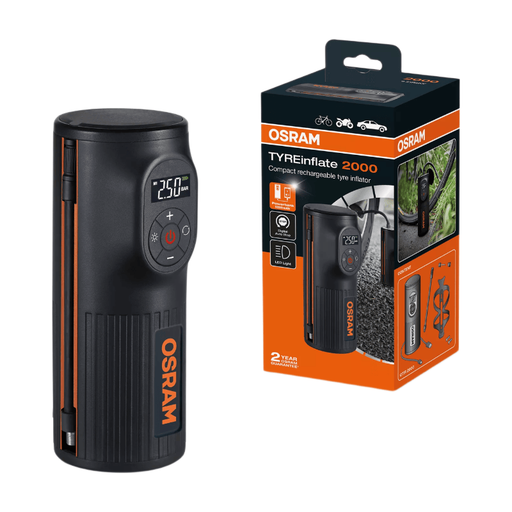
Why it suits this profile: A rechargeable air pump with a display, memory function and accessories for cars, bicycles, scooters and motorbikes.
The pressure can be set using the illuminated digital display, and the product description states that it has automatic shut-off. The manufacturer specifies a maximum pressure of 5.5 bar.
USB charging, LED lighting, pressure readings in bar, kPa and PSI, plus a stated two-year warranty.
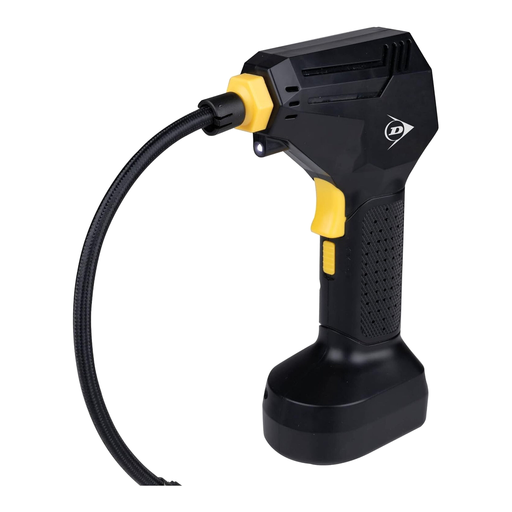
Why it suits this profile: This 12V compressor is aimed at motorists who value reach and multiple connection options.
The 3.5-metre cable helps solve the problem of a lead that is too short. The product information also states that it has automatic shut-off and a digital gauge.
Maximum 150 PSI, LED light, 30.5 cm hose, storage bag and valve adapters according to the product specifications.
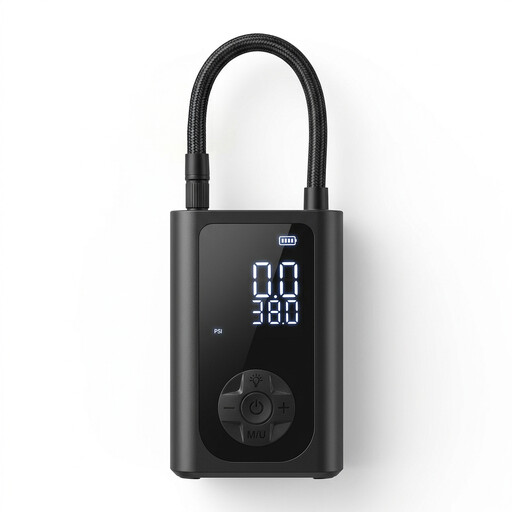
Why it suits this profile: This cordless model has five modes for cars, motorbikes, bicycles, balls and customised settings.
The digital pressure detection and automatic shut-off help maintain the set value. However, check the battery before setting off.
4000mAh battery, up to 150 PSI, two light modes and approximately 25 minutes of use per full charge according to the product information.
We have put together a complete, up-to-date list of products that fully meet these strict selection criteria and the applicable European safety regulations.
A compact pump is intended for topping up and emergency use. If a tyre is damaged, a valve is leaking or the pressure is dropping quickly, contact a tyre specialist or breakdown assistance service.
That depends on the pressure, airflow and battery. Check whether the manufacturer explicitly mentions car tyres and look at both the maximum pressure and operating time. A small rechargeable air pump is often suitable for topping up, but not always for inflating several completely flat car tyres.
Its service life depends on motor load, storage, charging habits and the operating time per session. Allow a compressor to cool down in accordance with the manual, and store a battery-powered model in a dry place rather than leaving it completely discharged for long periods. A 12V model does not have an internal battery, but it can also overheat during continuous use.
With a 12V tyre inflator, the electricity comes from the car. A cordless model uses electricity while charging via USB. Consumption per inflation is generally limited; the total cost mainly depends on charging frequency and the device’s power rating. As well as the purchase price, consider the battery capacity, cables, adapters and the operating time you require.
