
Vandaag of morgen in huis

Kwaliteit gegarandeerd

Welkomstaanbiedingen ontgrendelen: GRATIS bezorging | Tot 80% korting | Gratis 30 dagen JoyPlus-proefperiode
Download de app
A portable cool box is handy for a camping weekend, road trip, fishing trip or long drive. Yet many people buy a model that doesn’t suit the way they plan to use it. A basic insulated box works differently from an electric cool box with a compressor. And a large capacity doesn’t automatically mean your food will stay cool for longer.
Joybuy Product Recommendation Officer sets out the key differences, so you can avoid paying for features you don’t need or choosing a model that’s too small for your family, campervan or boat.
A passive cool box with foam insulation retains its temperature, but doesn’t lower it by itself. You’ll need pre-chilled food and drinks, plus plenty of ice packs. For example, the Mobi Garden box specifically states that it retains temperature but doesn’t actively cool or heat.
According to the product specifications, a 12V cool box with a fan can cool and sometimes heat, but its performance depends on the ambient temperature. A compressor cool box works differently: it can usually reach a set temperature, with some models offering a range of -18 °C to 15 °C, for example.
The stated insulation time depends on several factors:
According to the product description, the Mobi Garden 10L with ice box can keep things cool for around 16 to 40 hours. The 22L version states up to 36 to 48 hours with the included ice boxes. These are product specifications for certain conditions of use, not a guaranteed duration for every trip.
Before buying, check whether your vehicle has a 12V or 24V connection and whether the cable supplied is compatible. A 24V connection may be relevant for a lorry, campervan or boat. If you also want to use the cool box at home, you’ll need a model with 100-240V AC or a suitable adaptor.
Built-in battery protection with multiple levels can help prevent the vehicle battery from being deeply discharged. However, this feature doesn’t replace checking the connection, cables and battery condition. Always keep ventilation openings clear and follow the manufacturer’s safety instructions.
Don’t just look at the number of litres. Measure the space available in your car, caravan, campervan or boat too. A small car fridge with a capacity of 6 or 9 litres will often fit on or beside a passenger seat. For a family or several days on the road, 22 litres or more is more practical.
Check the internal layout too. A compressor cool box with baskets, a divider or two zones can be easier to organise than one large open space. Also check that your bottles, lunch boxes and ice packs will actually fit.
There are roughly three categories:
A cool box with a freezer function usually uses more power when cooling quickly. Check whether it has ECO and MAX modes, as well as battery protection.
Check the stated power rating, noise level and the amount of clear space required around the ventilation. Some EUHOMY models state around 40 to 42 dB and average power consumption of 45 W according to the product specifications. Actual running time depends on the temperature setting, surroundings and power source.
A compressor fridge needs to be kept stable. The BINGI 22L instructions state that the appliance must be left upright for at least six hours before first use if it wasn’t kept upright during transport. Other models specify a longer waiting time after being tilted. Always follow the instructions for the model you choose.
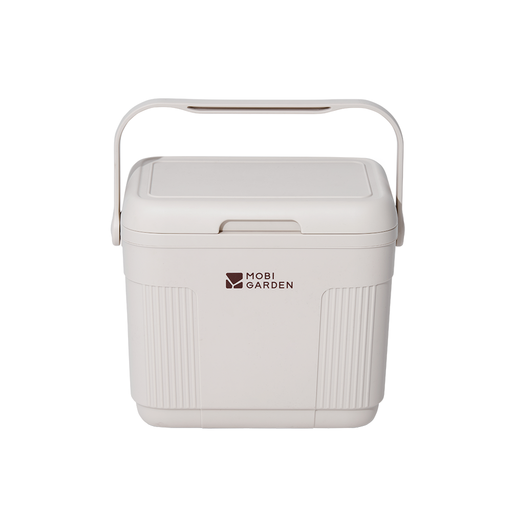
Why it suits this profile: A compact option for picnics, fishing and short camping trips without a power connection.
The description makes it clear that this is a passive box, so you know in advance that you’ll need ice or cooling elements.
10-litre capacity, PU insulation layer, integrated carry handle and a slot for an optional ice box.

Why it suits this profile: For travellers who want active cooling and need to use a power supply in both the car and at a campsite.
Its temperature range of -18 °C to 15 °C makes it easy to check the difference between keeping things cool and actively cooling them.
22-litre capacity, 12/24V DC and 100-240V AC, plus three-level built-in battery protection.

Why it suits this profile: Designed for campervans, boats, lorries and families who take plenty of provisions with them.
The two storage compartments and adjustable temperature mean the large capacity won’t just be wasted space.
49.4-litre capacity, 12/24V DC and 240V AC, adjustable from -20 °C to 20 °C, with app control.
Chill food and drinks in the fridge or freezer beforehand. Fill empty spaces with ice packs or cooling elements, and open the lid as little as possible. Keep the box out of direct sunlight. Don’t use dry ice, and keep raw meat away from direct contact with meltwater. A large ice block usually melts more slowly than crushed ice, while crushed ice cools things more quickly.
For an electric cool box, place it on a stable surface, leave around 10 cm of clear space around the ventilation openings and check that the battery protection is set correctly. Switch off the power before cleaning.
We’ve put together a complete, up-to-date list of products that meet these strict selection criteria and the current European safety requirements.
How long a passive box stays cold depends on the ice, insulation, ambient temperature and how often you open the lid. An electric or compressor cool box will keep cooling for as long as the power supply and settings allow.
Only if the model has a suitable 220-240V or 100-240V adaptor. Check whether one is included. For some models, the mains adaptor is optional.
Power consumption depends on the capacity, ambient temperature, set temperature and selected mode. ECO mode can help reduce power use while maintaining the temperature. If you use the cool box with the engine off, always check the battery protection too.
