
Vandaag of morgen in huis

Kwaliteit gegarandeerd

Welkomstaanbiedingen ontgrendelen: GRATIS bezorging | Tot 80% korting | Gratis 30 dagen JoyPlus-proefperiode
Download de app
A portable cool box may seem simple: you put food and drinks inside and plug it in. In practice, cool boxes vary considerably in cooling technology, capacity, power consumption and ease of use. A model that works well for a short car journey is not automatically suitable as a cool box for camping, motorhomes or boats.
Pay particular attention to these common pitfalls:
A thermoelectric system uses a fan and a heating element. This type is often compact and affordable. Some models can both cool and heat. However, performance depends heavily on the outside temperature. A mini fridge for the car is therefore mainly suitable for drinks, snacks and short journeys.
Pay attention to the ventilation openings. Do not place the cool box tightly against a seat, wall or luggage. Some models recommend leaving approximately 10 cm of free space around the ventilation.
A compressor cool box works in a similar way to a fridge and can generally reach an adjustable temperature below zero. This makes it suitable as a portable fridge, car fridge or cool box for motorhomes, caravans and boats. Models with 12V/24V DC and 100–240V AC are flexible for use on the move and at a campsite.
A compressor uses more power when starting up than a thermoelectric model. An ECO mode, good insulation and battery protection are therefore important features.
An insulated cool box works with ice blocks, cool packs or a separate cooling medium. It does not generate cold itself and must be chilled in advance. This type is practical for a picnic, festival or day trip when no socket is available.
According to the Mobi Garden cool box product description, the insulation period with a cool box element can be between 16 and 40 hours. The actual duration depends on the temperature, amount of ice, direct sunlight and how often you open the lid. Do not use dry ice unless this is expressly permitted for the product.
Do not choose based on litres alone; also consider the external dimensions and layout. A compact 4 to 6-litre cool box is easier to fit on a passenger seat. For trips lasting several days, 18 to 22 litres is often more practical. A 35 to 49-litre model offers more space, but also takes up considerably more room in the boot or motorhome.
Check beforehand:
A range such as -20 °C to 20 °C indicates a compressor cool box that can cool and freeze. The temperature setting does not guarantee a fixed internal temperature in every situation. After transport, leave a compressor cool box upright for the period specified in the instructions. Product information for various models states 6 to 12 hours if the appliance has been tilted.
Use MAX for faster cooling and ECO to maintain the temperature reached using less energy, where these modes are available.
For use in a vehicle, 12V cool boxes are common. Lorries, motorhomes and some boats also have 24V available. A universal DC connection is convenient, but always check the cables and adapters supplied.
Look for:
Battery protection can reduce the risk of deep discharge, but it does not replace a suitable leisure battery, fuse or power supply. On a boat, the electrical installation must also be protected appropriately.
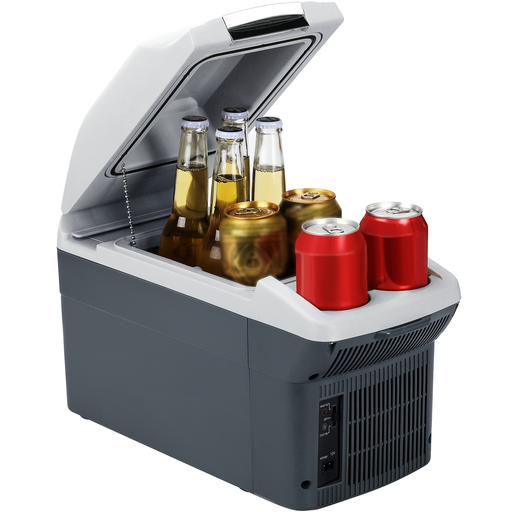
Why it suits this profile: A compact model for car journeys, day trips, picnics and snacks on the go. The product description mentions 12V operation, a carrying strap and two cup holders.
The cooling and warming functions are listed separately. Before buying, check that the capacity and optional home adapter suit your needs.
12V connection, approximately 40 dB according to the product information, carrying strap and cup holders.

Why it suits this profile: Suitable for campers, motorhome owners and travellers looking for one appliance for cooling and freezing.
The product information states a range of -18 °C to 15 °C, 12V/24V DC and 100–240V AC. This clearly sets out the power options and freezing capability.
22-litre capacity, compressor cooling, dual power supply and built-in battery protection according to the product description.

Why it suits this profile: The capacity, two zones, baskets and wheels are ideal for longer motorhome trips, boat outings and larger groups.
The product information states 12V/24V DC, 220–240V AC and three levels of battery protection. However, check that 35 litres will fit in your vehicle.
Two storage zones, a temperature range of -20 °C to 20 °C according to the product information, wheels and app control.
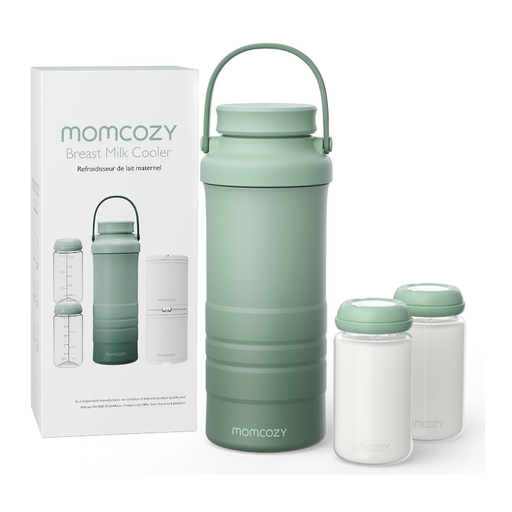
Why it suits this profile: This breast milk cooler is designed for carers who want to transport expressed milk chilled during outings or journeys.
The cooling tube must be completely frozen before use. Always follow the applicable guidelines for storing breast milk and clean all parts that come into contact with milk.
Supplied with one cooling tube and two 650 ml bottles; the product description states that the food-contact materials are BPA-free.
We have put together a complete, up-to-date list of products that fully meet these strict selection criteria and the applicable European safety regulations.
Use the supplied 12V or 24V cable with a suitable vehicle connection. Place the cool box securely, keep the ventilation clear and make sure the cable is not trapped or pinched. Battery protection is important when using the cool box with the car switched off. For longer periods when stationary, a separate power station or leisure battery is often more suitable than the starter battery.
The lifespan depends on the type, ventilation, moisture, vibrations, cleaning and how often the appliance is moved. A compressor cool box has moving parts and must be left to rest as instructed after being transported while tilted. Do not allow water to enter the electronics and store the box completely dry when you are not going to use it for an extended period.
This depends on the power consumption, outside temperature, set temperature and length of use. A product that uses, for example, 45 watts theoretically consumes 0.045 kWh per hour when running continuously at that power. In practice, a compressor often does not run continuously; ECO mode and good insulation can help limit consumption. For an accurate calculation, check the energy label and product specifications.
