
Vandaag of morgen in huis

Kwaliteit gegarandeerd

Welkomstaanbiedingen ontgrendelen: GRATIS bezorging | Tot 80% korting | Gratis 30 dagen JoyPlus-proefperiode
Download de app
A portable carpet cleaner is handy for spills on the carpet, stains on the sofa or dirt in the car. However, not all compact cleaners are the same. Some machines spray water and then suck the dirty water back up. Others work mainly with steam, making them more suitable for hard surfaces than for heavily soaked fabrics.
If you only look at the wattage or a high suction rating, you could end up buying a machine that isn’t right for the job. Below, we cover the key things to check, followed by a few product options for different households.
A higher wattage mainly tells you how much electrical power a machine uses. It doesn’t automatically show how well it removes moisture, dirt or hairs from upholstery. So check the suction pressure in kPa, as well as the spray function, hose length and water tank capacities.
For example, a 1,500-watt machine may be designed primarily as a steam cleaner, while a more compact stain cleaner with a lower wattage may be specifically designed to spray and suck water back up.
Steam can loosen grease and ingrained dirt, but not all upholstery can withstand high temperatures or moisture. Several manufacturers advise testing steam on an inconspicuous area first. Untreated wood, silk, velvet and heat-sensitive plastics may not be suitable.
A steam cleaner for upholstery therefore requires extra care. Always check the fabric’s care label and use no more moisture than necessary.
A small clean water tank may seem practical, but you’ll need to refill it frequently when cleaning larger sofas, several car seats or an entire carpet. The dirty water tank is just as important. If it’s difficult to empty and rinse, residue and odours may be left behind.
Check the filters, brush heads and hoses too. After use, empty, rinse and dry all parts thoroughly, following the instructions.
With an upholstery cleaner or wet-and-dry cleaner, the combination of spraying and suction is important. A higher kPa rating is generally presented as greater suction pressure, but ratings are only truly comparable when they’re measured using the same method.
As well as checking the stated suction power, look at:
A system with separate clean and dirty water tanks prevents used water from being spread around again. A small machine may be enough for the occasional stain. For families with children, dogs or cats, a larger dirty water tank is more practical.
For example, the ROUNY machine lists a 1,400 ml clean water tank and a 1,200 ml dirty water tank. According to the product information, the tanks are separate, and the machine is designed for carpets, sofas, stairs, car seats and pet areas.
A steam function uses hot vapour to loosen dirt. A traditional carpet cleaner sprays water or cleaning solution and then sucks the moisture back up. For deep stains in fabric, the latter is often more useful than steam alone.
Never put cleaning products in a tank unless the manufacturer allows it. According to the MONSGA steam cleaner’s product information, only clean water should be used; detergents, perfume and alcohol, among other substances, must not be added to the tank.
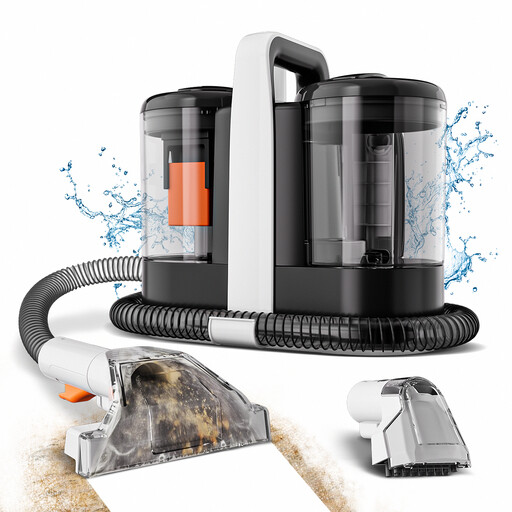
Why it suits this profile: This compact stain cleaner is designed for small spills on carpets, sofas, mattresses and car seats. Its spray, brush and suction functions make it a good fit for regular household use.
The product information lists a 1.5-litre clean water tank, a 0.8-litre dirty water tank and a suction rating of 15 kPa. Check that the capacity is right for the area you need to clean.
According to the product description, it comes with a 1.3-metre hose, a 3-metre power cord and two brush heads.
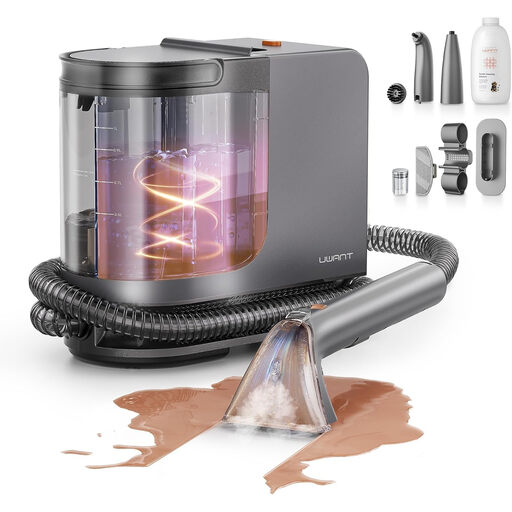
Why it suits this profile: The B400 is suitable for people who regularly clean sofas, beds, carpets and car interiors, and who value a higher stated suction rating.
The product information lists a 2-in-1 water tank and suction power of up to 18,000 Pa. Before buying, check how the tank is emptied and cleaned.
According to the product description, the machine has a power rating of 600 watts, a 14 cm brush width and a noise level of 75 dB.
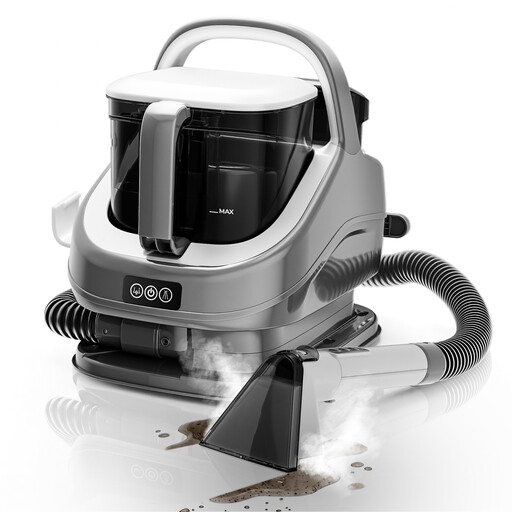
Why it suits this profile: This machine is designed for households tackling several types of fabric surfaces, including sofas, stairs, carpets, car seats and areas affected by dog or cat stains.
The machine offers three modes: cold water, hot water and steam. Use your chosen setting only on water-resistant fabrics, and follow the care instructions.
According to the product details, it offers 1,300 watts of power, 13 kPa suction, a 1.1-metre hose and a 3-metre power cord.
We’ve put together a complete, up-to-date list of products that meet these strict selection criteria and the applicable European safety requirements.
That depends on the care label and how water-resistant the upholstery is. A spray-extraction machine may be suitable for washable fabrics, but using too much water can leave marks or lead to long drying times. Use small amounts and test first.
Empty and rinse the dirty water tank after every use. Clean the brush, hose and filters according to the instructions. Let any removable parts dry before putting the machine away. This helps reduce residue and unpleasant odours, and keeps the airflow working more effectively.
The main costs are electricity, water, any suitable cleaning product and maintenance. A machine with a large tank can mean fewer interruptions for bigger jobs. Before buying, though, check that the tank capacity and power consumption suit how often you plan to use it.
