
Vandaag of morgen in huis

Kwaliteit gegarandeerd

Welkomstaanbiedingen ontgrendelen: GRATIS bezorging | Tot 80% korting | Gratis 30 dagen JoyPlus-proefperiode
Download de app
A spilt drink, mud brought in by pets or stains on a car seat can be difficult to remove with a standard vacuum cleaner alone. A portable carpet cleaner sprays water mixed with cleaning solution into the fabric, then vacuums up the dirty liquid again. This makes the appliance suitable for carpets, sofas, mattresses and fabric car upholstery.
However, there are clear differences between models. For example, a high suction power figure on the packaging does not tell you everything about how easy the appliance is to use in practice. So pay particular attention to these common pitfalls.
A motor power rating of 600 watts or a stated 15 kPa sounds convincing, but on its own it does not indicate how well an appliance collects water. The hose, nozzle, airflow and seals also play a part. So check whether the manufacturer provides information about the tanks, accessories and cleaning method as well as the power rating.
A compact handheld carpet cleaner is useful for dealing with a localised stain, but a small tank may mean that you have to refill or empty it frequently while cleaning. Separate clean- and dirty-water tanks are more practical for a sofa, several car seats or a large rug.
Dirty water remains in the machine after use. If the tank, hose and nozzle are not emptied and dried, unpleasant smells can develop. A model with an easily accessible dirty-water tank and simple-to-clean components saves time after every cleaning session.
For a carpet stain cleaner, it is important that the appliance not only sprays water but also collects the liquid again. A 3-in-1 system with spraying, brushing and suction can be useful for dried-on stains. According to OMESER’s product description, the C688A has a power rating of 600 watts and a stated suction power of 17,000 Pa. The W07 lists a suction power of 15 kPa.
These figures are useful for an initial comparison, but it is best to compare them within the same type of product. A wet cleaner for fabric upholstery works differently from a dry handheld vacuum.
Where possible, choose a system with a separate clean-water tank and dirty-water tank. This prevents used water from being spread over the surface again. According to the product information, the OMESER W07 has a 1.5-litre clean-water tank and a 0.8-litre dirty-water tank. The C688A also uses a two-tank system, but the stated capacity is not listed in the product details.
Pay attention to the maximum fill mark. An overfilled tank can affect performance. Use lukewarm water within the stated limit; the C688A specifies a maximum temperature of 40 °C. Do not use boiling water.
For a carpet cleaner for sofas or cars, the hose and mains cable length determine how far you can move without having to reposition the appliance. Also check whether different brushes are included. A narrow nozzle is suitable for stains and crevices, while a wider head works more quickly on a seat cushion.
A corded model provides a constant power supply during use, but you will need a suitable socket. A cordless appliance gives you greater freedom of movement, but has a limited operating time and needs to be recharged.
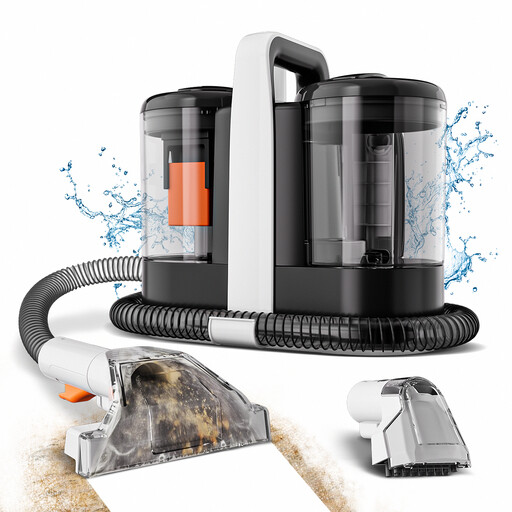
Why it suits this profile: This model is designed for spot-cleaning carpets, sofas, mattresses and car seats. The combination of a portable design, two brushes and a 9.84-foot cable is practical for households that only need to tackle a stain occasionally.
The separate clean- and dirty-water tanks help prevent dirty water from being spread around again. The 1.5- and 0.8-litre capacities are clearly stated, so you can assess in advance whether they suit your needs.
600 watts, stated suction power of 15 kPa, 3-in-1 spraying/brushing/suction and two water tanks.
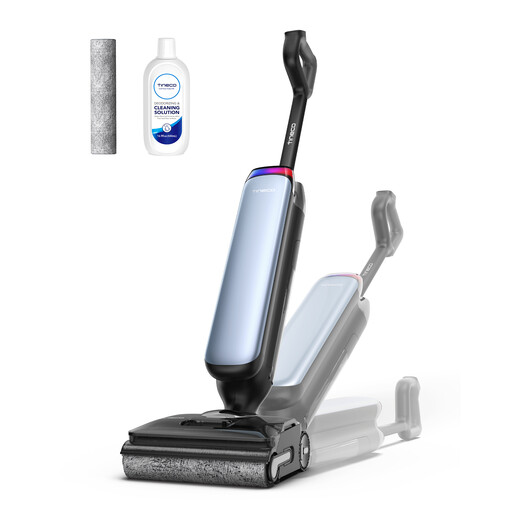
Why it suits this profile: According to the product name, this model combines wet and dry cleaning with 22 kPa suction power, up to 50 minutes of operating time and automatic self-cleaning. It is particularly appealing if you want to clean several types of flooring and larger surfaces.
The stated self-cleaning function may make everyday maintenance easier. Before buying, however, check the manual and make sure the cleaning method is suitable for your carpet or upholstery.
Stated suction power of 22 kPa, 50 minutes of operating time, anti-tangle function and 180° lay-flat design.
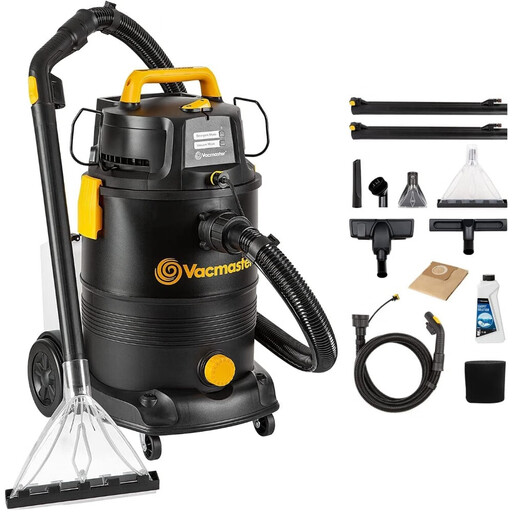
Why it suits this profile: According to the product description, this larger appliance is designed for wet, dry and carpet cleaning. It is suited to households, car owners or landlords who regularly clean larger surfaces, sofas and vehicle interiors.
The 6-litre cleaning-solution tank and 30-litre collection tank reduce the need for frequent interruptions. The trade-off is that the appliance weighs 10.8 kg and requires more storage space.
1300 watts, 30-litre collection capacity, 6-litre cleaning-solution tank and filters for wet and dry cleaning.
We have put together a complete, up-to-date list of products that fully meet these strict selection criteria and the applicable European safety regulations.
Do not use an upholstery cleaner for cars on electrical components or surfaces that are not suitable for moisture. Do not use it to collect flammable liquids either. Always consult the manual for the specific model.
Yes, many models are designed for fabric sofas, chairs, mattresses and car seats. Check the upholstery care label first and test a small, hidden area. Do not use more water than necessary to avoid a long drying time.
This depends on the amount of liquid, the suction power, the material and the ventilation. Several slow suction passes can help to remove moisture. Open windows or use ventilation, but do not place a heat source directly on the fabric.
The running costs mainly consist of electricity, water and, where applicable, cleaning solution. A corded model uses electricity while cleaning; a battery-powered version needs to be recharged. Follow the recommended cleaning-solution dosage and only use products that the manual states are suitable.
