
Vandaag of morgen in huis

Kwaliteit gegarandeerd

Welkomstaanbiedingen ontgrendelen: GRATIS bezorging | Tot 80% korting | Gratis 30 dagen JoyPlus-proefperiode
Download de app
A coffee stain on the rug, mud on the sofa, or dirt on a car seat can't always be removed with a cloth and an all-purpose cleaner. A portable carpet cleaner sprays a mixture of water and cleaning solution onto the surface and then vacuums up the dirty liquid. This makes these devices ideal for carpets, rugs, sofas, mattresses, and car interiors.
However, not every compact cleaner is equally practical. Marketing often focuses on high wattage or an impressive suction power figure, but other features are just as important. Pay close attention to these three common pitfalls.
The motor power in watts indicates how much electrical power the appliance uses. It doesn't directly tell you how much dirt and moisture it will remove. For that, factors like suction pressure, airflow, the hose, the brush, and the system's seal are all important.
A carpet cleaner with powerful suction can remove moisture from upholstery faster, but only if the nozzle creates a good seal with the surface. So, don't just look for 1300, 1400, or 1800 watts. Also, check if the manufacturer specifies a value in kPa and whether a suitable brush for stains is included.
A compact design is convenient for a flat or storage cupboard, but a clean water tank that's too small means you'll have to refill it more often. Likewise, a small dirty water tank will need to be emptied more frequently. This can be inconvenient when cleaning a sofa or multiple car seats.
A spot cleaner with separate tanks prevents clean and dirty water from mixing. Check the capacity of both tanks; don't just rely on the term "large tank" in the product title.
Many portable models are corded. This can be an advantage for longer cleaning sessions, as you won't have to wait for a flat battery to recharge. However, you'll need a power socket and must consider the length of the cable and hose.
A device with a long cord and a flexible hose is often more practical for stairs, sofas, and car interiors. For use in a car without a socket nearby, a cordless model might be more suitable, but be sure to check its battery life and charging time.
The product descriptions for the models below list suction values of around 13 to 18 kPa. A higher stated value can indicate greater suction capacity, but the final result also depends on the brush, hose, and the material you're cleaning.
Also, pay attention to the cleaning method:
Always test on a small, inconspicuous area to check for colourfastness and water resistance.
Separate clean and dirty water tanks make the process more straightforward. After each use, you need to empty the dirty water tank and clean components like the hose, brush, and filters. Leftover moisture or cleaning solution can cause unpleasant odours.
Also, look for the maximum fill line. Overfilling a tank can affect performance and cause leaks. Even with appliances that have a self-cleaning function, you should still check that all parts can dry properly afterwards.
For a sofa or upholstery cleaner, a hose of about one metre and a cord of a few metres are often sufficient. For a car interior, a longer reach is more convenient. Pay attention to the weight: a device weighing five to six kilograms is still portable, but becomes less comfortable if you have to carry it up and down stairs often.
A good basic kit should preferably include:
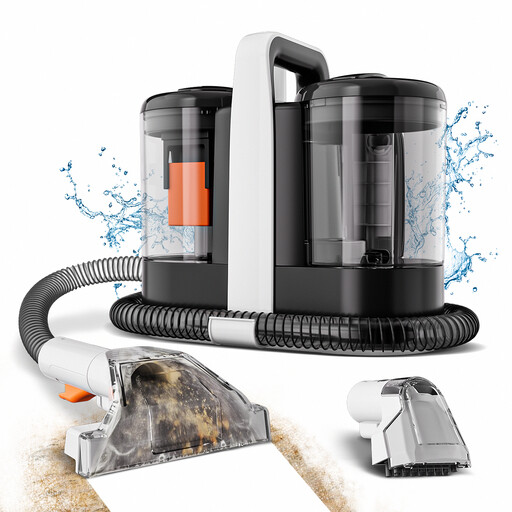
Why it's a good match: This compact model is designed for tackling stains on carpets, sofas, mattresses, and car seats. The two tanks and 9.84 ft cord provide a practical foundation for smaller cleaning jobs.
The product description mentions a 1.5-litre clean water tank and a 0.8-litre dirty water tank. This means you don't have to rely solely on a high motor power rating.
According to the product description, this model has 600 W of power, a stated suction power of 15 kPa, two brushes, and a portable design.
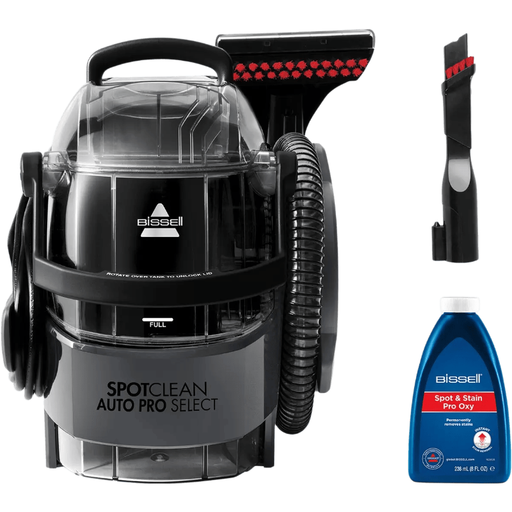
Why it's a good match: This model is ideal for households that regularly clean sofas, stairs, carpets, and car interiors, and who value the included accessories and separate water tanks.
The product information mentions two XL tanks and multiple brushes. This helps with longer jobs and means you don't need a separate tool for every type of stain.
According to the product description, the appliance has 750 W of power, a 2.8-litre capacity, a corded connection, and weighs 5.8 kg.
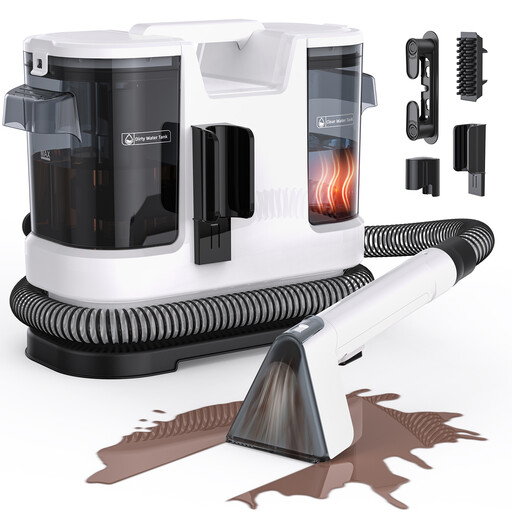
Why it's a good match: This is a logical choice for families, pet owners, and car owners who frequently tackle larger areas or stubborn stains.
The stated suction power and the fact that it's corded are clearly mentioned in the product title. Before buying, be sure to check your available power sockets and the cleaning instructions for your upholstery.
According to the product description, the Lubluelu V8 has 1400 W of power, a stated suction power of 15,000 Pa, a large tank, and a corded connection.
We've compiled a complete, up-to-date list of products that fully meet these strict selection criteria and comply with current European safety regulations.
With electric models, pay attention to the safety instructions. Do not use a corded appliance near open water, unplug it before carrying out maintenance, and keep the device out of the reach of children.
Yes, many models are designed for sofas, chairs, and other fabric upholstery. First, check the care label on your sofa. Not all fabrics are water-resistant, and some materials should not be treated with heat or steam.
Use a rug cleaner or sofa cleaner whenever a stain occurs, and consider scheduling periodic deep cleans for heavily used items. Pets, children, and high traffic usually mean more frequent cleaning is needed. Cleaning with water too often without allowing sufficient drying time can put unnecessary strain on the material.
The running costs mainly consist of electricity, water, and cleaning solution. A corded model uses electricity while you clean; the exact consumption depends on its power rating and how long you use it. A larger tank can reduce interruptions, but you should also check how much cleaning solution is needed per session.
