
Vandaag of morgen in huis

Kwaliteit gegarandeerd

Welkomstaanbiedingen ontgrendelen: GRATIS bezorging | Tot 80% korting | Gratis 30 dagen JoyPlus-proefperiode
Download de app
A knocked-over drink, muddy pawprints or a spill on the sofa calls for a quick solution. A portable carpet cleaner sprays water and cleaning solution onto the fabric, then sucks up the dirty liquid. This type of spot cleaner is suitable for carpets, stairs, mattresses, sofas and car upholstery.
However, not every compact machine is equally practical. A high wattage, for example, doesn’t automatically mean it will pick up dirty water effectively. Before you buy, look out for these common pitfalls.
A motor rated at 600 or 750 watts may sound impressive, but it doesn’t tell you everything about cleaning performance. Suction power, the nozzle, water flow and how you hold the machine against the fabric all play a part too.
As well as checking the wattage, look for the stated suction power in kPa, if available. For example, a machine with 17 kPa suction power gives you a different performance measure from a model that lists only its motor power.
The tank on a budget spot cleaner can fill up quickly. You may need to stop more often to top up the clean water or empty the dirty water. A system with two separate tanks is more practical, as it keeps clean and dirty water apart.
Check the capacity of both tanks too. A larger tank is handy for cleaning a sofa or several car seats, while a small reservoir takes up less space in a flat.
After use, water, cleaning solution and dirt can remain in the hose, brush and dirty-water tank. If the parts can’t be removed or rinsed properly, the machine may be less pleasant to use.
Empty and rinse the dirty-water tank after every clean. Let all parts dry completely before putting them back. Also, always check whether the fabric is suitable for wet cleaning. Test the cleaning solution on an inconspicuous area first, especially on coloured, delicate or water-sensitive upholstery.
Most portable carpet cleaners work in three steps: spray, brush and suck up. A rotating or firm brush helps loosen dirt. The suction function then determines how much moisture and loosened dirt is lifted from the fabric.
If you have children or pets and plan to use the cleaner regularly, a model with clear details about its power, suction and nozzles is easier to compare. Bear in mind that a brand’s claims about deep cleaning or odour removal come from the product description. They don’t guarantee the same results on every fabric or stain.
For occasional spills, choose a compact model with tanks that are easy to remove. If you want a carpet cleaner for sofas, stairs and several seats, a larger capacity can save time.
A dual-tank system is especially practical because you won’t spray with water that’s already dirty. Check whether the tank opening is large enough for rinsing and whether you can see the water level.
A long hose is useful for stairs, corners and car seats. For cleaning a car, a compact machine with a flexible nozzle is often more important than a large tank. Check the mains lead length too: these models generally need to be plugged in, so they aren’t cordless.
A narrow nozzle is suitable for seams and small stains. A wider brush works more efficiently on a sofa seat or rug. If you need to tackle pet stains, a dedicated upholstery or stain nozzle is useful, but always follow the instructions for the cleaning solution you use.
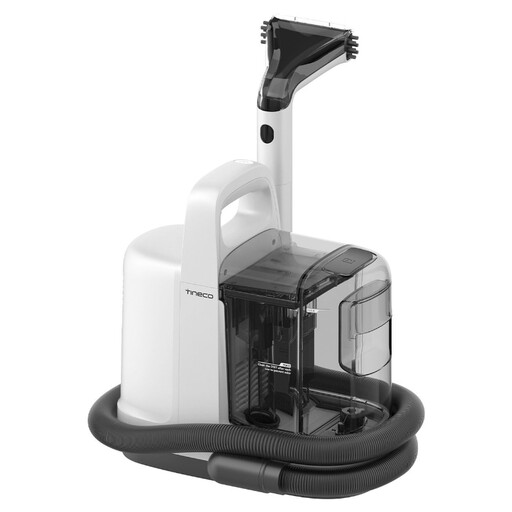
Why it suits this type of user: This compact model is designed for spot cleaning carpets, furniture, mattresses and car upholstery. It’s a sensible choice if you’re mainly looking for a machine for occasional cleaning.
The product description lists a sprayer, two tanks and a rotating brush. That means you don’t have to rely on wattage alone.
400 watts of power, a removable tank and an upholstery accessory included. The machine has a power cord.
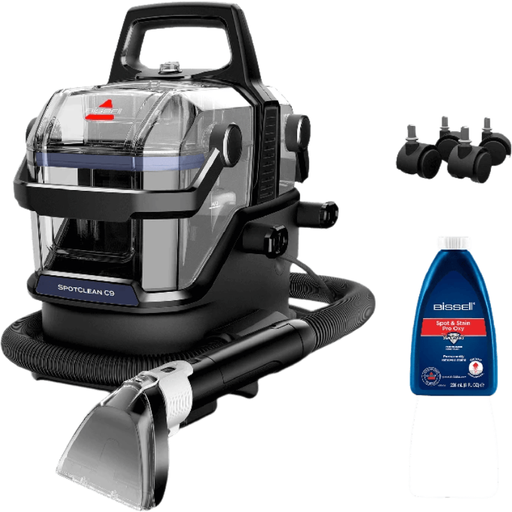
Why it suits this type of user: This model is a good fit for households looking for straightforward controls and multiple functions for carpets, furniture and car interiors.
The two tanks, two cleaning modes and HydroRinse tool make filling, cleaning and maintenance more straightforward than with models that include few accessories.
400 watts, a 1,70-litre tank and a 1,5-metre hose. The stated manufacturer’s warranty is 2 years.
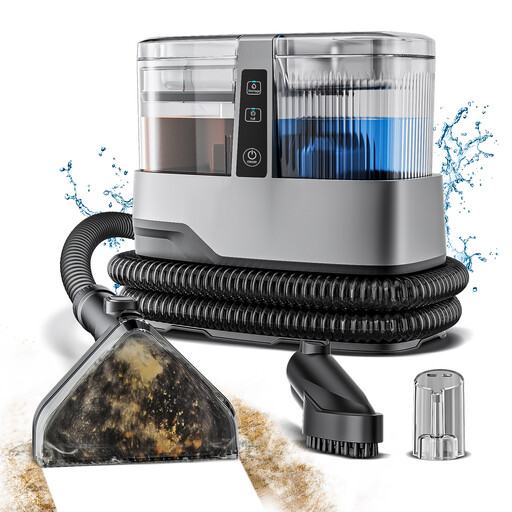
Why it suits this type of user: The handheld design, 5-metre power cord and stated suction power of 17 kPa make it a good fit for families, pet owners and motorists who regularly clean larger areas.
The manufacturer states both the motor power and suction power. The clean- and dirty-water tanks are separate too, so you can compare these features before buying.
600 watts, stated suction power of 17 kPa and a 5-metre power cord. The instructions recommend using warm water at a maximum temperature of 40 °C.
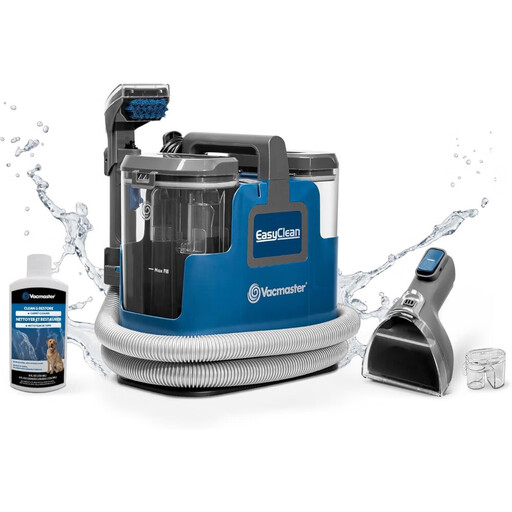
Why it suits this type of user: Its compact size and 1,8-metre hose are handy for car seats, sofas, stairs and hard-to-reach corners.
The product details list a dual tank, removable reservoirs and a long hose. This makes maintenance and reach clearer before you buy.
500 watts of power, a 1,8-metre hose and Spot & Pet cleaning solution included, according to the product description.
We’ve put together a complete, up-to-date list of products that meet these strict selection criteria and current European safety requirements.
Only if the upholstery is suitable for wet cleaning. Check the care label or the furniture manufacturer’s instructions. Test a small, inconspicuous area first. Use no more liquid than necessary and vacuum slowly to recover as much moisture as possible.
Empty the dirty-water tank after each use, then rinse the tank, hose and nozzle. Remove any hair and fluff from the brush. Let all removable parts dry completely. Only use cleaning solutions approved in the instruction manual; foaming or harsh products can cause problems.
The main running costs are electricity, water and cleaning solution. A 400-watt model theoretically uses 0,4 kWh in one hour, but a cleaning session usually takes much less time. The overall cost therefore depends mainly on how often you use the machine and how much solution you use each time.
